
The short answer
Pay the licensing fee and have the car tested when an inspection is required; payment alone is not enough in that case. After a failure, repair the faults and complete the inspection as instructed by the centre. If the licence has expired, arrange transport or the appropriate permit before driving.
Who this guide is for
Private car owners in Israel preparing for a vehicle test, dealing with a failure or checking how the requirements change as their car ages.
To renew your vehicle licence (רישיון רכב), you must pay the licensing fee (אגרת רישוי) and pass the roadworthiness test (טסט) when your car requires one. Payment alone is not enough in that case. If the car fails, repair the defects and complete the approval process as instructed by the test centre; if the licence has expired, do not simply drive to the centre on your own initiative.
Avoiding a wasted visit starts before you start the engine: check the expiry date, the car's age, the documents required and any restrictions. This guide covers private cars in ordinary use in Israel. Collector vehicles, commercial vehicles and those in special classifications may face different requirements. This is general information, and the rules applying to your particular vehicle take precedence.
When a test is required and what changes as the car ages
According to the Ministry of Transport and Road Safety, a new private car is exempt from the physical inspection for its first three years, but the renewal fee must still be paid. After that exemption, a test is generally required every year. A new car registered for rental or leasing has a shorter initial exemption, until it is two years old. Do not automatically apply the three-year rule to it.
Once a car is 15 years old, its braking system must be checked at a licensed garage (מוסך מורשה) before the test, and you must bring the certificate. This is an additional licensing requirement, not a check that can be replaced by your own impression of the brake pedal or an invoice for a previous service.
A private car that has reached 19 years from its year of manufacture when its licence is renewed is classed as an ageing vehicle (רכב מיושן). It requires renewal and a test every six months, together with the relevant certificates. The Israel National Road Safety Authority clarifies that the calculation refers to the year of manufacture. If your car is close to the threshold, check the requirement on the licence and with the test centre before arranging a garage certificate.
Separate the vehicle licensing fee from the test centre's charge
The licence renewal fee is paid to the government, while the test charge is paid to the inspection centre. These are two separate payments. Repairing defects or having a preliminary garage inspection is an additional cost, so the test price alone is not the preparation budget for a car that needs work.
The Ministry of Transport and Road Safety allows payment of the fee and completion of the test up to 60 days before the licence expires. There is no need to wait for a letter in the post. Download the paid licence and keep the payment confirmation; the ministry states that the amount shown in its system takes precedence if it differs from the form sent to you.
There is no single vehicle licensing fee that applies to every reader. For an ordinary private car, the amount depends, among other things, on its fee group and the year it first went on the road. Check your own payment notice and the centre's current price list, and do not treat a price published a year ago as a quote for today. For broader planning, include these payments in your car ownership budget.
What to prepare before heading to the test centre
Prepare a paid vehicle licence, a valid compulsory motor insurance certificate (ביטוח חובה) and identification. If someone else is bringing the car, establish the centre's power of attorney (ייפוי כוח) and identification requirements beforehand, and bring the appropriate documents. The ability to drive without carrying a physical vehicle licence does not mean identification documents are unnecessary for this service.
Include a brake certificate (אישור בלמים) if your car's age requires one, together with any additional certificates specified on the licence or renewal requirements. Check that they are valid before leaving. A document proving that a service was carried out previously is not necessarily the specific certificate the centre needs to inspect your car this year.
You can start by checking the vehicle's details and licence validity by registration number, which also shows the date of the last test according to the register. The data is a starting point for planning; it does not replace the current licence, the required certificates or a check for restrictions in your government personal account.
What the test covers and what you should check beforehand
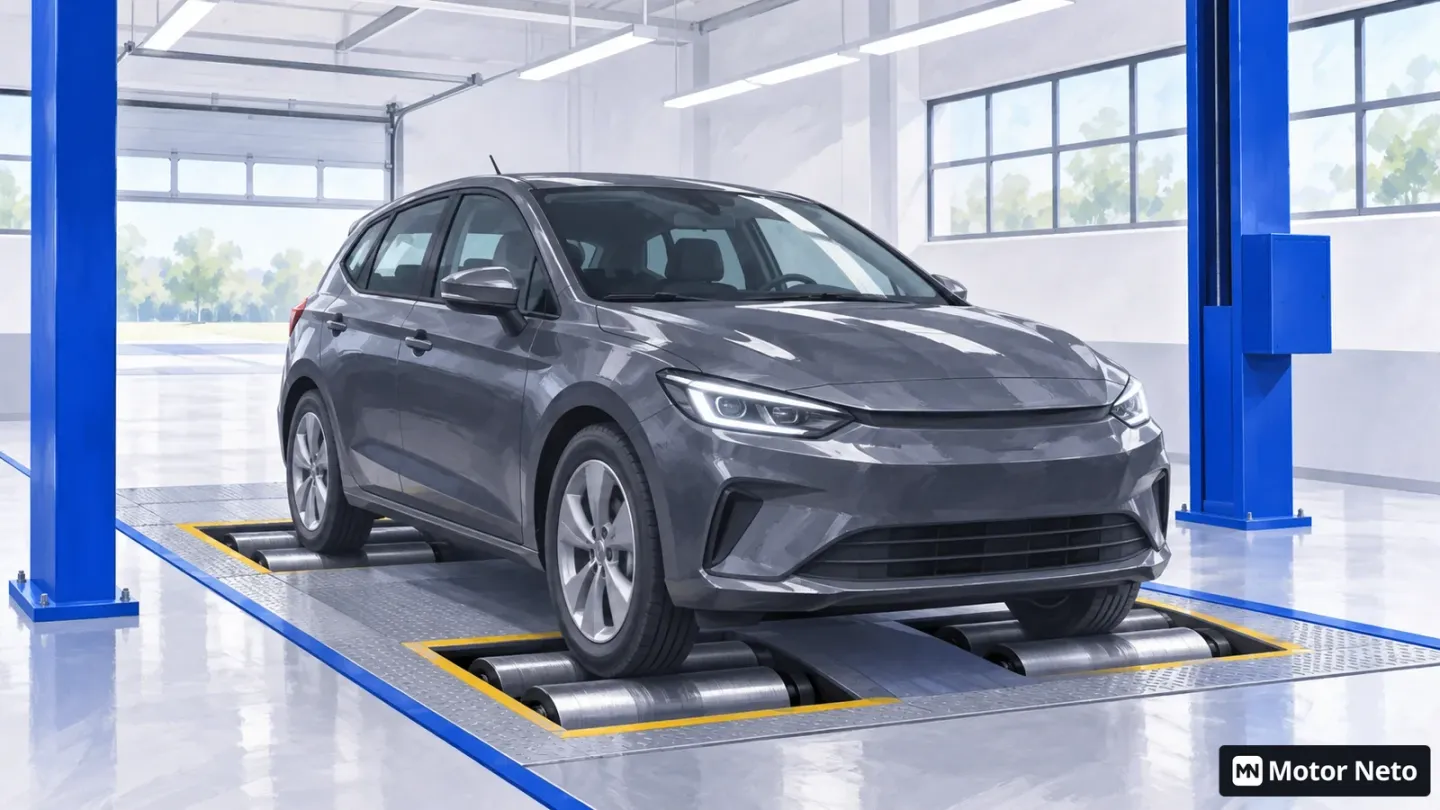
The inspection concerns the vehicle's fitness for road use. The Computest inspection network describes checks of the vehicle's and owner's identity, the steering system, underbody, lights, brakes, wheel alignment and emissions. The checks and how they are carried out depend on the vehicle type; an electric car, for example, has no combustion-engine emissions to measure as a petrol car does.
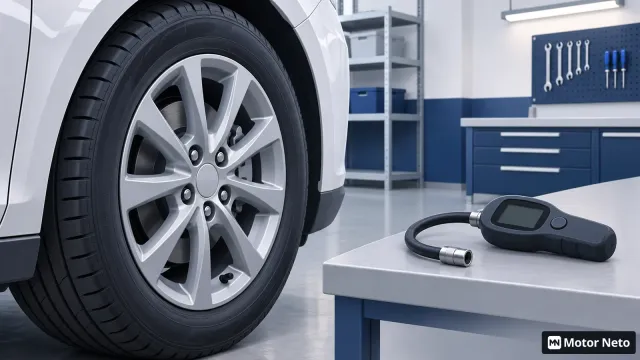
At home, concentrate on simple preparations: check that the lights and indicators work, the wipers clear the glass and the washers have fluid. Look at the condition of the tyres and whether the number plates are legible. The Israel National Road Safety Authority also recommends checking the steering and brakes and referring defects to a professional. These are not instructions for repairing a safety system yourself.
If you already know about a fault, deal with it before arriving rather than hoping the test will give it a clean bill of health. A warning light, unusual noise or change in the car's behaviour needs attention in line with the manufacturer's instructions. A preliminary inspection can help you prepare, but it does not guarantee a pass or replace the test itself.
Recalls and vehicle modifications may need separate attention
An outstanding recall (קריאה חוזרת) is more than a maintenance item. According to the Ministry of Transport and Road Safety, failing to complete the repair within six months of the notice being sent may block licence renewal. Check the recall's status with the importer before your test date, and keep the completion certificate. The importer is responsible for removing a restriction after the repair.
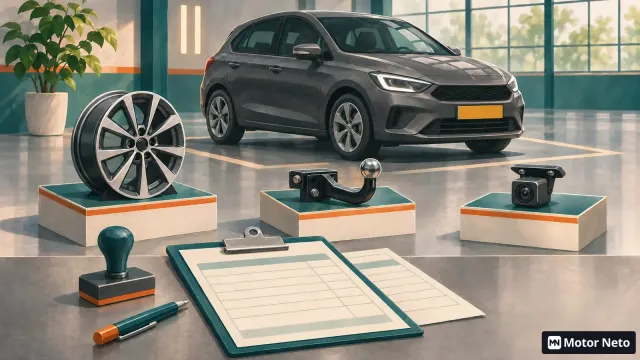
If you have changed tyre size, fitted an accessory or made a modification requiring approval and registration, make sure the paperwork is complete. Having the part installed at a garage does not resolve every licensing question. The guide to approval for vehicle upgrades and modifications explains what to establish before the work, not just when the car is already in the inspection lane.
Before booking, work through this list:
Checklist before you continue
If the car fails, follow the defects report
Ask for a clear report and read which faults need repairing and what retest is required. The Ministry of Transport and Road Safety distinguishes between a repair that can be completed at the centre and work at a licensed garage. In the first case, the examiner's approval and completion of the roadworthiness record are needed; in the second, you return for another test after the repair, for an additional charge.
The service page describes a temporary movement permit for seven days when a garage repair is required. Do not interpret this as automatic permission for every car that fails: check which permit you have been issued and its conditions. If the vehicle is unfit for the road or you have not received an appropriate permit, arrange transport instead of driving.
Show the garage the defects report and ask for a work quotation separating repairs required because of the test from other recommendations. Keep invoices and certificates, and on returning to the centre make sure the process is complete. Repairing the fault does not replace retest approval when that is required.
If the licence has already expired, payment does not authorise driving
You must not drive a vehicle whose licence is no longer valid, even if you are heading to the test centre. The Ministry of Transport and Road Safety directs owners to arrange a tow truck or transporter and allows applications for a temporary licence lasting 48 hours. An application is not an approval; if you choose this route, you must receive the permit and follow its conditions, alongside appropriate insurance and a roadworthy vehicle.
After passing the test, keep the result confirmation and updated licence, and check the next renewal date. Set an early reminder that leaves time for repairs, particularly with an older car. The test confirms roadworthiness at the time of inspection, while dealing with faults and maintaining the car according to the manufacturer's instructions continue throughout the year.
Useful tools for this topic
- Vehicle registration number lookup: car details and licence expiryCheck vehicle details, the last roadworthiness test date and licence expiry against the Ministry of Transport register.
Found an error or outdated information? Read how we handle corrections and sources, or email us: [email protected].