

The short answer
Use the pressure specified on the placard or in the handbook for your particular car, tyre size and load. Match the axle and measurement unit, and check under the temperature conditions the manufacturer specifies.
Who this guide is for
Drivers in Israel who want to understand their pressure placard before a routine check or a change in passenger and luggage load.
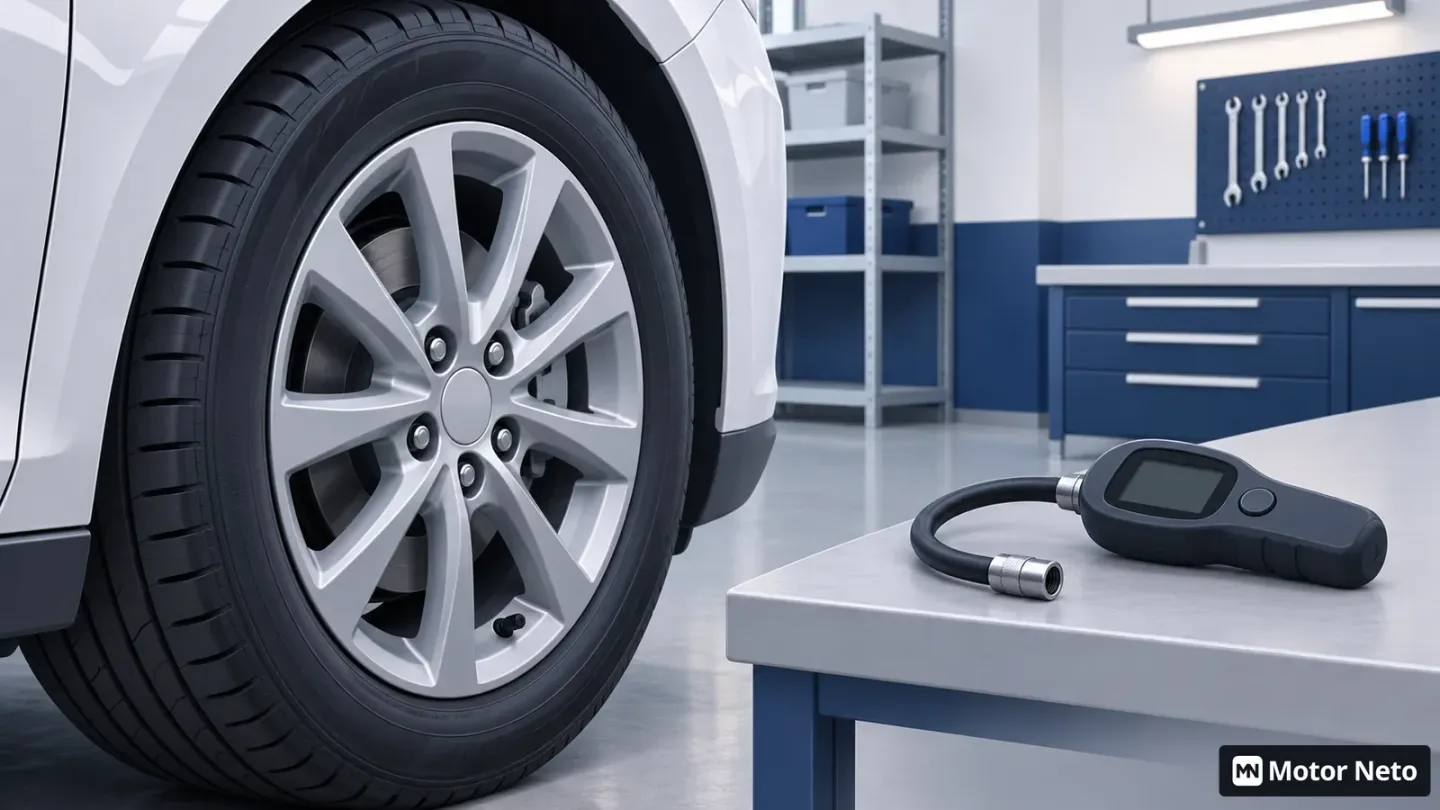
Choose tyre pressure for your own car and the tyres fitted to it, rather than using a number someone remembers from theirs. Find the manufacturer’s placard or the relevant handbook section. Match tyre size, loading condition, axle and unit before setting the equipment.
If the placard is missing or unclear, ask the importer or a tyre professional to identify the applicable instruction. There is no need to invent a temporary value just to finish the check. This guide explains how to read the information; it does not prescribe a universal pressure or explain how to repair a tyre.
Find the vehicle instruction, not a random sidewall number
Michelin’s explanation of tyre pressure says the recommended setting is usually found around the driver’s door, inside the fuel flap or in the handbook. It also distinguishes ordinary and loaded use, and front and rear axles. The actual location and table depend on the vehicle.
Take a readable photograph of the label, but check the original on the car before relying on an old picture. If tyres or wheels have been changed, confirm that the current size is covered by the applicable instructions. A number on the tyre sidewall does not replace the car manufacturer’s recommendation.
When several rows appear, do not choose the first simply because it catches your eye. Read the headings and symbols. If a passenger, luggage or speed symbol is unclear, find its explanation in the handbook before changing the pressure.
Separate front and rear axles and different loads
Write down two clearly labelled values, front and rear, only after selecting the right loading row. They may be identical or different. Do not assume the higher setting always belongs to one particular axle, or that a higher pressure is an improvement.
Check the journey you are planning: passengers and luggage, using the manufacturer’s definitions. If the table gives a fully loaded setting, also read how to return to ordinary use. Do not replace the instructed choice with an average of two numbers.
A trip carrying equipment differs from your daily drive, but that is no reason to guess. Plan the check before loading and departure. Where the table gives no clear match, obtain advice for the particular model and tyre size instead of applying general social-media advice.
Match the gauge unit to the instruction
Check whether the table uses bar, PSI or kPa, and what the gauge displays. The same pressure can be expressed by different numbers in different units. Entering a number without its unit can turn correct information into the wrong action.
If the equipment lets you select a unit shown on the placard, use it to avoid an unnecessary conversion. If conversion is needed, verify it before adjustment and write the unit beside the result. Do not rely on the position of a decimal point or on a number looking familiar.
Never copy the setting left on the petrol-station machine: it may belong to the previous car. Check the value and unit at the start, and again when moving between axles with different specified settings.
Check under the right conditions, rather than just clearing a warning
Israel’s Ministry of Education road-safety teaching material instructs drivers to check cold tyres and inflate according to the vehicle manufacturer. Plan the check under the conditions defined in your handbook. If you arrive after driving and the tyres are warm, do not release air merely to match a warm reading to a cold-tyre specification. Follow the appropriate instructions or seek professional assistance.
If the car has tyre-pressure monitoring, read its instructions separately. Resetting or acknowledging a message does not replace measurement and correction of an unsuitable condition. Do not look only for a way to switch off the lamp. For a warning, consult the guide to finding the manufacturer’s warning-light instruction and the vehicle handbook itself.
Repeated pressure loss, visible damage or unusual behaviour require professional inspection. Do not treat repeated inflation as a permanent solution or continue driving against the vehicle’s safety instructions. If you cannot check in a safe place, postpone the operation and obtain suitable assistance.
Leave yourself a useful record for next time
Keep a short note of tyre size, the selected load row, axle values and units, alongside the check date. It records what you did but does not replace rereading the instructions when conditions change. You can include the check in your maintenance routine based on time and mileage without inventing a new service interval.
Checklist before you continue
The aim is not a memorable number. It is a clear match between the instruction and your car. If one detail is missing, establish it before making the adjustment.
Found an error or outdated information? Read how we handle corrections and sources, or email us: [email protected].