

The short answer
Collect your actual car expenses and separate ongoing payments, periodic bills and economic costs such as depreciation. Do not count both principal repayments and the car's full purchase price in the same cost calculation.
Who this guide is for
Car owners and buyers who want to know how much to allocate each month and how to compare alternatives.
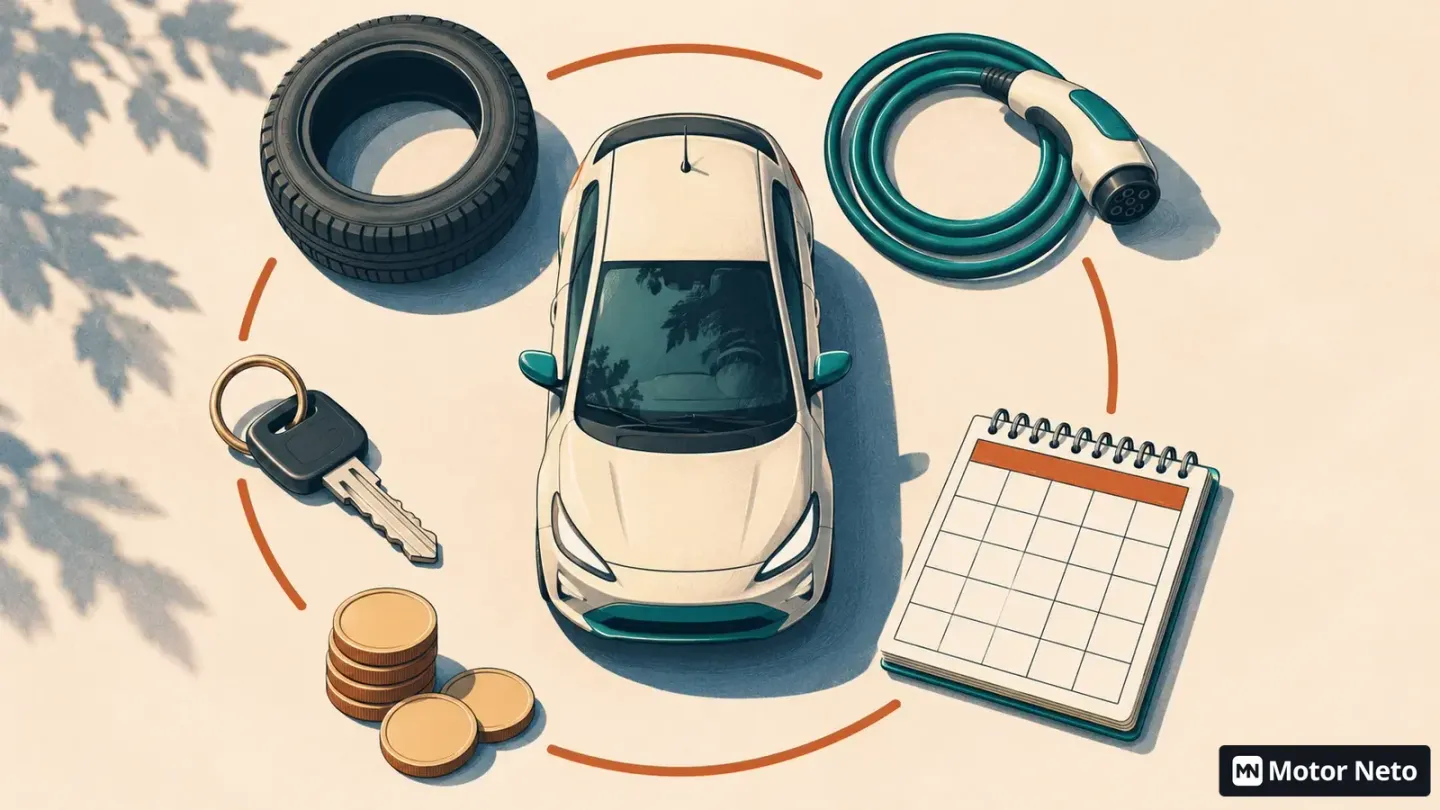
To understand what your car costs, you need to keep two accounts: how much money actually leaves your account each month, and how much ownership costs over the period. The first helps you pay on time. The second lets you compare alternatives. Loan repayments, fuel and insurance are not the whole picture, and depreciation is not a charge that appears in your banking app.
The practical approach is to collect real expenses, separate fixed costs from those that depend on use, and add items whose payment date has not yet arrived. There is no single monthly cost that fits every driver in Israel. Parking arrangements, insured drivers, the model and mileage all change the calculation, so build it around your own circumstances.
First decide which calculation you want
A cash-flow budget includes the deposit, loan payments and running expenses when you actually pay them. The economic cost of ownership includes the difference between purchase and sale prices, borrowing costs and running expenses. You can show the two side by side, but you must not add them together without checking whether the same expense has been counted twice.
If you bought the car with a loan, repaying the principal reduces the debt. It is not an additional expense on top of the car's price already included in the economic cost. Interest and fees, by contrast, are additional costs. With an arrangement involving a large final payment, even a comfortable month for cash flow does not mean the commitment is small.
Prepare two summary lines, therefore. One is the money that needs to be available in an average month; the other is an estimated annual cost based on defined assumptions. If you have balloon finance, include a source for the final payment in your cash-flow plan, even if it is not yet due.
Fixed expenses arrive even while the car is parked
Start with insurance, licensing and regular parking, if applicable. Obtain insurance quotes covering the same drivers and the same use. Separate compulsory insurance (ביטוח חובה), property damage cover and additional services, and do not compare only the total payment when the cover differs. Also check the excess (השתתפות עצמית) and possible expenses outside the premium.
The Ministry of Transport and Road Safety sets out the vehicle licence renewal process. Use the amount on the payment notice for your own vehicle licence (רישיון רכב), and keep any required roadworthiness test (טסט) charge separate. There is no uniform rate here that you should copy for every model or year of manufacture.
If you pay for parking at home or work, record it even when it appears on a separate bill. Check which expenses would disappear if you changed cars and which would remain. A fixed parking charge, for example, may be the same for two alternatives, but it still matters when comparing car ownership with managing without one.
Calculate energy costs from the quantity you paid for
For a petrol car, you can use the litres purchased and the price paid, or mileage and actual consumption over a suitable period. For an electric car, use the energy billed and the relevant tariffs, including additional charges. Do not mix consumption displayed by the car with a charging bill without checking what each figure measures.
A purely hypothetical example: 15,000 km a year at 6 litres per 100 km means 900 litres. At an assumed price of 8 ₪ per litre, the cost is 7,200 ₪ a year, or an average of 600 ₪ a month. That assumed price is not the current fuel price, and the consumption figure is not a measurement for any particular model.
For a similar calculation involving a plug-in vehicle, you need to define whether the energy quantity includes charging losses. The direct route to your own total is to collect actual bills. If you have no private charging, also include parking, subscriptions and dedicated trips to a charger, as explained in the guide to an electric car without home charging.
If you do not have a price from a receipt, the maximum price of 95-octane petrol by area and service type can serve as a clearly labelled calculation assumption, not proof of the price you will pay at a filling station.
Planned maintenance and a contingency fund are separate pots
Take the model's maintenance schedule and ask which jobs will fall within your upcoming ownership period. Obtain quotes for known work and record when it is expected based on time or mileage. Tyres, an auxiliary battery and repairs identified during an inspection should not disappear from the budget simply because you do not pay for them every month.
A contingency fund for faults is for things without a diagnosis or known date. There is no universal amount that makes every car financially safe. Set a cushion you can afford to maintain, considering the car's condition, warranty and your ability to absorb an expense. Do not present a contingency fund as though it were an evidence-based forecast of annual repair costs.
If you receive a repair quote, update the item after reading the garage estimate carefully. This avoids duplication between a repair that has already been priced and a general amount added for the same purpose. Money not spent from your contingency fund remains yours; you do not need to invent an expense to justify it.
Include the smaller journeys and your time
Toll roads, occasional parking, washes and roadside services can appear on different bills. Review a representative period, not just a month in which you barely drove. Mark an unusual expense separately so it does not automatically become a normal monthly cost or disappear from planning altogether.
Time is a personal consideration. You can record hours spent waiting to charge or at a garage without immediately converting them into money. If you do estimate the cost of time, state that it is a personal assumption. There is no reason to assign every driver the same hourly value or present every minute of charging as lost work.
Check changeover expenses too: a pre-purchase inspection, transfer of ownership (העברת בעלות), necessary accessories or professional installation of charging infrastructure. They may be one-off costs, but they are part of the choice between cars. Spread them across the ownership period only for comparison purposes, while keeping the actual payment date in your cash flow as well.
A working table that separates facts from assumptions
| Item | Source of the figure | How to record it |
|---|---|---|
| Insurance and licensing | Quote or payment notice | Annual total alongside a monthly average |
| Fuel or electricity | Receipts and bills | By period and mileage |
| Known maintenance | Maintenance schedule and quote | By expected date |
| Diagnosed repair | Detailed quote | Planned expense |
| Unknown faults | Personal budgeting decision | Clearly labelled contingency fund |
| Depreciation | Future sale scenarios | Range of assumptions |
Insurance and licensing
- Source of the figure
- Quote or payment notice
- How to record it
- Annual total alongside a monthly average
Fuel or electricity
- Source of the figure
- Receipts and bills
- How to record it
- By period and mileage
Known maintenance
- Source of the figure
- Maintenance schedule and quote
- How to record it
- By expected date
Diagnosed repair
- Source of the figure
- Detailed quote
- How to record it
- Planned expense
Unknown faults
- Source of the figure
- Personal budgeting decision
- How to record it
- Clearly labelled contingency fund
Depreciation
- Source of the figure
- Future sale scenarios
- How to record it
- Range of assumptions
Do not add a figure you do not have simply to fill every cell. Write missing, then identify which quote or check will resolve it. A partial result that makes the gaps clear is more useful than an apparently precise total built on guesswork.
After two or three months, compare the plan with the expenses that actually occurred. If your mileage has changed, update the energy item. If you discover a fixed expense that was omitted, include it going forward. The aim is not to prove that the forecast was right, but to make the budget more useful.
Checklist before you continue
The figure that matters is one you can explain: where it came from, what it includes and what change would move it. Only then can you choose where to save without hiding an expense that will arrive later.
You can fill in the fuel item using the monthly journey cost calculation based on your distance, frequency and consumption, while keeping the car's other expenses in separate categories.
Useful tools for this topic
- Regulated 95 octane petrol prices: self-service, full service and EilatSee the maximum 95 octane petrol price and its effective date, and calculate the cost of a fill-up or how many litres your budget buys.
- Fuel cost calculator for journeys, monthly spending and sharing costsCalculate litres and costs per journey, month and year, including cost per km and an equal split between those paying.
Found an error or outdated information? Read how we handle corrections and sources, or email us: [email protected].