
The short answer
Ask for an itemised explanation of the fault, procedures, parts, labour, warranty and total price. Make sure the quotes you compare cover the same work and that every change requires a recorded explanation and approval.
Who this guide is for
For anyone who has received a repair quote and wants to understand what it includes before authorising the work.
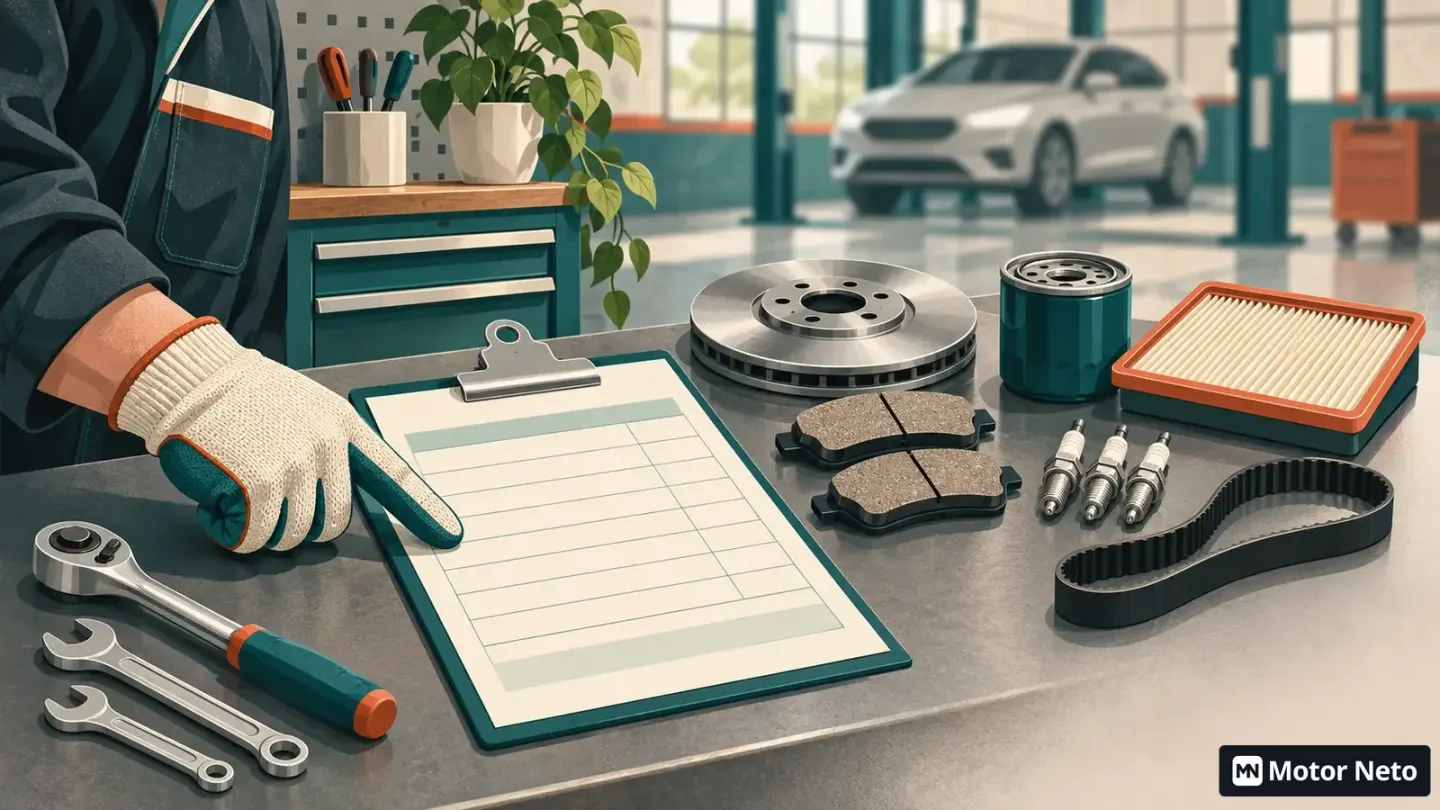
A garage quote should explain what the garage proposes to do, why, which parts it will use and how much the work will cost. The total at the bottom matters, but you can compare it only once you understand the scope of the repair. Start by separating the diagnosis, the recommended procedure and any part identified as needing replacement, then ask for a record of every change to the quote.
Two quotes can look far apart in price while describing different jobs. One may include diagnosis, the other only a part; one may cover a complete replacement, the other a more limited procedure. Before deciding which is expensive, make sure they address the same problem. This guide provides a practical way to read the paperwork and is not legal advice for a particular dispute.
Define the complaint before defining the repair
When handing over the car, describe what you notice and when: a noise on starting, a change in braking or a warning light that appears under particular conditions. Do not dictate a diagnosis just because you found a similar description online. A good description of the symptoms helps you ask later whether the proposed work actually addresses them.
Ask for the work order (הזמנת עבודה) to reflect your complaint and what you initially authorised. If you authorised diagnosis only, put that in writing. Establish the diagnostic charge in advance, what it includes and what happens if you choose not to have the repair carried out there. An inspection that does not result in a part being replaced may still be chargeable work, depending on what was agreed.
If the problem occurs only occasionally, bring evidence gathered safely, such as a photograph taken after stopping or a record of the time and conditions. Do not try to reproduce a dangerous fault to prove it exists. If a warning light is showing, the relevant safety instruction takes priority over discussing the price.
Read the quote in four layers
Start with the procedures: what will be dismantled, checked and replaced. Then move to the parts: their identification, manufacturer and type where relevant. In the third layer, check the labour, hours and pricing. In the fourth, check the warranty, additional charges and overall total. Ask for wording you can understand without knowing professional abbreviations.
Section 132 of the Licensing of Services and Professions in the Vehicle Industry Law, in the version published in 2016, lists information to include in a garage quote, such as procedures, expected labour hours, automotive products, warranty and an itemised breakdown of payments. It provides a useful basis for questions about an incomplete quote; in a dispute, the current law and documents applicable to the case need to be examined.
Ask for a price including taxes and an explanation if any amount is only an estimate. An open-ended item is not necessarily a problem, but you need to know what will allow it to be finalised. If dismantling is needed to understand the problem, you can first agree to a defined diagnostic stage and ask the garage to return to you with its findings.
A part's price does not identify the part
Ask which product is being offered and whether a suitable alternative exists. Whether a part is genuine, suitable, of adequate quality and covered by a warranty are questions to consider together. Do not assume a cheap part is necessarily unsuitable, or that the word genuine is enough without identification. Ask for the quote to describe what will actually be supplied.
If a reconditioned or used part is offered, insist that this is stated and that the warranty is explained. Check whether the price depends on returning the old part and what that condition means. You do not need to decide engineering suitability yourself; that is a question for the professional, who should explain the alternatives and their limitations.
Check units and quantities too. A price per item, per pair or per kit is not the same price. Materials may be listed in a particular quantity, so it is important to know what the amount includes. If descriptions are unclear, ask for the item to be broken down into products and procedures rather than accepting a general heading such as major service.
Separate immediate needs from recommendations for later
Ask the garage to divide its findings into categories: what requires attention for safety reasons or under the manufacturer's instructions, what relates to the complaint that brought you in, and what is recommended for future planning. You do not need to diagnose the car yourself, but you can ask why and when each item is needed.
| Wording in the quote | A useful question to ask |
|---|---|
| Assembly replacement | What finding leads to replacement, and what does it include? |
| Scheduled service | Which item in the maintenance schedule does this correspond to? |
| Replacement recommended | How urgent is it, and what is that assessment based on? |
| Addition after dismantling | What is authorised now, and when will an updated quote be provided? |
| Labour and materials | Which procedures, quantities and parts are included? |
Assembly replacement
- A useful question to ask
- What finding leads to replacement, and what does it include?
Scheduled service
- A useful question to ask
- Which item in the maintenance schedule does this correspond to?
Replacement recommended
- A useful question to ask
- How urgent is it, and what is that assessment based on?
Addition after dismantling
- A useful question to ask
- What is authorised now, and when will an updated quote be provided?
Labour and materials
- A useful question to ask
- Which procedures, quantities and parts are included?
If you are told the car is unsafe to drive, do not try to test that by taking it for a drive yourself. You can arrange a second opinion safely and in coordination with those involved. Cost considerations do not outweigh the need to address a dangerous condition, but they do justify asking for a professional explanation and clear paperwork.
Compare quotes without overlooking their differences
To obtain another quote, provide the same description of the problem and the relevant information. If the second garage wants to carry out its own inspection, establish the charge and what you will receive. You should not expect a professional to commit to a diagnosis they have not made simply to produce a figure for comparison.
Compare the parts, scope of work, warranty and planned timescale. A lower price may include fewer procedures, while a higher price does not prove that the offer is better. Ask about parts availability too, and how you will be updated if the car stays at the garage beyond the date you were given.
Distinguish between a garage licensed by the Ministry of Transport and Road Safety (מוסך מורשה) and an authorised service garage for a particular importer. Check its licence and suitability for the work required in the official register. If the repair may be covered by a warranty or recall (קריאה חוזרת), clarify this before approving an ordinary paid repair, using the documents and the appropriate organisation.
Also ask whether there is a storage charge or another fee if the car remains there after the work is completed, and when that condition takes effect. This does not mean every garage charges such a fee. It is a point worth settling beforehand if you are travelling abroad, waiting for another approval or unable to collect the car on time.
Agree in advance how additional work will be authorised
Record a contact person and a channel for approving additional work. Ask to receive a description, a reason and a price before deciding, and keep the updated quote. A brief call during a busy day can lead to misunderstanding; a clear document lets you revisit what was approved without relying on memory.
When collecting the car, compare the invoice with the latest quote. Ask for details of the work completed, the warranty and any instructions for what to do next. If the symptoms that brought you in are still present, record this and contact the garage with the paperwork. Do not assume that every recurrence of a symptom automatically proves the same fault, but do not lose the continuity of your records either.
Add the expense to your ownership budget and keep the invoice with the car's records. Compare maintenance work with the servicing schedule by time and mileage too, so your next decision starts with information already gathered.
Checklist before you continue
A good quote does not have to be short. It needs to let you understand the decision you are authorising and what you will receive as a result.
Found an error or outdated information? Read how we handle corrections and sources, or email us: [email protected].