
The short answer
Regulation 356(d) includes the windscreen, rear windscreen and windows beside the front seats in its coating prohibition. Rear side windows are not included in that list, but the requirements for sound condition and clear visibility also apply to them. A product's tint percentage is not permission to coat a prohibited window.
Who this guide is for
For vehicle owners in Israel planning to order window coating, and anyone assessing a used car with dark windows.
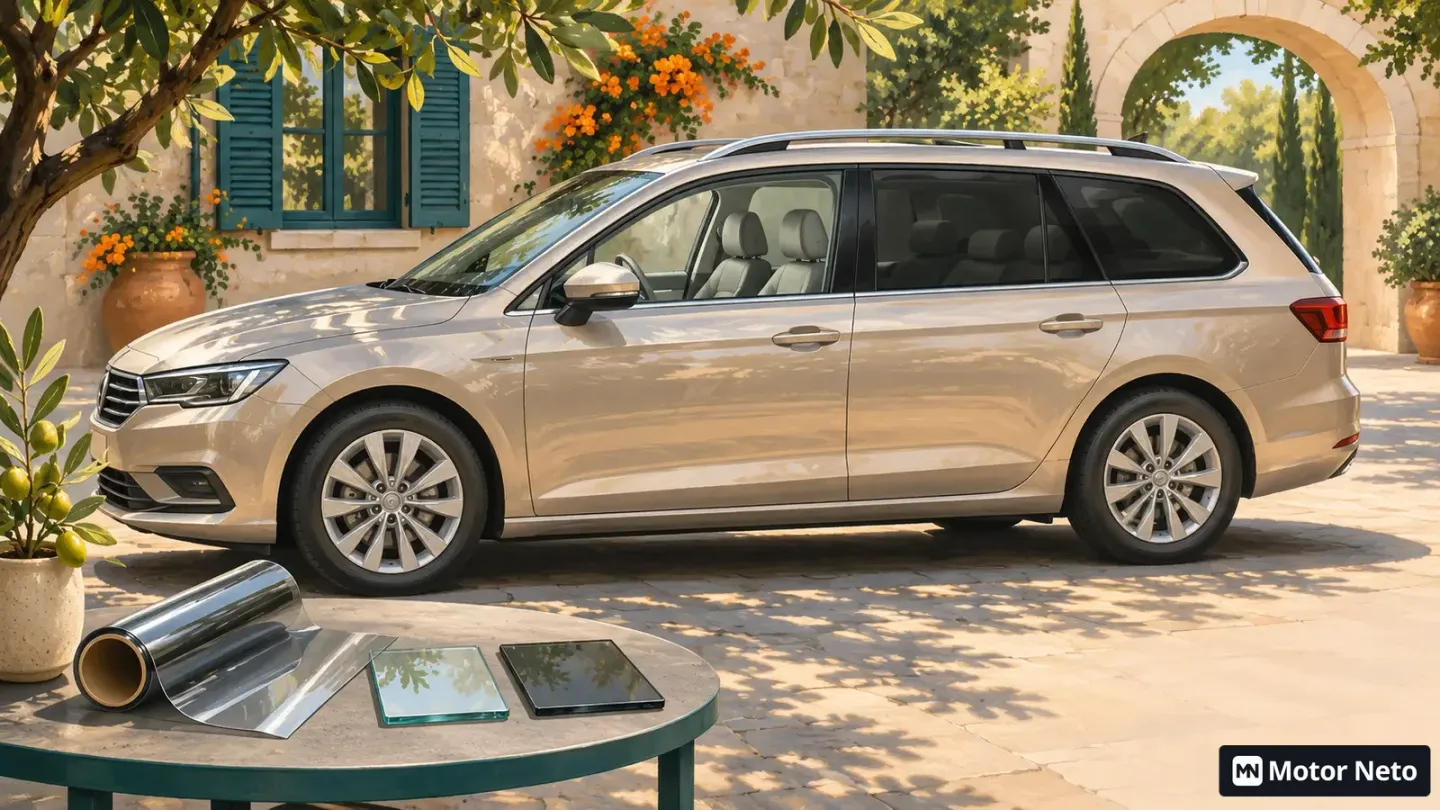
For car window coating in Israel, the first question is which window you intend to coat. Regulation 356(d) (תקנה 356(ד)) refers to the windscreen, rear windscreen and windows beside the front seats, and states that a vehicle with these windows coated will not be registered or have its licence renewed. Rear side windows are not included in that prohibition list, but the requirement for sound condition and clear visibility remains relevant.
An offer to tint “rear windows” therefore needs clarification: does it mean the two side windows at the back, or also the large rear windscreen above the boot? That small difference in wording changes the work you may order. This guide concerns private cars in civilian use and presents general legal information based on sources checked as of 10 November 2026.
What the regulation says about each part of the car
The Israel National Road Safety Authority publishes Regulation 356 on tinted windows. Alongside the coating prohibition for the listed windows, subsection (a) requires windows to be in sound condition and allow a clear view through them. These two parts should be read together, rather than looking for a single percentage that resolves every case.
| Part of the car | What the rule means when ordering coating |
|---|---|
| Windscreen | Included in the regulation's coating prohibition |
| Driver's window and window beside the front passenger | Included in the coating prohibition |
| Rear windscreen | Included in the prohibition, even when called a rear window |
| Side windows behind the front seats | Not in the prohibition list, subject to the general requirements |
Windscreen
- What the rule means when ordering coating
- Included in the regulation's coating prohibition
Driver's window and window beside the front passenger
- What the rule means when ordering coating
- Included in the coating prohibition
Rear windscreen
- What the rule means when ordering coating
- Included in the prohibition, even when called a rear window
Side windows behind the front seats
- What the rule means when ordering coating
- Not in the prohibition list, subject to the general requirements
A Government Vehicle Administration specification for installing coatings also distinguishes between the windows. It restricts tinting work with coating to the side windows behind the driver and front passenger. This reinforces the distinction in practice; it is not private permission obtained through a government tender.
If the vehicle has an unusual layout, such as a long side window or an additional small window, do not decide from a photograph of another car. Show the installer your vehicle and ask for every pane to be expressly identified in the quotation. If doubt remains about a particular window, seek professional clarification before installation.
A tint percentage does not replace permission to apply coating
Section 356(d) is not written as a table of light-transmission percentages for coating each window. It addresses the coating itself on the listed windows, whether sprayed, adhered or applied in another way. A product described as light, ceramic or heat-filtering therefore does not gain an exception to the prohibition simply from that label.
The Israeli sources examined did not establish a uniform percentage threshold that can be presented here as permission to coat a windscreen or front side window. A number from a foreign website does not answer the Israeli question either. If you are shown an approval, ask who issued it, which product and vehicle it concerns, and whether it covers the proposed use or merely a property of the material.
For rear side windows, do not turn the absence of that particular prohibition into a recommendation always to choose the darkest coating. Ask the supplier to explain exactly what the advertised percentage measures and provide a clear specification. There is no need to choose on the basis of a trade name or a sample that looks impressive under bright shop lighting.
Original tinted glass and subsequently applied coating are different situations
A car may arrive with tinted glass as part of its original specification. Its appearance does not establish that material may be applied to the same window on another vehicle. Equally, not every piece of glass that looks dark should be deemed an improper coating. You need to identify what is actually fitted and the vehicle's approved specification.
If you are buying a used car, ask whether coating was applied after delivery and to which windows. Request an invoice or records if available, and ask a professional inspector to distinguish the glass from any addition applied to it. This is a focused question that can be included in the sequence of checks when buying a used car.
The word “tinting” does not by itself tell you how the work was carried out either. Do not assume that a different method, or a product without adhesive, falls outside the law. The regulation is broadly worded concerning coating, and the glazing itself has suitability requirements. This guide does not approve a particular method or product.
Define the purpose before requesting a quotation
Write down what you want: privacy for rear passengers, a change in appearance or a response to perceived heat. These are different aims, so ask the supplier to distinguish between the product's properties rather than explain all of them with the word “quality”. Require a specification for every quantitative claim presented.
If heat reduction or radiation filtering is promised, ask for the product's test document and the conditions in which the figure was measured. No cabin-temperature promise or brand comparison is offered here. Even a genuine technical figure must relate to the specific product listed in your quotation.
When choosing coating for rear side windows, ask for a demonstration from inside the car in the context of your own use. You should be able to assess visibility in low light too, not merely look at the car from outside. This is a practical selection recommendation, not a test that replaces a legal requirement or professional compatibility assessment.
What the work order should include
An orderly quotation should identify the windows, coating product and warranty. The phrase “full package” is not enough, because it does not make clear what is being coated and what will stay as it is. Ask for an itemised description even if the installer says this is how they work on every car of that type.
Establish what happens if a defect in the product or work is found: who examines it, what the repair involves and what the warranty terms are. Ask separately about liability for damage that might occur during application or removal, particularly where original equipment is near the glass. No instructions for removing coating yourself are provided here.
If the car is still under warranty, or this is an accessory you want included in your insurance cover, complete the insurance and warranty enquiries before making a change. An installer's answer about film quality is not an answer from the insurer or vehicle warranty provider. Keep the correspondence with the order.
A previous roadworthiness test pass does not approve the coating
Regulation 356(d) expressly concerns registration and licence renewal. Do not rely on a story about a similar car passing its annual roadworthiness test (טסט), or on a promise that the coating goes unnoticed. The exception in the regulation for vehicles in military use is also a defined exception, not general permission for a civilian car.
If it turns out that the car has coating that does not meet the requirements, seek professional attention and clarification of the next steps. Do not plan temporary removal only for the test and reapplication afterwards. The aim is a vehicle suitable for use between licensing tests too. For the distinction between product approval, installation and registration, read the guide to vehicle upgrades in Israel.
Checklist for ordering window coating
Checklist before you continue
When collecting the vehicle, compare the work with the order. Make sure only the agreed windows were treated and that you received the product's use and care instructions. You can then enjoy your chosen change without leaving a basic dispute about what was ordered, what was installed and what was permitted.
Found an error or outdated information? Read how we handle corrections and sources, or email us: [email protected].