
What this overview is based on
EV Edge terms illustrate the billing structure. The checking process and numerical example are editorial explanations, not a tariff.
Bottom line
Matching documents and components is more useful than comparing two amounts without context.
The short answer
First match the receipt and payment to the same charging session, then calculate each component separately. Check the status of the card entry and keep the documents before concluding that a charge is duplicated.
Who this guide is for
For electric-car owners in Israel who want to understand a public charging bill or investigate a payment discrepancy.
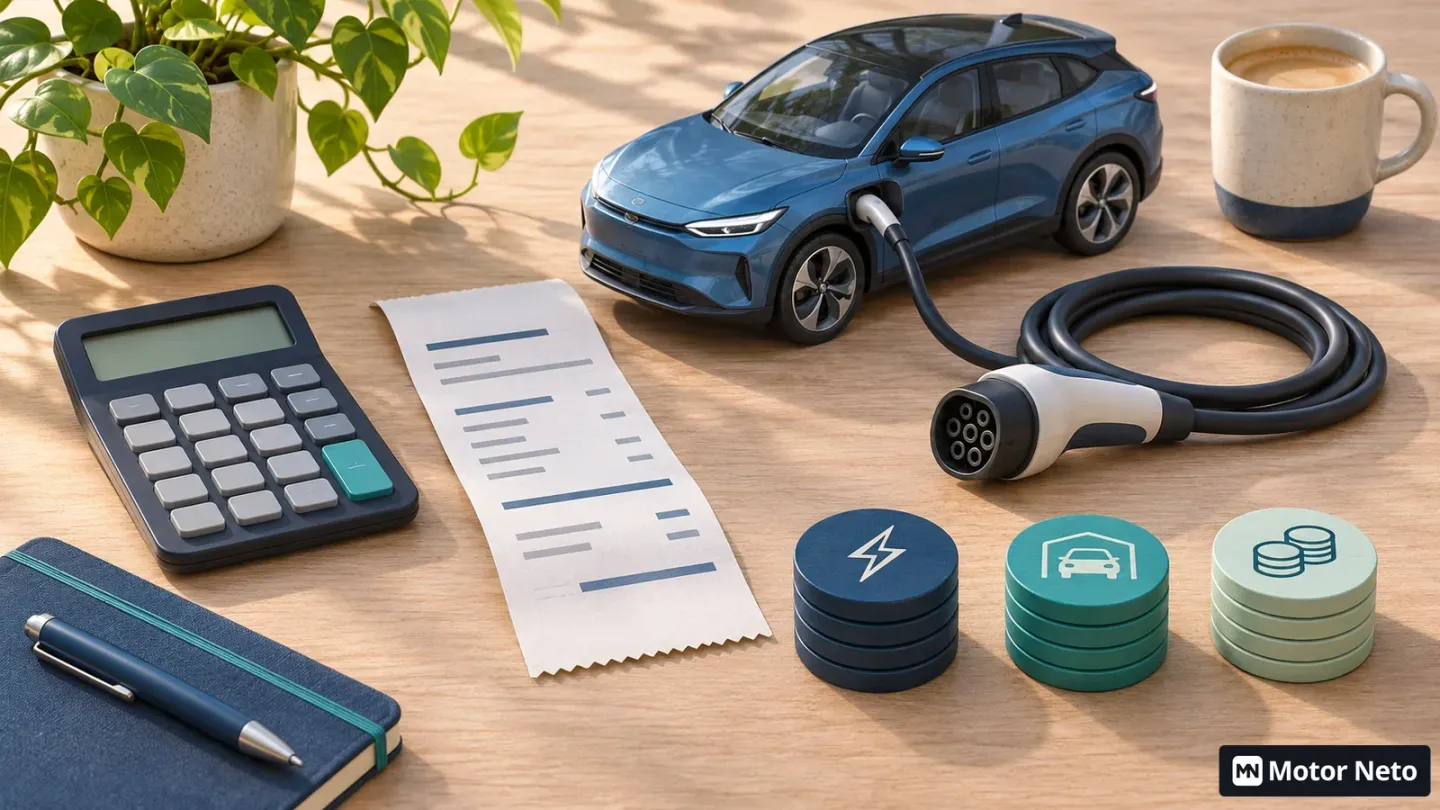
To check a public charging bill, start with one session rather than the monthly total. Match the charger number, session time, transaction details and final card charge. Then separate the electricity you bought from every additional payment. This makes it possible to identify what needs explaining without assuming every difference is a mistake, or accepting an unclear amount simply because the car received a charge.
The number shown in your card app may not tell the whole story. Check what kind of entry it is, which session it belongs to and whether a final document has been issued. This guide deals with a bill already incurred. For planning a charging routine, start with owning an electric car without home charging.
Identify the transaction before calculating its price
Open the charging history and receipt side by side. Record the date, location, charger or connector identifier, start and finish times and transaction number. A shopping centre's name is not enough if you used two chargers there or restarted an interrupted session. Two sessions on the same day may also produce separate amounts.
Keep the original document and create a simple working record beside it: what was displayed before starting, what was recorded at the end and what was charged. Mark missing information as missing. Do not reconstruct a price from memory or apply today's displayed rate to last week's session. You can ask the operator for the tariff breakdown assigned to that particular transaction.
For example, EV Edge's service terms distinguish charging, connection and overstay fees, and temporary card authorisations from actual charges. This is one service's structure, not a price list for every Israeli network.
In practice, read the session components and payment status together. A photograph of one price or a card notification does not replace a breakdown identifying what was paid. This guide provides neither a recommended tariff nor a promise of a fixed cost.
Rebuild the total one component at a time
Check the energy line first: the quantity in kilowatt-hours multiplied by the unit price recorded for the transaction. If the bill has separate periods or rates, calculate each line separately. Do not multiply the entire quantity by one price until you know that this is how the bill was calculated.
Then review connection, time, parking, overstay and discount entries, if listed. A component not shown is not necessarily zero: it may be included, billed separately or require clarification. Do not add tax again to a price described as tax-inclusive. Check the document's definition rather than your assumption.
The following is an arithmetic example only. These are not EV Edge's rates or any other operator's tariff:
| Example component | Calculation | Amount |
|---|---|---|
| Energy | 18 kWh multiplied by 2 ₪ | 36 ₪ |
| Connection | Illustrative amount | 3 ₪ |
| Itemised additional charge | Illustrative amount | 5 ₪ |
| Total | 36 plus 3 plus 5 | 44 ₪ |
Energy
- Calculation
- 18 kWh multiplied by 2 ₪
- Amount
- 36 ₪
Connection
- Calculation
- Illustrative amount
- Amount
- 3 ₪
Itemised additional charge
- Calculation
- Illustrative amount
- Amount
- 5 ₪
Total
- Calculation
- 36 plus 3 plus 5
- Amount
- 44 ₪
If the card amount in this example is 44 ₪, dividing it by 18 gives the average cost of the whole transaction per kWh. It does not mean the energy tariff exceeded 2 ₪. That distinction is useful when comparing expenses, but does not establish whether the additional charge was justified.
Battery percentages are also not the same unit as the kWh on a bill. Do not replace the recorded quantity with a calculation based only on percentages and a capacity figure from an advertisement. If a difference appears unusual, request the session and measurement records behind the bill. You need not decide in advance whether the cause lies with the car, charger or record keeping.
Separate charging time, card authorisation and final payment
Arrange the event on a timeline: start, charging stop, disconnection, departure and appearance of the charge. You will not always have every time. The purpose is to identify the missing question, such as the point from which a time-based fee was calculated, rather than inventing a time to complete a table.
If two entries appear on the card, check the description and status of each with the card issuer and operator. Ask whether they represent two final charges, a temporary entry and a charge, or different transactions. Do not automatically add every entry to the amount paid, but do not assume an unexplained entry will disappear either.
A discount or in-app balance needs another reconciliation. Record how much was deducted from the balance and how much was paid by card, so you do not count the same electricity twice. Also check whether the benefit applied to the whole transaction or one component. There is no need to estimate a promotion's value from its marketing headline when you can request the actual breakdown.
Parking may appear on a separate document. For your car ownership budget, add the relevant costs of the visit, but retain separate bills so you know whom to contact about each component. Calculating an overall planning cost and checking one supplier's charge are different tasks.
Ask a question that can be investigated
An effective enquiry includes the transaction number, date, charger identifier and exact difference. You could write: the itemised components add up to this amount, but the card shows another amount; please provide a breakdown and explanation. If the question concerns time, give the times you know and request those missing. Avoid a general statement that you were overcharged when you can identify the disputed line.
Send only the necessary documents through the official service channel. You do not need to send a full card number or post personal documents in a group. Keep the enquiry reference, date and reply. If a correction is promised, track the actual credit and match it to the original transaction too.
Checklist before you continue
The check is complete when every component has an explanation and every payment matches a record. If a difference remains, keep it as an open question supported by documents, rather than treating it as an accepted cost or a proven mistake.
Found an error or outdated information? Read how we handle corrections and sources, or email us: [email protected].