
The short answer
kWh measures energy, while kW measures the rate at which it is transferred. Charging time depends on the energy missing, the power the car and charger allow throughout the stop, and the target charge level. A figure such as 10% to 80% in 30 minutes applies to stated conditions and does not guarantee the same result at every charger.
Who this guide is for
For readers comparing an electric car or a range extender vehicle who want to understand charging specifications before buying or planning a journey.
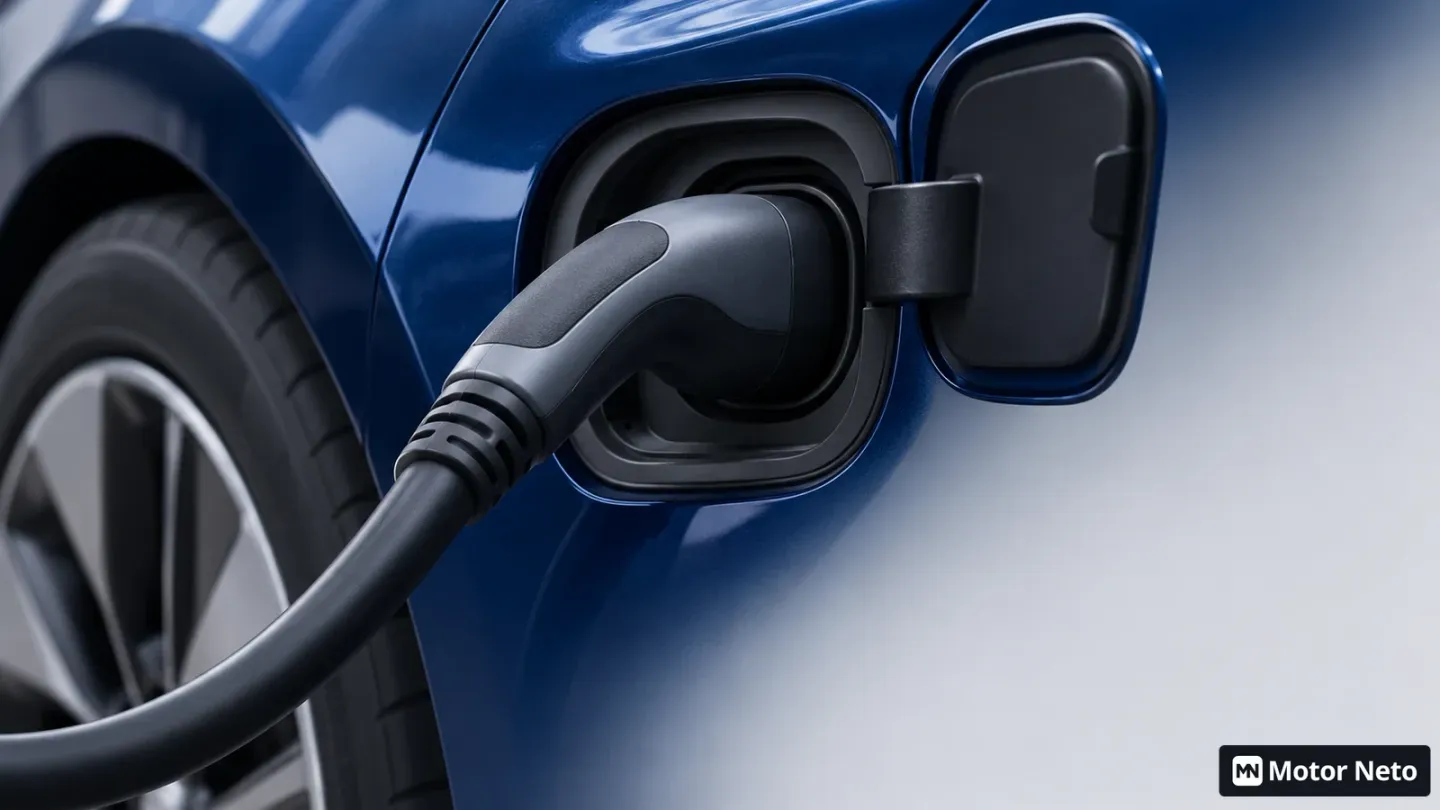
To understand how long an electric car will spend charging, connect three figures: how much energy is missing from the battery, the rate at which the car and charger can transfer it, and the charge level you want to reach. kWh describes energy, kW describes power, and a time such as 30 minutes refers to test conditions and a defined charging window. None replaces the others.
This distinction matters before buying. A larger battery does not necessarily charge faster, and a powerful charger does not guarantee that the car can use its full output. The examples here come from Israeli importer publications checked on 13 November 2026. They teach specification reading, rather than recommend a model.
kWh is the quantity; kW is the rate
Battery capacity is expressed in kilowatt hours, or kWh. It describes the energy the battery can store under the stated definition. Look for whether it is gross capacity or net usable capacity. When calculating the energy added between two charge levels, do not substitute one for the other without knowing what the manufacturer published.
Charging power is expressed in kilowatts, or kW. This is the rate of energy transfer at a particular moment. Energy equals power multiplied by time: with constant power and time measured in hours, the result is kWh. If power changes during charging, you need its average over that period, not a peak briefly shown on a screen.
Both consumption and battery size may use kWh, but they answer different questions. kWh per 100 km describes consumption; a battery's kWh figure describes capacity. To translate energy into kilometres, divide it by consumption per kilometre, matching the units and the driving conditions.
With AC charging, the charger inside the car has a limit too
AC means alternating current. In this type of charging, common at home and work, the car's onboard charger converts it to direct current suitable for the battery. The AC entry in the specification therefore describes a limit of the vehicle itself. Increasing the charging point's power does not bypass it, and the electricity connection and actual available power must also be suitable.
For example, the Israeli XPENG L03 configurator published by Carasso Motors lists AC capability of up to 11 kW for the EV RWD Standard Range and EV RWD Long Range. The REEV PowerX Long Range, which has a range extender, is listed at 6.6 kW. These are the three versions' figures on the check date, not a promise for every future car bearing the same name.
A charging point capable of supplying 11 kW will therefore not make the REEV version accept 11 kW on AC. Conversely, different batteries need different amounts of energy, so power alone does not establish which version will reach its target first. The differences are detailed in the news article about XPENG L03 versions in Israel.
Ask the importer to specify the connection conditions needed for the declared power. Separately establish what is available where you park, including load management limits. Designing and installing a charging system is work for an electrician with the appropriate licence, not a task to undertake from a buying guide.
With DC charging, the station's number is not a promised rate
DC means direct current. The station performs the conversion outside the vehicle, and energy reaches the battery without using the onboard charger's AC conversion path. There is therefore no contradiction between relatively low AC power and high DC power in the same car.
There are two different ceilings: what the station can supply and what the car is prepared to accept. The lower limits the rate, but even that does not promise the stated output. Available power may vary because of site power sharing, voltage and current limits, battery temperature and its state of charge.
Manufacturers usually state maximum DC power. During charging, power can rise and fall under the battery's control system. Two cars with the same peak can therefore take different times over the same charge window. Compare times for the same window, test conditions and energy added, rather than just a large number beside DC.
Why 10% to 80% is quoted, and what a 30 minute figure leaves out
The window from 10% to 80% demonstrates a substantial energy addition without including the final charging stage, when the rate falls as the battery approaches full. The battery management system limits the rate to maintain suitable operating conditions for the cells. Slowing does not always start at exactly the same percentage, and no single curve fits every model.
You therefore cannot extend a 10% to 80% time linearly to calculate the time to 100%. Nor is this a blanket recommendation to limit every car to 80% in daily use: the target follows the manufacturer's instructions for the particular battery and use.
A useful example is the Kia EV5 Premium LR and Executive LR imported by Talcar. The model page states 30 minutes from 10% to 80%, with a note specifying a 150 kW DC station. In the importer's technical specification, the same window and time appear beside a 350 kW charger. Both documents were checked on 13 November 2026.
These two station ratings are not two acceptance power figures for the car. They do not establish that the vehicle charges at 350 kW, or that both stations will necessarily deliver the same result. Ask Talcar to clarify the declaration's conditions in writing for the version ordered. Background appears in the Kia EV5 Israel launch article.
Battery temperature, the charge level at arrival and the station's available capability need to match the declaration's conditions. Battery preconditioning may help in a vehicle that supports it, following its instructions. The stated time also does not necessarily include queuing, entering the car park or activating the charger.
Worked example: from energy to time and added range
Take the BMW i3 40 xDrive Pure, using Delek Motors' specification on the check date. It lists 82.8 kWh net capacity, AC up to 11 kW, DC up to 300 kW and a declared 21 minutes from 10% to 80%. The version's declared WLTP range is 702 km. Prices and versions appear in the article on the BMW 3 Series and i3 in Israel.
This is an arithmetic estimate, assuming the charge percentage approximately represents the same fraction of usable capacity. The difference is 70% of the battery: 82.8 multiplied by 0.70 equals 57.96 kWh, or about 58 kWh added to stored energy.
If that energy is added over 21 minutes, or 0.35 hours, the calculated average power stored in the battery is about 166 kW. This is not a charging measurement, nor is it the same as power at the station's output, which also covers losses and auxiliary consumers. Above all, it shows why you should not calculate the entire stop using the 300 kW peak.
On AC, dividing 57.96 by 11 gives about 5.27 hours, roughly 5 hours and 16 minutes. This is an ideal lower bound at constant power with no losses. In practice, more energy must come from the station than is stored in the battery, and lower power extends the time. It is not an AC time promised by the importer for this window.
For a rough range translation, 70% of 702 is about 491 km, solely in terms of the declared WLTP range. This does not promise that distance after the stop. Actual consumption, weather, speed and route change the result. For a real journey, use consumption appropriate to the car and route and retain a reserve, without turning laboratory range into an arrival plan.
Match the figures to your driving routine
At home, the question is how much energy you can replenish while the car is parked anyway. On the road, it is how much energy you need to reach the next station and how much time that requires under available conditions. Readers considering an electric car without home charging should pay particular attention to regular weekly stops, not just a rare long journey.
Alongside time, estimate electricity expenses with the home charging cost calculator, using the tariff and charging loss assumptions you enter. The calculator does not measure the car's charging curve. Before buying, turn your questions into a short document the importer can answer precisely.
Checklist before you continue
With energy quantity, rate and timing conditions together, you can read the charging entry as a basis for planning rather than a promise of a fixed length stop.
Found an error or outdated information? Read how we handle corrections and sources, or email us: [email protected].