
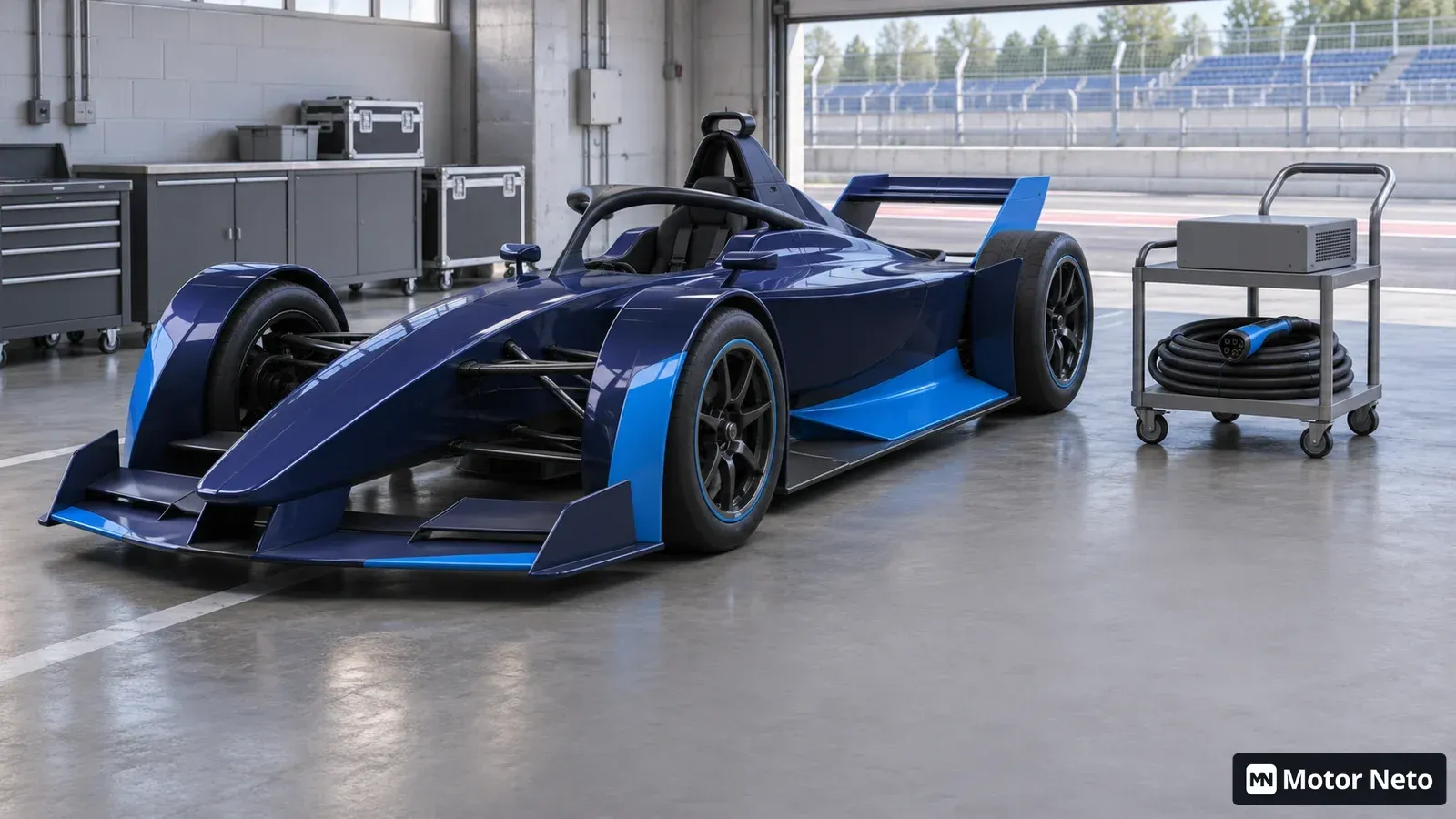
Opel arrived at Jarama near Madrid this week for its first collective test against the full Formula E field with the GSE 27FE. According to the manufacturer’s 16 November announcement, the preparation week runs until 20 November and includes six sessions. Alongside the car, the new team is testing how to work together under conditions it will encounter in racing.
The next stage is more than another chance to set a quick lap. Wednesday and Friday include planned simulations of two formats: E-Prix with a mandatory charging stop, and the shorter E-PrixUnleashed. A programme that looks orderly on paper must now function with all the competitors sharing the circuit.
Six sessions, not a continuous week of racing
Opel’s published test plan puts running on Monday, Wednesday and Friday, with three hours each morning and three each afternoon. That totals 18 scheduled track hours. The date range should therefore not be read as a race or official session taking place every day.
Formula E’s timetable places the next two sessions on 18 November, from 09:00 to 12:00 and 14:00 to 17:00 local Madrid time. In Israel those are 10:00 to 13:00 and 15:00 to 18:00. These are scheduled hours, not a promise of an Israeli broadcast or of every car running throughout.
Opel has also confirmed the drivers’ numbers: Théo Pourchaire will use 12 and Mitch Evans 4. The numbers make the two cars easier to follow, but one driver’s result does not summarise the team’s work. Each car can serve a different part of the test programme.
A charging stop tests more than power
Team principal Jörg Schrott describes a gradual move from reliability checks towards race performance, covering both the car and team processes. The announcement provides no success ranking and does not claim that Opel has already gained an advantage over its rivals. It sets out what the team intends to examine.
Formula E’s accompanying explanation of testing stresses running two cars, coordinating personnel and rehearsing procedures for changing situations. In that context, a charging stop is a sequence of operations, not merely an electrical figure. What happens before connection and after disconnection also belongs to the rehearsal.
This suggests a cautious reading of the timing sheet: it can show who was fast in a particular session, but not, on its own, what was being tested or how much of the programme was completed. The championship organiser also cautions against treating test times as a direct forecast of the season. They are not a competitive result that establishes who will win in Mexico.
What the circuit can teach, and what remains a showroom question
For enthusiasts in Israel, the week offers a way to follow a familiar brand entering a new electric racing environment and to see drivers and crew adapting together. The latest announcement places the 2027 season opener in Mexico City on 16 January, following the postponement of the Jeddah event previously intended to open it. The updated calendar matters more than older publicity.
An interest in engineering does not require turning the racing car into a purchase recommendation. As the story of Mazda MX-5 design choices illustrates, it is possible to understand a car’s priorities without claiming personal driving experience. Opel’s test concerns its racing car and team, not a comparison of its road cars in Israel.
Anyone choosing between hybrid, plug-in hybrid and electric power for their routine still needs to assess the local vehicle, their use and their charging arrangements. A track charging stop is not a home-charging time. What is worth looking for later this week is reporting on completed work and rehearsals alongside the lap times, rather than a consumer promise that was never made.
Found an error or outdated information? Read how we handle corrections and sources, or email us: [email protected].