
Mercedes-Benz announced plans on 16 November to expand its assistance systems in Germany and the US, including hands-free motorway driving and point-to-point support in urban areas. The central condition sits alongside the capability: the driver must monitor traffic, remains responsible for driving and must be ready to intervene at any time. This is not permission to turn attention to another activity.
For somebody choosing a car in Israel, it is a technology development worth understanding, but not an equipment item that can automatically be added to a local order. Mercedes’ announcement concerns specified markets and rollout stages. It gives neither an Israeli launch date nor an Israeli price for the new systems.
Motorways and cities have different rollout tracks
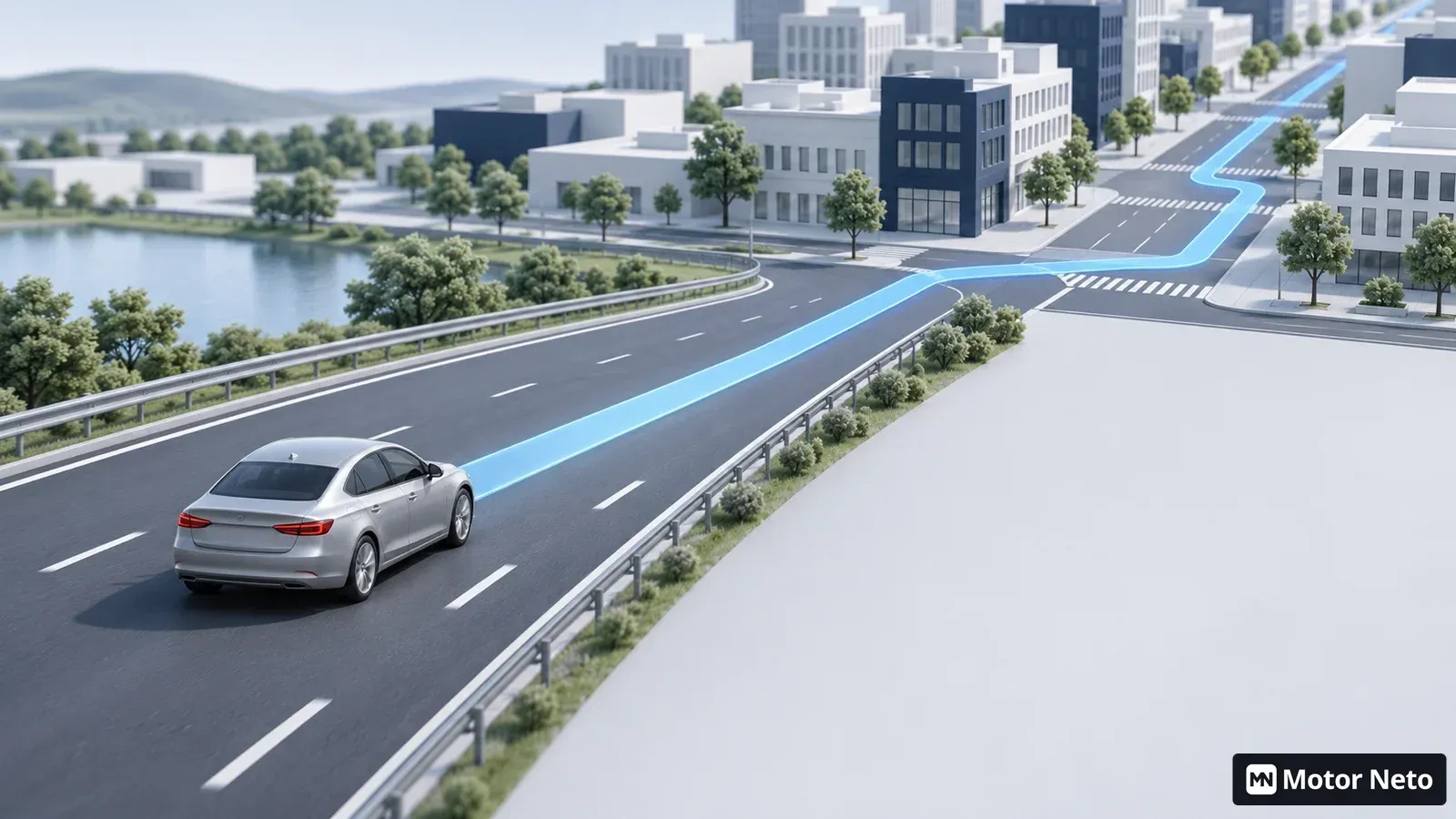
The company says Hands-free Assist permits hands to be taken off the wheel on motorways at up to 130 km/h where system and operating conditions allow. Proactive Lane Change Assist adds lane changes initiated and carried out without the driver separately triggering or confirming every manoeuvre. The manufacturer gives overtaking and following a route towards an exit as examples.
That stated maximum speed is not a promise that the system works on every road or in every situation below it. Even where a manoeuvre proceeds without repeated confirmation, supervision remains necessary. Who performs the manoeuvre and who must watch the surroundings and be ready to take control are separate questions.
Mercedes plans motorway assistance in Germany by the end of 2026, followed by a nationwide US rollout during 2027. Separately, MB.DRIVE ASSIST PRO, intended to provide point-to-point assistance including in urban settings, is planned for Germany and the US in the first half of 2027. These are manufacturer plans, not confirmation that every car bearing the badge already has the features.
Early access does not mean access for every customer
An early-access programme for selected customers is due to begin in December 2026. In Germany it is intended to bring urban assistance to Stuttgart and Munich; in the US it starts in California and also includes hands-free motorway assistance. Mercedes says the programme is intended to gather feedback before wider deployment.
That distinction matters when reading a launch headline. Participation in a limited programme, operation in a particular city and rollout across a market are not the same milestone. A video showing a function in one city does not, by itself, establish anything about a car ordered in another country.
The company says customers with eligible vehicles will be able to receive the functions through an over-the-air update after rollout. Availability varies by model and market, it stresses, with further model and pricing details to come before the respective launches. There is therefore no basis for assuming that every car with a similar screen, system name or app connection will qualify.
What to establish before factoring the promise into a purchase
In your car requirements based on budget and daily use, separate a capability present in the particular car at handover from one on a roadmap. Ask for the exact package name and version, its operating conditions and what the order documents promise. An answer about the global plan is not an answer about local eligibility.
If a seller mentions a future update, ask them to distinguish hardware compatibility, software, market and payment. These are questions to resolve, not a claim that the update will cost money in Israel or never arrive. The present announcement simply does not supply those local details.
Even after an active system is delivered, retain the instructions for that vehicle version. Finding the manufacturer’s instruction when a warning appears matters more than relying on a familiar marketing name. Mercedes’ announced development concerns how much assistance the car can provide; it does not erase the distinction between helping a driver and removing the need for their supervision.
Found an error or outdated information? Read how we handle corrections and sources, or email us: [email protected].