
Israel registered 277,880 new vehicles between January and the end of October 2026, approximately 6.3% more than in the same period of 2025. Yet overall growth conceals a sharp change in the market’s composition: battery electric registrations fell, while plug-in hybrids more than doubled. For anyone choosing a car now, the figures help explain the market but do not establish which powertrain suits them.
The powertrain report from the Israel Vehicle Importers Association (איגוד יבואני הרכב) is dated 2 November 2026 and covers registrations through 31 October. October itself added 22,657 registrations, calculated by subtracting the cumulative September report from October’s. That represents approximately 17% growth over October 2025, calculated in the same way. These are registration figures, even when commonly described as deliveries.
More registrations, but not just private buyers
The association’s brand report includes M1 and N1 vehicles and taxis, and covers direct importers only. Its total therefore should not be read as covering every import channel into Israel, or as though every registration represents a family receiving a new car. The document does not break down private buyers, fleets and importer ownership.
Omoda Jaecoo leads the cumulative table with 34,929 registrations, followed by Toyota with 28,396. The ranking shows how many vehicles were registered under each brand entry. It is not a reliability test, a satisfaction survey or a comparison of particular models. Even first place cannot replace checking the version, warranty, insurance and suitability for your use.
The gap between the cumulative total and 300,000 is 22,120 vehicles. That is arithmetic, not a forecast: the report ends in October and does not establish how many registrations November and December will add. It is possible to identify proximity to the round-number threshold without presenting its crossing as something that has already happened.
Plug-in hybrids grow faster than hybrids
The powertrain table compares the first ten months of both years. The changes below are calculated from the association’s published totals, rather than from changes in market share.
| Vehicle type | January to October 2026 | January to October 2025 | Change in registrations |
|---|---|---|---|
| Battery electric | 36,262 | 52,612 | Down 31.1% |
| Hybrid | 88,659 | 67,639 | Up 31.1% |
| Plug-in hybrid | 69,610 | 28,640 | Up 143.1% |
Battery electric
- January to October 2026
- 36,262
- January to October 2025
- 52,612
- Change in registrations
- Down 31.1%
Hybrid
- January to October 2026
- 88,659
- January to October 2025
- 67,639
- Change in registrations
- Up 31.1%
Plug-in hybrid
- January to October 2026
- 69,610
- January to October 2025
- 28,640
- Change in registrations
- Up 143.1%
Battery electric cars now account for approximately 13% of cumulative registrations, and plug-in hybrids for approximately 25%. The distinction matters: growth of about 31% belongs to hybrids, while plug-in hybrids recorded a much larger increase. The figures do not show that everyone who did not buy an electric car switched to a plug-in hybrid; this is not a study tracking the same buyer’s decisions over time.
Charging routines remain a personal question
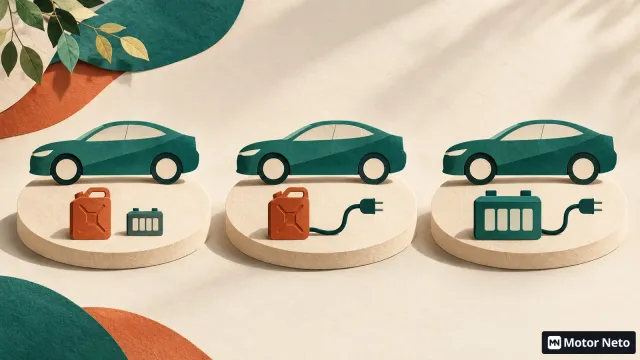
A plug-in hybrid combines an electric motor and rechargeable battery with a combustion engine. The ability to use fuel does not guarantee that you will make use of electric driving in everyday life. If you do not intend to plug the car in, do not build a budget that assumes daily charging. Before deciding, distinguish between hybrids, plug-in hybrids and electric cars by usage.
Nor does a fall in electric registrations make an existing electric car less suitable for a particular route. Consider where you will charge, how long the car is parked and what your longer journeys require. For drivers without a private charger, choosing an electric car without home charging starts with the actual charging options, rather than the powertrain’s market share.
Finally, compare offers on the same basis: vehicle price, finance terms, insurance, servicing and energy costs for your expected usage. The car loan calculator calculates payments and interest from the terms you enter, without implying that a popular brand necessarily offers a suitable deal. This is a general comparison framework, not personal financial advice.
The deliveries table helps explain what was registered in Israel. To choose what belongs in your parking space, connect it with a shortlist based on budget and driving routine. This sequence keeps the decision with you: market figures provide context, while the particular offer is assessed against your needs.
Found an error or outdated information? Read how we handle corrections and sources, or email us: [email protected].