
What this overview is based on
Ministry of Transport and Road Safety announcement of the signing, alongside the licence category register. event_date refers to the signing; the announcement did not specify the commencement date.
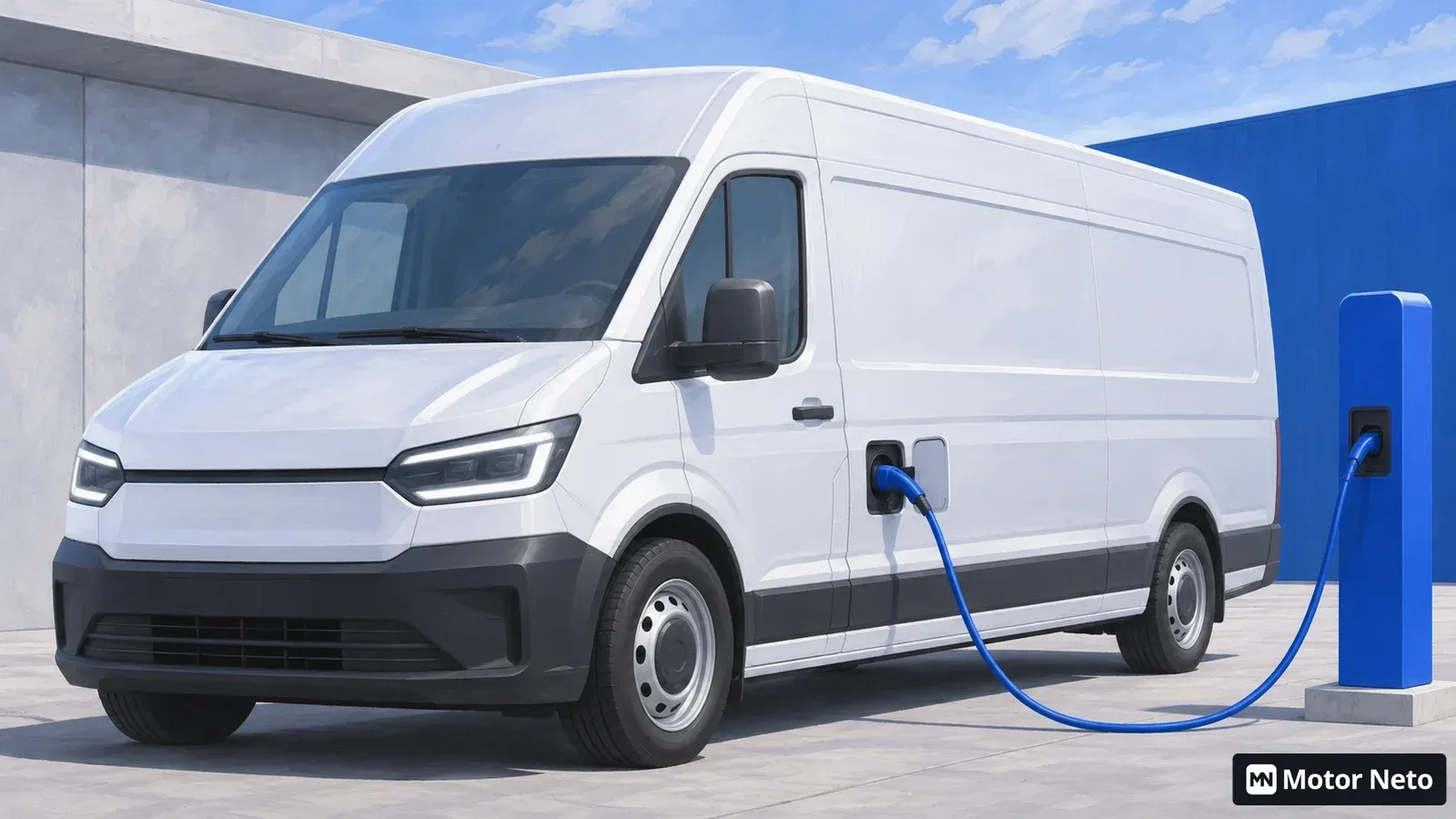
Transport Minister Miri Regev signed an amendment on 9 November 2026 that will, subject to conditions, allow electric vans with a maximum authorised mass of up to 4.25 tonnes to be driven on a category B licence (רישיון B). For business owners and delivery drivers, this could widen the choice of working vehicles. However, the ministry's announcement does not specify a commencement date: signing alone does not authorise you to start driving a vehicle outside your current licence category.
According to the Ministry of Transport and Road Safety announcement, the easing is intended for zero-emission vans, including electric ones, whose additional weight comes from the powertrain. It requires the driver to have held a category B licence for at least two years and the vehicle to have approval from the Licensing Authority (רשות הרישוי). The amendment also addresses armoured vehicles and the types of vehicles permitted for C1 holders.
The extra weight is for the powertrain, without increasing payload
At present, the ministry explains, a category B licence generally permits driving a vehicle with a maximum authorised mass of no more than 3.5 tonnes. A battery and electric powertrain can make a van heavier than its combustion-engined equivalent. The arrangement covered by the signed amendment is intended to allow this extra weight without requiring the driver to move to category C1 solely because of it.
The practical distinction is between maximum authorised mass (משקל כולל מותר) and payload capacity. According to the ministry, the permission does not increase the permitted cargo weight compared with an equivalent vehicle. The higher weight ceiling should therefore not be read as a promise that you can carry more goods. When choosing a van, ask for the registered gross weight figure and the payload limit for the specific version.
Being plugged into a socket is not enough either. An experienced category B driver and an electric van weighing less than the new ceiling do not necessarily make a combination that qualifies: vehicle approval and the amendment's conditions are also required. Before ordering for a business, ask the supplier for a written explanation of eligibility and check the relevant registration with the Licensing Authority.
Armoured vehicles are also included, under a separate set of conditions
The amendment includes the possibility for category B holders to drive bullet-resistant vehicles of up to four tonnes used by local emergency response squads (כיתות כוננות) and approved by the Home Front Command, subject to registration and restrictions. It also addresses armoured vehicles owned by the police, government ministries and their subordinate agencies, under the conditions specified.
These are separate provisions from the easing for zero-emission vans. The announcement does not give category B holders blanket permission to drive every armoured vehicle or every heavier vehicle. Anyone assigned such a vehicle for their role needs to establish that both the vehicle and driver qualify under the specific procedure, and obtain the applicable instructions and approvals from the operating organisation.
What changes for holders of a category C1 licence
Category C1 allows driving within the weight range above 3.5 tonnes and up to 12 tonnes. According to the ministry's announcement, the amendment will expand the vehicle types permitted in this category to include private motor vehicles within that range, excluding a private bus. The change described here concerns the type of vehicle, rather than an increase in the ceiling beyond 12 tonnes.
For buyers, this means reading the driving licence category, vehicle classification and maximum authorised mass together. A trade name or a vehicle's appearance does not replace those details. Even when a supplier presents a vehicle as suitable for a particular licence, ask which registration and approval support that claim.
Before replacing a van, establish when the permission applies
The ministry said the regulations would be published in the Official Gazette (רשומות) and apply in accordance with the law. Its announcement does not name an exact commencement date. As of 10 November 2026, this article provides no basis for changing an individual driver's entitlement; commencement and vehicle approval must be confirmed before using the easing.
Alongside checking the licence, consider how the powertrain fits your driving routine and the possibility of using an electric vehicle without home charging. A suitable licence answers one question, while charging availability and work planning remain part of the decision.
Prepare three questions for the supplier: whether the version is approved for the easing, what its permitted payload is, and what must appear in the documents at handover. Also ask for a distinction between the order date and the date on which you will actually be able to drive it. The information here is general and does not determine an individual's entitlement to drive a vehicle.
Found an error or outdated information? Read how we handle corrections and sources, or email us: [email protected].