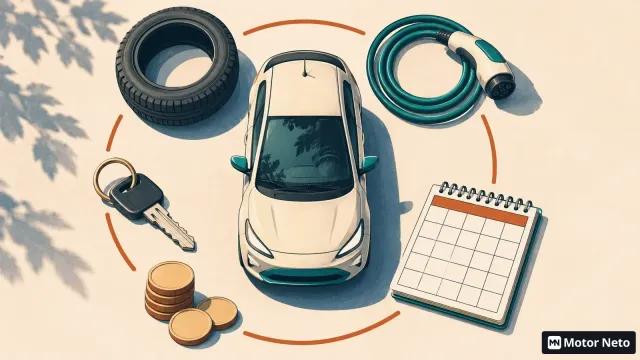


A used dream car needs to pass two different tests: whether the particular vehicle is worth buying, and whether living with it suits you. An affordable purchase price does not guarantee affordable maintenance, and affection for a model does not replace a documented history. Precisely when you know exactly what you want, it is worth writing down in advance what would make you walk away.
You are not buying the memory of a poster or a video. You are buying a particular car with an age, previous owners, repairs and perhaps modifications. That distinction does not diminish the potential enjoyment. It lets you make room for it in your budget and routine, rather than discovering that the purchase itself was only the first obstacle.
Define the dream before searching for a price
Write down exactly what appeals to you: an open body, a manual gearbox, design from a particular era or a specific version. Then check whether the adverts you save genuinely offer that thing. A single model name can cover different generations and powertrains, and a difference that looks small in a headline may be the very thing that interested you in the first place.
Do not let a conspicuous accessory obscure the car's identity. Upholstery, wheels or a body kit do not prove that it is an original version. Compare the chassis number and documents, and request appropriate official information if its identity is unclear. If you cannot explain which version is being offered, it is still too early to pay a premium for rarity or a special story.
Think about how you will use it, too. A weekend car and a family's only car have to meet different requirements. Parking, passenger numbers and your ability to leave the car at a garage are part of the decision. A dream that does not suit your usage can remain desirable, but you should know its practical cost.
For a vehicle covered by the database, you can cross-check the advert against the registered model code and trim level, without drawing any conclusions about its mechanical condition or modifications.
Check the availability of servicing before the availability of finance
Find a garage with the appropriate licence and relevant experience of the model or its systems. The Ministry of Transport and Road Safety garage register lets you check licensing; it does not rate expertise in a rare model. You need a professional conversation to establish the garage's experience and the types of work it carries out.
Ask about parts that matter for the particular car and how it can be diagnosed. You do not need a promise that every part is on the shelf. You need to know who orders parts, what can be established in advance and which components need particular inspection before purchase. An honest unknown is better than a general promise that everything is obtainable.
If the car on offer has a missing part, ask for it to be identified and establish its cost and availability before paying. Do not simply assume you will find it online after buying. The price of an item abroad is not necessarily the cost of bringing it to Israel, ensuring compatibility and fitting it, so it should not be treated as a local quotation.
Modifications need documentation, not just power figures
For a modified car, ask for a list of the work, invoices, the identity of whoever carried it out and compatibility documentation or approvals where required. Do not assume that a high-quality part alone makes an installation suitable, or that every modification was carried out poorly. The information you need is what was done to this car and under which conditions.
A power figure in an advert is not a result you can accept without a document and measurement conditions. If power is part of your reason for buying, ask how the figure was established. Also check any potential implications for licensing and insurance with the relevant parties. This is an enquiry about the individual car, not a list of upgrades permitted or prohibited on every vehicle.
A return to original condition also needs to be a documented fact, not a reassuring phrase. Ask which parts were put back, what remains different and whether the documentation matches the current condition. A professional inspection should address the modifications themselves, rather than just the model's reputation when it was sold new.
History matters more than a claim about a caring owner
Dated invoices, mileage readings and repair records let you understand the sequence of events. A collection of pristine photographs does not replace them. Ask for an explanation of gaps and let the inspector see the documents before summarising the findings. Information about an earlier repair can change the questions that the inspection should address.
Distinguish a general pre-purchase inspection from a focused inspection of a special car. If it has a folding roof, an unusual powertrain or a significant modification, ask beforehand whether these are included. Do not leave with a reassuring report about items that were never inspected.
Also start with the sequence of checks for a used car, and check registration and restrictions through the appropriate channels. Enthusiasm does not remove the basic questions about ownership, documents and recalls (קריאות חוזרות). It merely makes those questions easier to postpone, which is why it helps to set the order in advance.
The purchase price must leave money for living with the car
Build a budget that includes suitable insurance, parking, maintenance and costs identified by the inspection. Separate cosmetic restoration you would like to carry out from repairs needed to use the car safely. Otherwise, it is easy to convince yourself that everything can wait, or to spend money on appearance that was intended for necessary work.
Consider a period off the road as well. If this is the household's only car, what is your alternative? If you need to wait for a part, is there somewhere to keep it? You do not need to predict how long it will stand idle, but you do need to know whether a wait you consider reasonable would make the purchase unworkable.
Your calculation of ownership costs should also account for assumptions that have yet to materialise. Do not rely on appreciation to justify the price or repairs. Enjoyment is a legitimate reason to spend money, provided you present it as enjoyment rather than an investment with a guaranteed return.
Write down your reasons to walk away before meeting the seller
List three things you will not accept: an unclear vehicle identity, refusal of an appropriate inspection or a cost that wipes out your reserve, for example. These are examples of personal conditions, not a declaration that every other finding is insignificant. The aim is to stop the moment when you hold the key from changing every rule you set at home.
If the car passes the checks and stays within your plan, you can choose it even if it is not the cheapest option. Not every purchase has to optimise cost per kilometre. But it should be a car you can keep and use, rather than simply a car you can afford to buy today.
Sometimes the right decision is to wait for a more suitable example. Wanting a model does not oblige you to accept every history or price that comes with it. A dream is better preserved when you do not let a single deal redefine it.
Useful tools for this topic
- Vehicle registration number lookup: car details and licence expiryCheck vehicle details, the last roadworthiness test date and licence expiry against the Ministry of Transport register.
Found an error or outdated information? Read how we handle corrections and sources, or email us: [email protected].