
The short answer
Ask for every key and test each separately using the handbook, with the other moved away. If an item is missing or a function fails, obtain vehicle-specific costs and instructions and record who will complete the work before handover.
Who this guide is for
Used-car buyers in Israel checking that the promised keys are actually usable.
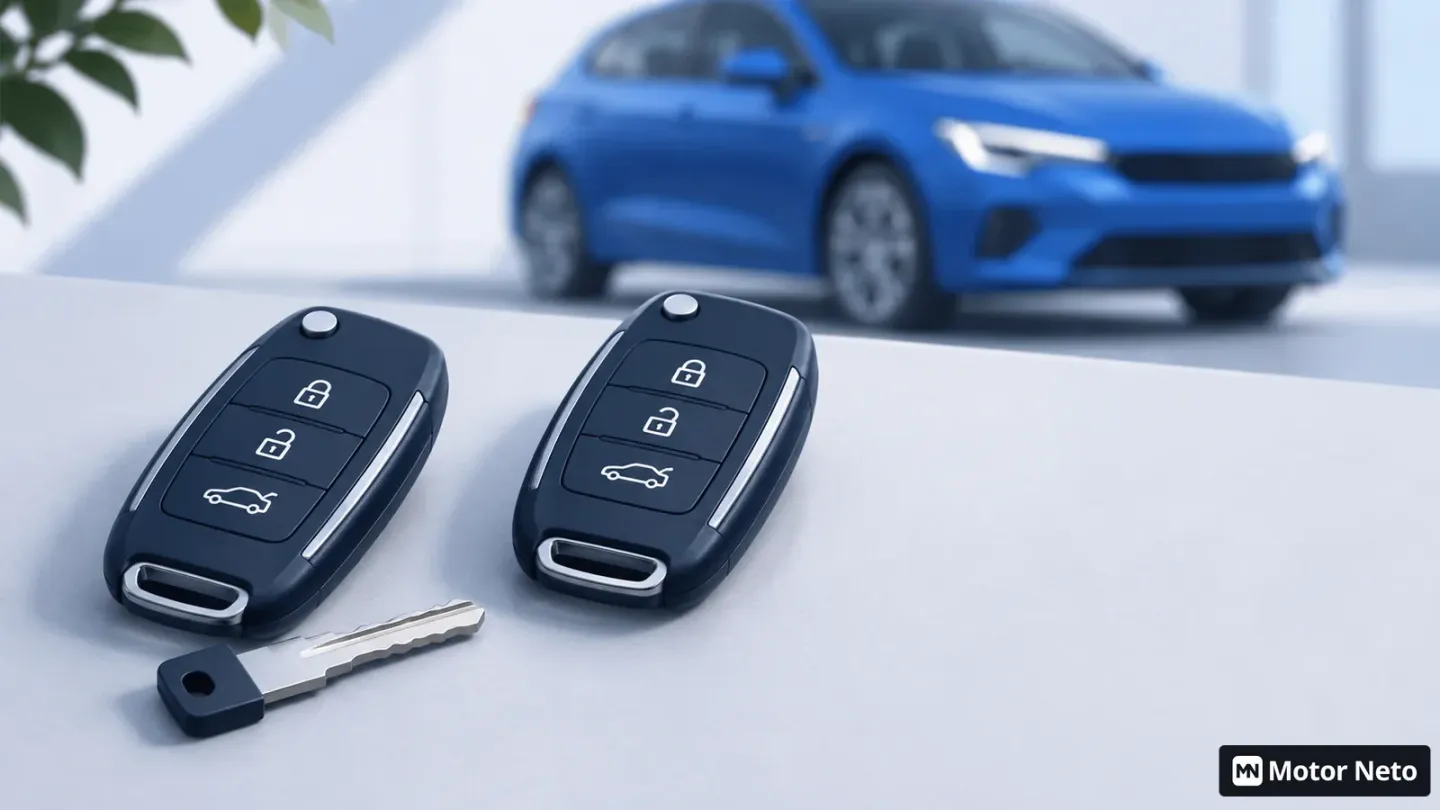
Two remote fobs on the table do not yet amount to two usable keys. Before buying a used car, ask the seller to bring every key and mechanical blade included in the sale, then check each separately using the vehicle handbook. The aim is to establish exactly what you will receive, what works and what needs an answer or an expenditure before handover, rather than to learn key programming.
Arrange this when booking the viewing. A key left at home is not necessarily lost, but it has not been checked either. If it forms part of the sale, agree when it will be produced and handed over. That avoids reaching the end of the purchase with the car agreed upon and the spare key resting on a verbal promise.
Start with an inventory, not a count of fobs
Lay the items side by side and describe each: a complete remote, a mechanical key, a card or another device supplied for that model. Do not assume that similar cases contain identical keys, or that a blade which turns a lock also authorises starting. Mechanical access, remote locking and electronic starting authorisation can be separate functions.
In its official explanation of missing keys, Toyota UK describes ordering, cutting and programming as separate stages. This explains the mechanism; it is not an Israeli price list or delivery commitment. The useful question for the seller is therefore what the item can do now, not simply whether another piece of metal or plastic exists.
Record what has not been shown as well. “Additional remote not yet brought for inspection” does not describe it as lost or faulty. Keeping a missing item separate from an untested one helps you seek the right remedy without commissioning unnecessary work. Include this in your used-car buying checks before settling the handover arrangements.
Test each key without the other taking part
With a smart key, attempting to start while both keys are beside the car does not isolate either one's operation. Ask the seller to move the other key away as the model's instructions require, then check unlocking, locking and starting authorisation separately. There is no universal distance for every system, so an invented rule about a particular number of metres is unhelpful.
Do this with the car stationary in a safe location, following the handbook and with the seller present. Do not lock a person or animal inside for the test or attempt to bypass security. If the engine must run, use an appropriate open-air location, not an enclosed space. This is not a road test and does not require driving away.
Write down the result plainly: key A unlocked, locked and authorised starting; key B unlocked, but starting was not checked. If a function fails, do not immediately diagnose a flat fob battery. Ask the seller to arrange the appropriate check or remedy, then repeat the operation. A promise that a fault is minor is not a test result.
Check that the mechanical blade intended for the key is supplied too. Use the handbook to understand its permitted operation without forcing covers off or trying unfamiliar locks. If the seller cannot explain the procedure, ask a suitable service provider instead of turning the viewing into an experiment.
A working key may have different permissions
Some systems allow restrictions to be associated with a key. Ford's description of MyKey, for example, includes speed and audio-volume limits. This is a model- and market-specific example, not a claim that every Ford in Israel has the feature or that every spare key is restricted. Where the handbook describes profiles or permissions, establish which ones apply to each item supplied.
Ask whether both keys provide the functions you need in everyday use. A household planning to share a car between two drivers cannot settle for knowing that the second key opens a door if its ability to support the intended use remains unclear. Conversely, a limited emergency access device may be entirely fit for its purpose, provided it is described as such.
Keep this separate from a manufacturer account or a key on a phone. Disconnecting a digital user does not prove that a physical remote works; two functioning remotes do not prove that the previous user's digital access has been removed. They are distinct handover jobs, and one does not replace the other.
Obtain a vehicle-specific quote for a missing key
If a key is missing, request a written quote based on the exact model, production year and vehicle identity. Ask for the item, any blade cutting, programming, labour and other charges to be separated. Establish whether the car and remaining keys must attend, and what delivery date the provider can commit to for this particular order.
In the official US-market handbook for the 2015 V60, Volvo describes deleting the code of a lost key and programming its replacement. Your car's procedure may differ. Ask specifically what can be disabled electronically and what remains possible with a mechanical blade. Do not assume that removing electronic authorisation also changes the physical lock.
There is no fixed Israeli price or universal job duration here. Comparing a single line labelled “key” will not resolve differences between quotes. Use the principles for reading a garage quotation to compare the same scope of work. Also ask which identity and ownership documents the provider requires, without sending personal information to a business you have not chosen.
Settle the arrangement before handover day
You can agree that the seller will obtain a key before handover, or that the buyer will deal with it within an agreed price. What matters is recording the responsibility, timing and exact deliverable. If the work is still outstanding, do not describe it as completed on the handover record. Keep the quote and test results with the purchase documents.
On handover day, count the items again and briefly check each key separately. There is no need to rely on an old photograph or the fact that a remote worked at the earlier viewing. Even after a new key has been ordered, confirm that you receive the agreed item and evidence of the work performed, rather than only a general invoice.
If the seller proposes sending the key after handover, agree the delivery method and date as well. Do not mark it as received before it has arrived and been checked.
Checklist before you continue
Found an error or outdated information? Read how we handle corrections and sources, or email us: [email protected].