
What this overview is based on
Toyota Israel booking page and an original editorial comparison method; no firsthand vehicle test or measured performance claim.
The short answer
Use the same questions for both cars and confirm how each demonstration version differs from the offer. Keep observations, personal impressions and untested items separate.
Who this guide is for
Car buyers in Israel choosing between two vehicles after dealership demonstration drives.
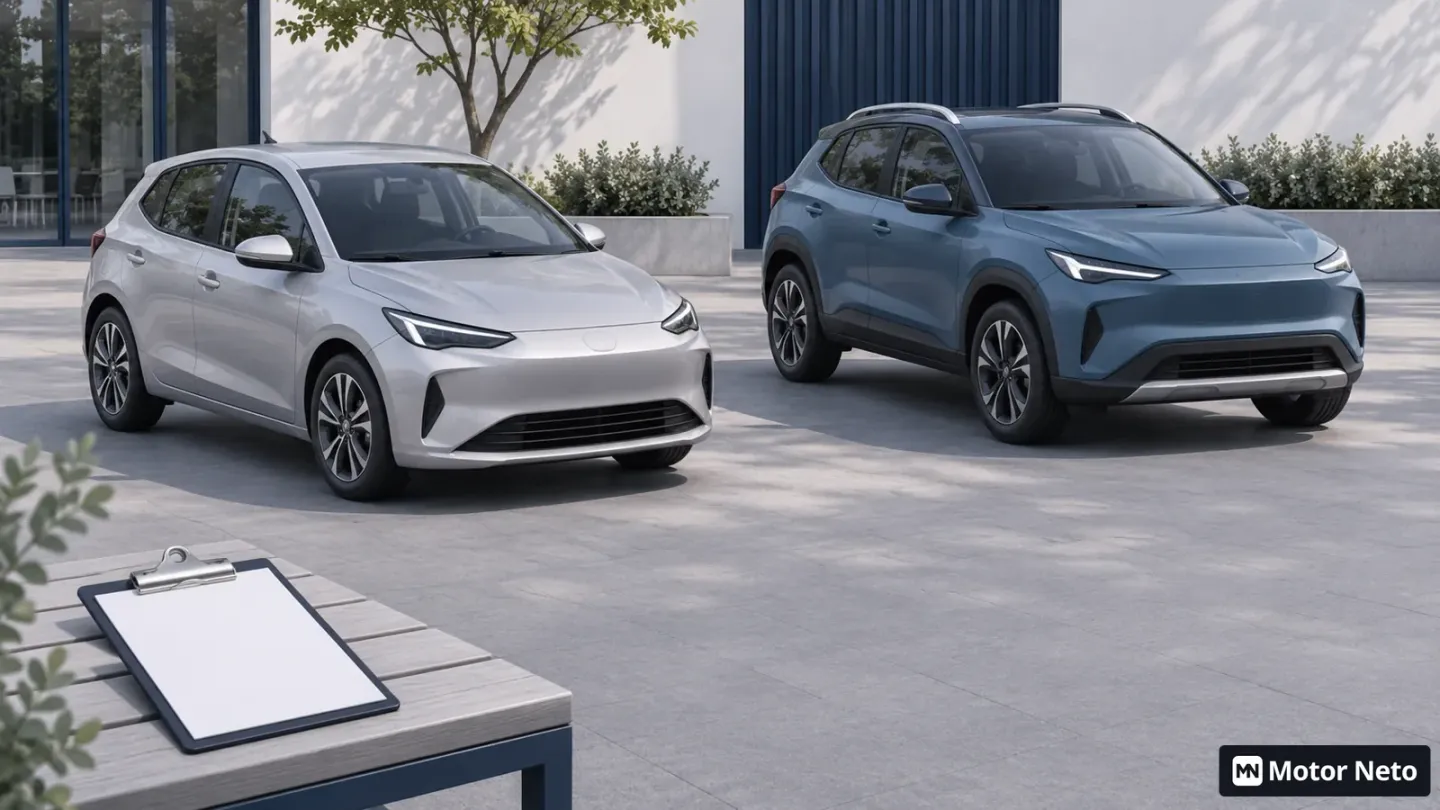
To compare two cars on demonstration drives, prepare the same questions for both and record separately what you checked, what you felt and what remains unanswered. The aim is not to award a professional rating, but to establish which version better suits your use. An enjoyable drive is a good start, yet it does not by itself answer questions about driving position, everyday operation or passengers' needs.
Choose a few requirements beforehand that could change your decision. A daily urban driver might prioritise outward visibility and simple controls, while someone carrying a regular passenger should consider that seat too. Use a shortlist based on budget and routine for the initial selection, then use the drives to resolve remaining questions between candidates.
Check that the demonstration car represents the offer
When booking, ask which version will be available: engine or powertrain, trim, seats and equipment relevant to your intended use. If it differs from the car you are considering, note that before setting off. A drive in another version need not be rejected, but know which impressions can be transferred to the proposed order and which cannot.
Toyota Israel offers online demonstration-drive booking. A booking form does not guarantee that a particular car is available at every branch or time. Confirm the version, meeting place and allocated time with the dealership itself.
Ask who may drive, what to bring and which conditions apply. If two household members will use the car, arrange an opportunity for both to try it. Do not assume the appointment includes an additional driver, a particular route or unlimited time.
Separate stationary checks from driving impressions
Before moving, adjust the driving seat and mirrors and familiarise yourself with the controls you will need. Ask for an explanation of anything unclear. Searching through a menu while driving is not a useful way to decide whether it suits you.
While stationary, check access to controls, display readability and places for objects you regularly use. Try a real action, such as changing ventilation direction, rather than settling for a general impression of a “large screen”. Ask to repeat it in the second car while that car is also stationary.
On the road, observe what matters to your routine within permitted conditions and the agreed route. Do not deliberately make an emergency stop, provoke collision-avoidance intervention or explore grip limits. A demonstration drive is neither a safety test nor a performance measurement, and need not become one.
Note differences between driving conditions too
Plan similar routes where possible, but do not hide differences you cannot remove. Traffic, road type, weather and passenger numbers may vary. Record them alongside your impressions so you remember what was actually compared.
For example, “I found it easier to get comfortable in car A” is a useful personal impression. “Car A is safer” is a conclusion a short drive cannot establish. Nor is displayed fuel or electricity consumption a fair comparison if routes, drive lengths and previously accumulated data differ.
Use three simple columns: checked and suitable, checked and troublesome, not checked. This distinguishes a drawback from missing information. If there was no time to try an important function, leave a question open instead of awarding a middling score that suggests a check was completed.
Turn impressions into a decision you can explain
Write your notes after stopping safely and before details blend into those of the next car. Ask accompanying passengers to describe their own experience first. Agreement on a conclusion does not require every occupant to have experienced identical comfort.
Then compare the findings with your original requirements. Do not suddenly give great weight to an attractive accessory simply because the demonstrator had it. Check that it is included in the version and written quotation you are actually considering.
A demonstration drive can leave two good candidates. In that case, identify what would settle the choice: a stationary check, a dealership answer or another arranged drive. You do not have to decide during that visit. This process does not replace the separate checks required when buying a used vehicle.
Checklist before you continue
Found an error or outdated information? Read how we handle corrections and sources, or email us: [email protected].