
The short answer
Check the condition of the windscreen and blades first, and clean them according to the vehicle manual. Damaged rubber or persistent poor wiping calls for replacement or professional system inspection, rather than automatically buying another pair.
Who this guide is for
For car owners in Israel whose wipers leave streaks, especially when replacement blades have not improved the result.
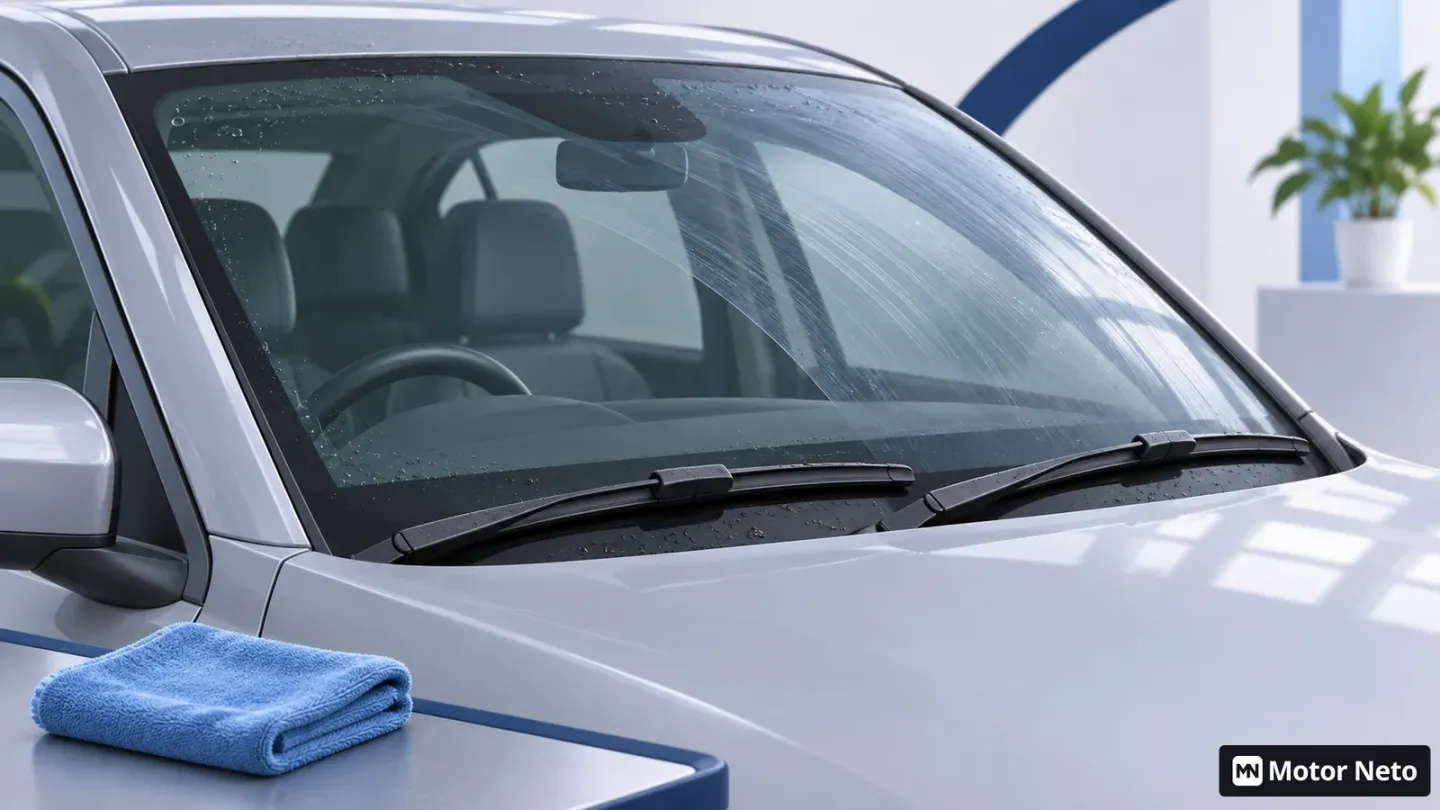
Streaks on the windscreen do not prove that you need another pair of wipers. Start by checking the cleanliness and condition of the glass and blades against the vehicle manual, then assess the result on wet glass with the car stationary. Damaged rubber or wiping that remains poor after appropriate cleaning calls for replacement or professional inspection. Even a new blade does not rule out a fitting or system problem.
This distinction is particularly useful when you have already paid for replacement blades with little improvement. Before ordering another product, establish what was fitted, which vehicle it suits and exactly what remains in your field of view. The aim is not to diagnose an arm or motor remotely, but to approach the repair with a clear description.
Start with the glass, not the blade's price
Bosch's guidance lists several possible causes of poor wiping: dirty glass, the wrong type of wiper, worn or damaged blades, glass damage and a problem with the wiping system. The list matters because different faults can produce a similar symptom. A streak after every sweep does not, on its own, identify the part that needs replacing.
A Valeo technical bulletin also identifies dirt and particles accumulating on the windscreen as factors that can damage the rubber. Cleaning the glass and blade is therefore part of assessing their condition, not simply improving their appearance. Inspect the glass and rubber edge with the system switched off. If you see a tear or damage, do not try to restore the rubber with a cleaning product.
Distinguish contamination on the outside from misting inside the cabin. If the location is unclear, check it while parked. Replacing an external blade is not automatically the answer to everything that obscures the view through a window.
The vehicle manual determines the cleaning method
Cleaning instructions vary between models. For example, Volvo's V60 manual specifies lukewarm soapy water or car shampoo for the blades and windscreen and says not to use strong solvents. Tesla's Model S manual specifies products approved for automotive glass and rubber and warns against unsuitable products. These are particular manufacturers' instructions, not a universal recipe.
Find the wiper section in your own manual before selecting a product or lifting an arm. Check whether a service position is required and how to disable automatic operation. Do not copy a sequence of controls from another model. If the arm cannot be accessed in its normal position, do not force it to move.
Use only the cleaning product and method permitted for your vehicle, and follow the product's instructions too. There is no need to invent a homemade mixture or add a coating in the hope that it will solve every smear. If you do not know what has already been applied to the glass, mention that before further treatment.
Compare the result under consistent conditions
After cleaning, return the system to its normal operating position as instructed and test it on wet glass with the car stationary. In its EC40 manual, Volvo says to test the wipers before driving and that wet glass is necessary for proper operation. Repeatedly running a blade across dry glass is not a useful way to judge how it will work in rain.
Record whether the result improved, which side is affected and whether the problem began after replacement of the blades or windscreen. “A streak remains in the same place after cleaning” is more useful than “the wipers are bad”. It still does not diagnose the faulty component.
If visibility is inadequate, do not turn a drive in the rain into an experiment. Complete the inspection or repair before relying on the system. This guide does not determine whether a car will pass Israel's roadworthiness test (טסט), or set an official allowance for streaks. It explains a practical investigation process.
Fit involves more than length
Before buying a blade, confirm compatibility with the model, model year and side of the vehicle. Check the connector too. The Model S manual, for example, requires a connector matching the original and warns that unsuitable blades can damage the system and windscreen. Do not transfer that example's measurements to another car because a blade looks similar.
Ask the supplier to identify the correct part from the vehicle's details rather than a general photograph. Establish whether the quote covers one blade, the front pair or the rear wiper as well, and whether fitting is included. You can then compare the same work without assuming that the cheaper quote includes identical components.
According to Bosch's checklist, problems after windscreen replacement warrant workshop checks of the glass, wiper pressure and angle. This is not an instruction to bend an arm at home. A mechanism problem needs professional investigation rather than repeated blade changes alone.
Take a specific question to the workshop
When appropriate cleaning has not resolved the problem, ask the workshop to distinguish component replacement from system diagnosis. Explain what has already been done and retain the details of the blades fitted. Ask which parts are proposed, what labour costs and what will be checked afterwards. Our guide to reading a garage quotation helps organise those questions.
Do not turn one manufacturer's annual recommendation into a single replacement date for every vehicle. Check the model's instructions and actual condition, and do not wait for a calendar date when damage or poor wiping is already apparent. You can include inspection in a routine of servicing by time and mileage while distinguishing scheduled maintenance from a problem that already exists.
Checklist before you continue
The desired result is a clear view through the glass, not a receipt for another pair of blades. Starting with the conditions and fit makes it easier to choose between cleaning, replacement and professional inspection.
Found an error or outdated information? Read how we handle corrections and sources, or email us: [email protected].