
The short answer
Identify the paint code using the correct vehicle source and document the area before requesting a quotation. Ask for repair scope, the matching assessment and the approval process for any changes in writing.
Who this guide is for
For vehicle owners in Israel seeking cosmetic paint repairs and buyers examining records of earlier work.
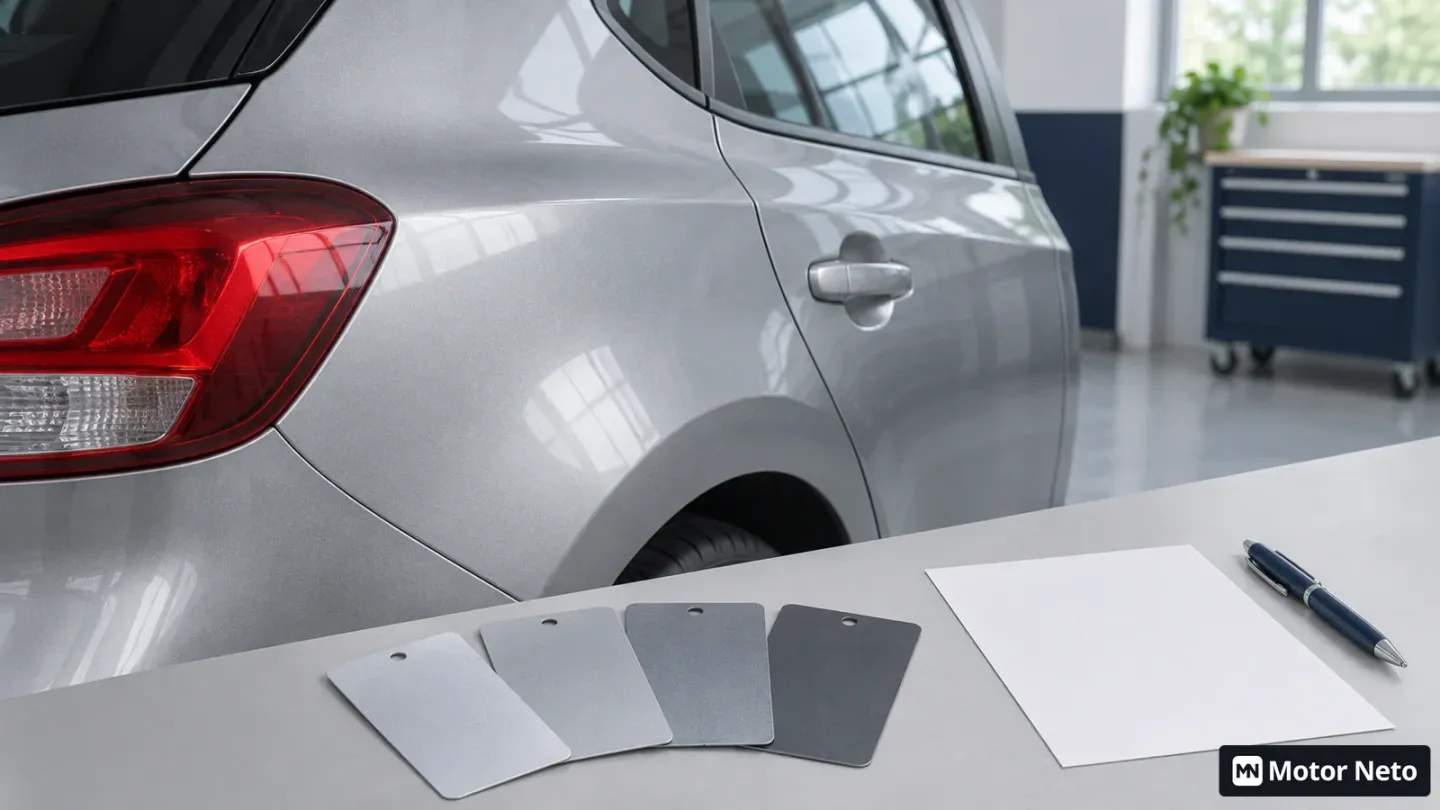
Before booking a paint repair, prepare two separate pieces of information: the car's colour identification and the work you expect to receive. A marketing name such as pearl white or metallic blue is not a substitute for a paint code, and a correct code is not an agreement about repair scope. Photograph the affected area, gather the vehicle details and ask the professional to explain in writing what will be treated and how the result will be assessed.
This guide covers preparation and comparison of cosmetic repair quotations. It is not a painting tutorial, an assessment of damage depth or a promise of an invisible repair. If there is any indication of damage beyond the paint surface, request a professional inspection before classifying the job as purely cosmetic. A phone photograph can start a discussion but cannot replace examination of the car.
Identify the colour from the actual vehicle
Start with the documents and instructions for the particular model. Look for the paint-code reference or ask the importer or a suitable workshop to identify it using the vehicle details. Do not assume a label in a friend's car is in the same position as yours. If you find a label, take a complete photograph and a close-up without removing or altering it.
For example, Ford's instructions for minor paint damage direct owners to an authorised dealer to identify the colour code. This is an example of a manufacturer-supported identification method, not a commitment about product or service availability in Israel. Use the appropriate official source for another brand.
Send the information directly to the person preparing the quotation. There is no need to post a photograph containing a VIN or personal details in a public group merely to ask about a shade. If the code is illegible, say so and request confirmation rather than guessing a character. An initial identification error can turn the entire comparison into one between different jobs.
Describe the condition without diagnosing a photograph
Photograph the whole panel as well as the area that concerns you. Choose lighting that reveals the surface and avoid colour filters or beautifying edits. Say whether you know of previous painting or repairs to that panel. If you do not know, record that uncertainty: missing paperwork does not prove original paint.
Do not choose a repair method solely from the apparent size of a scratch in a photograph. Ask the professional to inspect what lies behind the visible condition, whether extra preparation is needed and what remains outside the quotation. The aim is not to dictate materials, but to understand the findings supporting the recommendation.
The colour name and code help identify the starting point; they do not by themselves guarantee a perfect visual match on the existing car. Ask how matching will be checked in practice and what happens if a difference is visible afterwards. A brief assurance that the number is the same is not a substitute for explaining the expected result.
Compare the same scope of work
Ask which panel and area are included, whether anything will be removed, and what preparation and finishing cover. A quotation for treating a spot is not necessarily equivalent to repainting a larger area. Both may be called a scratch repair while describing different work. Our guide to reading a garage quotation helps turn a general label into understandable items.
Establish whether the estimate follows photographs alone or a physical inspection. If the price may change after work starts, ask under what circumstances and how a change will be approved. There is no need to invent a market rate to compare offers: first ensure they concern the same car, damage and agreed result.
Separate an estimated completion date from handover conditions. Ask whether there will be specific aftercare instructions, such as when a particular cleaning operation is appropriate, and obtain them in writing from the repairer. Do not copy a waiting period for another product found online. The materials and method used should determine the instructions, rather than generic advice unrelated to your repair.
Agree how the result will be checked
Before authorising work, ask how the result will be examined at collection. Request an opportunity to view the area in suitable lighting and discuss any difference that concerns you. Earlier photographs help distinguish the treated area from a mark that already existed outside the agreed scope. They are not a professional quality inspection, but provide a shared starting point for the conversation.
Keep the quotation, approval, photographs and invoice, together with the warranty terms actually supplied. This guide promises no universal warranty period. If a previous repair or visible colour difference already exists, ask for it to be recorded so it does not disappear between the first discussion and collection.
When buying a used car, a paint repair is a question to investigate rather than automatic proof of a major accident. Conversely, a uniform appearance does not establish that no earlier damage occurred. Combine this information with our used-car buying sequence and a professional examination of the particular car. A paint code helps identify a shade; vehicle history and condition require additional evidence.
Checklist before you continue
Found an error or outdated information? Read how we handle corrections and sources, or email us: [email protected].