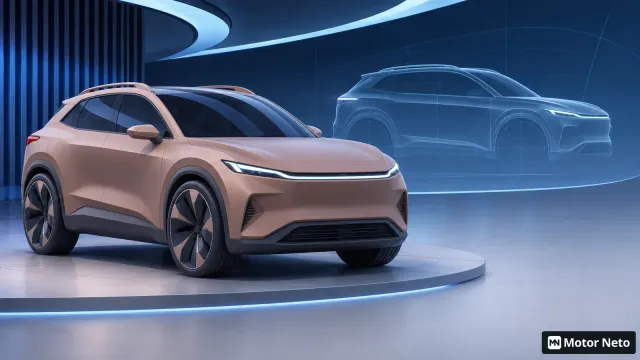

Honda unveiled the new Avancier on 20 November, a three-row SUV introducing its next-generation Honda Hybrid system. The global announcement concerns markets primarily in Asia, including Thailand, Japan and China. It is not an Israeli launch announcement and provides neither an Israeli price nor a local specification to use in a buying comparison.
For readers here, the interesting development goes beyond the model name. Honda is bringing an updated hybrid system, a new platform and separately controlled electric rear-wheel drive together in one vehicle. That indicates its engineering direction, but does not yet establish what a family ordering a car in Israel would receive. Local equipment, cost and warranty terms sit between those two questions.
What changes in the powertrain
According to Honda's announcement, Honda Hybrid develops the company's two-motor hybrid system further. The manufacturer describes improvements in drive-unit efficiency and control, alongside a broader efficient operating range for the petrol engine. These are the manufacturer's descriptions, not results from a fuel-consumption test conducted by Motor Neto.
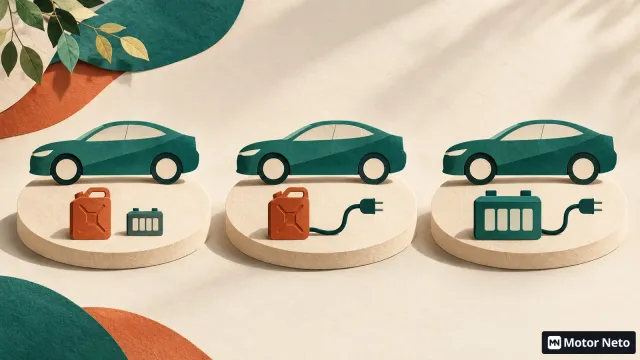
In Honda's published interview with the development leader, electric drive is described as operating across a broad range of speeds, while the petrol engine can drive the wheels directly during high-speed cruising. The system chooses its operating mode according to driving conditions. The presence of an electric motor therefore does not make this a battery-electric car.
A new commercial name is also insufficient for comparing fuel bills. A purchasing decision needs the exact variant's consumption figure, the measurement method and the conditions in which the car will be used. Our guide to choosing between hybrid, plug-in hybrid and electric cars puts the driving routine ahead of the technological promise.
Electric rear-wheel drive and a shared platform
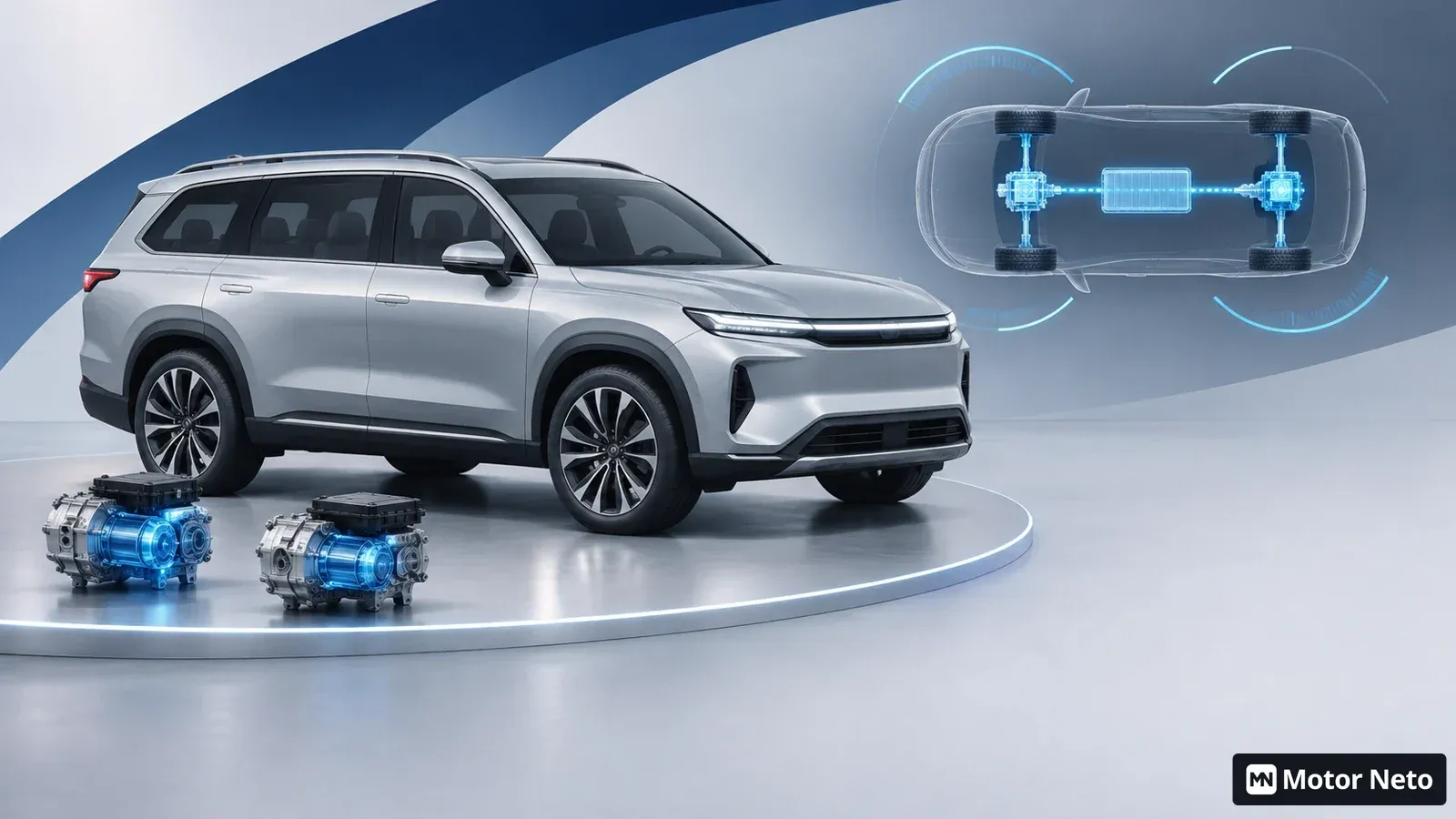
Honda is also introducing DualPower eAWD in the Avancier. Its technology description explains that front and rear motors allow separate control of driving force. The company attributes precise response and condition-dependent power distribution to the system. That alone does not demonstrate a particular off-road capability or a result on Israeli roads.
Honda's development account describes a new platform combining components shared between models with areas that can be adapted for each vehicle, such as the rear cabin. The industrial rationale is to build different models on a common technological foundation. Buyers still need to assess each model and variant separately: a shared basis does not guarantee identical space, equipment or pricing.
The manufacturer also describes integrated braking and powertrain control intended to improve vehicle behaviour. This explains an operating principle and a development objective. Steering feel, comfort and noise require independent assessment and are not presented here as measured findings.
Three rows begin the family assessment
The reveal includes a three-row cabin, with the manufacturer emphasising comfort and access to the rear seats. For a family, the number of rows is important but incomplete information. The practical questions are who uses each row, how often, and how much luggage must fit when every seat is occupied.
It is therefore useful to separate interest in a future model from a purchase that can be made today. If a car is needed soon, first compare variants available to order in Israel whose suitability can be examined in person. A shortlist based on budget and driving routine helps establish those requirements before another model is added.
The Avancier reveal shows Honda's direction in hybrid development. It does not replace a local sales announcement. Until one is published, equipment shown abroad should not be assumed to be available here, and an estimated price should not determine whether to wait.
Found an error or outdated information? Read how we handle corrections and sources, or email us: [email protected].