
The short answer
Compare the invoice with the quotation, additional approvals and completed-work record. Clarify differences and keep the documents with the warranty terms supplied.
Who this guide is for
For car owners collecting a vehicle after servicing or repairs in Israel.
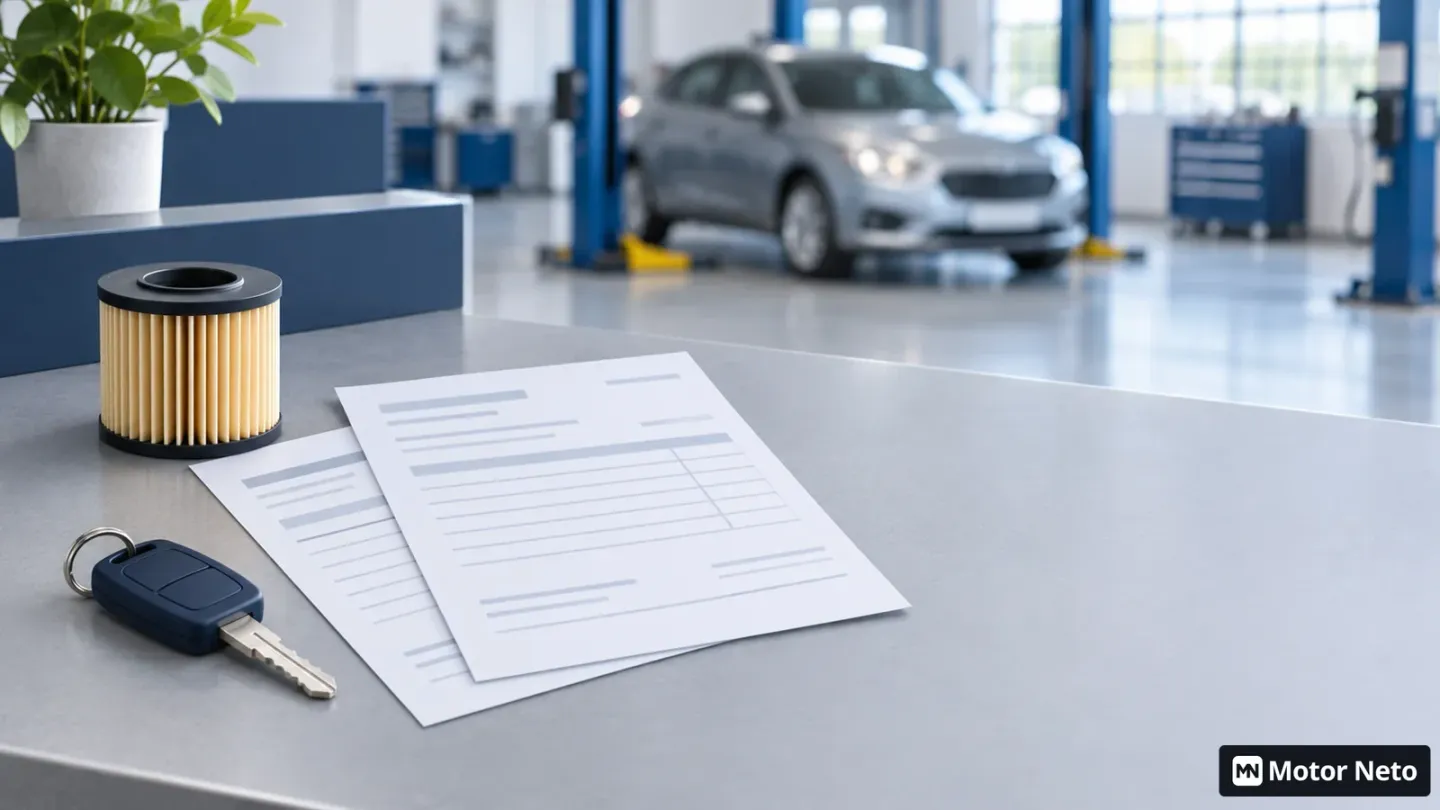
When the garage says your car is ready, ask to see the approved quotation, the work record and the final bill together. The aim is to connect what you requested, what was done and what was charged. A total matching the quotation is not enough if the completed work is unclear. A different total does not, by itself, prove an error.
Allow a few minutes at reception while the documents and someone familiar with the job are available. You do not need to dismantle anything or inspect a repair yourself. This is a check of records and explanations, not professional certification of the work. Even a tidy file cannot replace the manufacturer's instructions or investigation of an unresolved fault.
Start with the right vehicle and visit
Check the registration number, visit date and mileage. If a job-card number appears, make sure it connects to the same visit. A small typing mistake can make the service history harder to follow later, especially when a household owns several cars or pays for several jobs together.
The Ministry of Transport's sample invoice separates parts, labour and the total. Use it as a reading aid, not evidence that every invoice must look identical. A document's format and the work performed are separate questions.
If your name is correct but the vehicle number is wrong, request a corrected document. Do not edit the garage's file yourself or rely on a note from memory. Keep the correction with the correspondence explaining it so the current record is clear.
Match each charge to authorised work
Compare the bill with the quotation line by line. If you initially authorised diagnosis only, distinguish that charge from anything added afterwards. Include messages approving an additional replacement during the day. A telephone agreement can be forgotten; request a written account of what was added and why.
A description such as “general service” may not be enough for your maintenance file. Ask which checks or replacements it included and which were merely recommended for next time. Do not record a recommendation as completed work. You can mark each item as completed, not completed or awaiting clarification.
For example, if you agreed to inspection followed by replacement depending on the findings, but the bill lists inspection only, ask for the result. Do not assume the part was replaced or that the garage forgot it. For the earlier approval stage, see our guide to reading a garage quotation.
Check parts and arithmetic without guessing
Ask for names and descriptions that identify the parts and materials charged. A catalogue number is useful evidence, but you are not expected to decode it. The professional should explain how the item relates to the work on your particular car.
Review quantities, discounts, diagnostic charges and money already paid. If you paid a deposit, ask where it enters the balance calculation. If a service package applies, establish what it includes before assuming two lines are duplicate charges. They may describe parts and labour separately, or the document may need correction.
Compare amounts on the same basis, including the relevant taxes, rather than a pre-tax line with the final total. This guide does not set a fair price for a particular repair and is not legal or tax advice. If the charge itself is disputed, retain the quotation, approvals and bill and request clarification of the specific difference.
Separate completed repairs from remaining follow-up
Return to the complaint that brought the car in. Ask what was found, what was done and whether another check remains. If the symptom could not be reproduced, have that recorded. Replacing a component does not alone establish that the original symptom has disappeared.
Request the warranty terms supplied for the work or part and the contact procedure if the problem returns. Do not assume one period covers every item or every fault. This is not a statement of a particular entitlement; the purpose is to preserve the terms provided without adding an unwritten promise.
If another visit is needed, record its purpose and who should arrange it. Do not recreate a dangerous fault on the road to test the repair. For a warning light that remains on or returns, follow the instructions appropriate to the vehicle, regardless of whether an invoice has been issued.
Turn the visit into a useful record
Keep the invoice, job card (כרטיס עבודה), quotation and related approvals together. A filename containing the date and registration number makes the record easier to find. Add a short note of mileage and outstanding questions if useful, but preserve the garage's original documents.
Do not schedule the next service solely from a windscreen sticker or the amount paid. Compare the completed work with the correct maintenance schedule, as explained in our guide to servicing by time or mileage. If an unperformed task is recorded, or an agreed task is missing, clarify it before relying on the record.
Checklist before you continue
The result should be a visit file you can still understand next year: why the car arrived, what you authorised, what was done and what you paid. If a link is missing, a precise question now is more useful than an assumption you will have to reconstruct later.
Found an error or outdated information? Read how we handle corrections and sources, or email us: [email protected].