
The short answer
Bring the items you normally carry and test them with the seats arranged as you will use them. Compare the opening, sill height, access and permitted load too; litres alone cannot establish suitability.
Who this guide is for
For car buyers in Israel who need room for a pushchair, suitcases, shopping or work equipment.
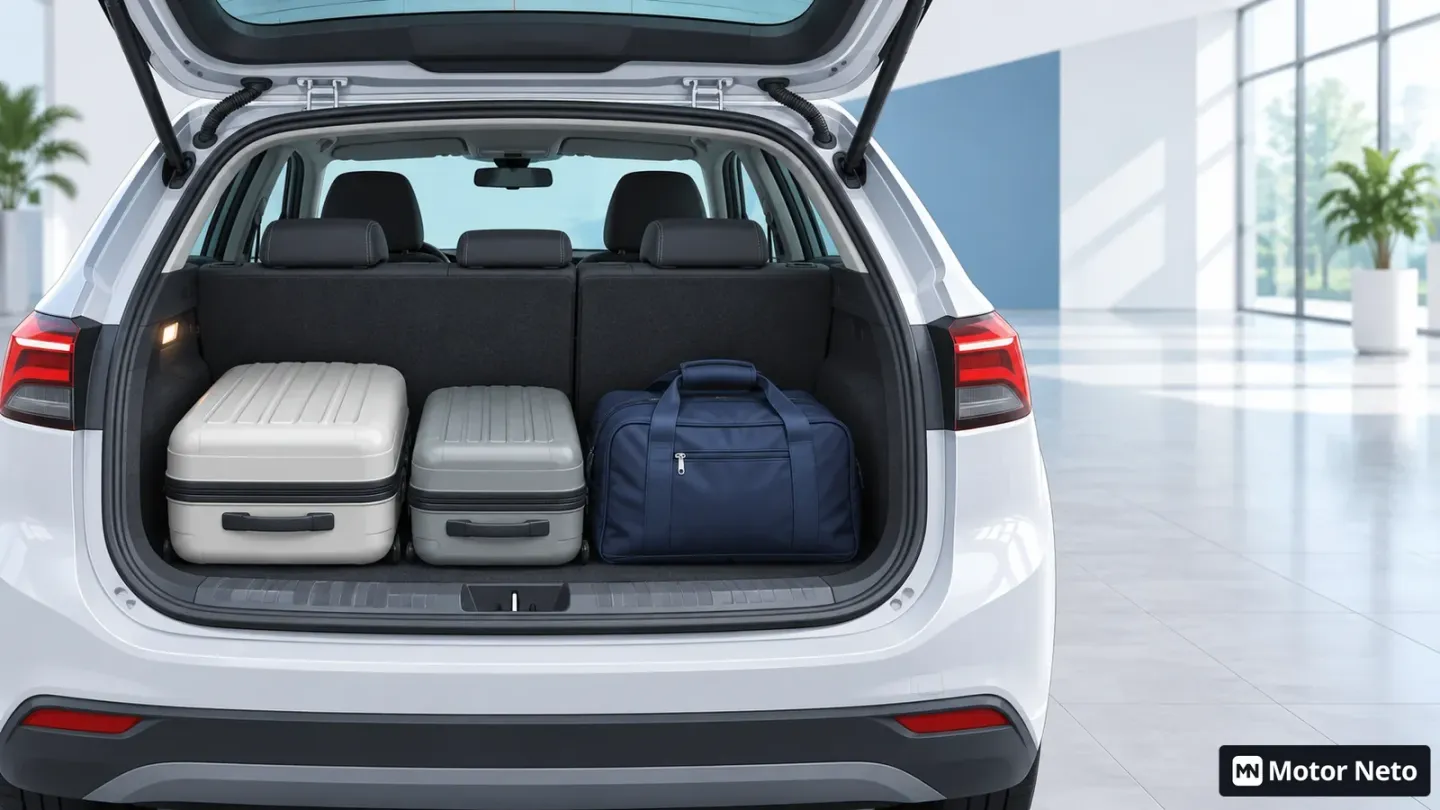
To find out whether a boot suits you, bring your own equipment to the car. Test it with the seats in the position you will actually use, not only with everything folded. The volume figure helps with an initial shortlist, but does not establish whether a particular item passes through the opening, sits properly inside and is easy to remove again.
Do this before choosing a version and paying a deposit. It complements choosing a car around your budget and routine: once the shortlist is smaller, compare the cars using the same loading task.
Define a real load and two uses
Start with an ordinary day. List what travels together: a pushchair and bag, work equipment and shopping, or passengers’ suitcases. Do not test each item separately when they must all travel at once. Alongside the routine, identify a less frequent but important occasion, such as a long family journey.
Distinguish a regular need from something you can change. If the pushchair fits only after dismantling that you are unwilling to do every day, record that as a usability limitation. If a large suitcase travels once a year, consider another suitcase instead of choosing a larger car solely for it. The decision is yours, but its cost and effort should be explicit.
Ask permission in advance to bring the items to the showroom or seller. Bring clean equipment and avoid scratching surfaces. If you cannot bring an item, measure it and make a light cardboard mock-up of its dimensions. That tests space only; it does not reproduce weight, flexibility or ease of lifting.
Compare the same seat arrangement and exact version
Adjust the seats for normal use before loading. If passengers occupy the rear seats, do not count folding their seats as a solution. In a vehicle with several rows, ask to see the boot with the rows you need in use.
Check the version offered in Israel. Do not infer what sits beneath its floor from a photograph of a foreign-market car. A spare wheel, repair kit, charging cable and other accessories may need storage; establish what comes with the particular car and where it belongs.
When comparing declared volume, ask which configuration was measured and what it includes. Underfloor space can be useful without replacing a continuous area for a suitcase. If the measurement conditions are unspecified, record an open question rather than awarding a precise advantage to the larger number.
Check the opening and the whole task
Put the items into the car in the order you will load them. Check the opening’s narrowest width, its height and the lift over the sill. An item that fits the boot floor must still pass through the opening. Do not force it in merely to demonstrate that it fits.
Try removing the first item you will need at your destination. If getting shopping out requires unloading the pushchair, record that practical result. Also check whether equipment beneath the floor is accessible without emptying everything. There is no universally best arrangement: priorities depend on what you remove most often.
Close the tailgate gently and only when its path is clear. Ask the showroom representative about opening clearance in your parking space, particularly near a wall or low ceiling. Measure the parking space separately; an open showroom does not reproduce where you unload groceries in the evening.
Distinguish empty space from permitted weight
A boot that looks empty is not permission to add weight. Request the exact version’s loading limits and manual instructions, including relevant restrictions for the floor and storage accessories. Do not borrow a weight figure from a foreign version or similar vehicle.
Volvo’s loading recommendations emphasise load position and securing it. Follow the precise manual for your car; this example does not supply a weight limit for every vehicle.
Check where the anchorage points are and which restraints suit them. Do not count space where luggage obstructs passengers or safety equipment as usable capacity. If there is no clear way to load and secure your equipment, ask for a qualified demonstration or consider another car.
Record a result you can compare
With the seller’s permission, photograph the loading arrangement without personal details. Record what fits, what needs dismantling and what remains accessible. Repeat the same test in each candidate. The comparison then rests on an identical task rather than a memory of a boot that looked large.
In a used car, luggage fit is not a condition inspection. Include it in the pre-purchase vehicle checking process, and separately request checks of seat and tailgate mechanisms or damage you notice.
Checklist before you continue
Choose for the task you will repeat. A suitable boot lets you load, secure and remove your equipment without inventing a workaround on every journey.
Found an error or outdated information? Read how we handle corrections and sources, or email us: [email protected].