
The short answer
Long tubes change the path of exhaust pulses from the cylinder head onwards. Two ARH configurations with a basic labour allowance work out at around 12,300 to 18,200 ₪ before freight, other import charges and calibration.
Who this guide is for
For owners of a 2016 to 2024 sixth generation Camaro SS coupé deciding how much of the exhaust to change.
Which part of the exhaust needs to change?
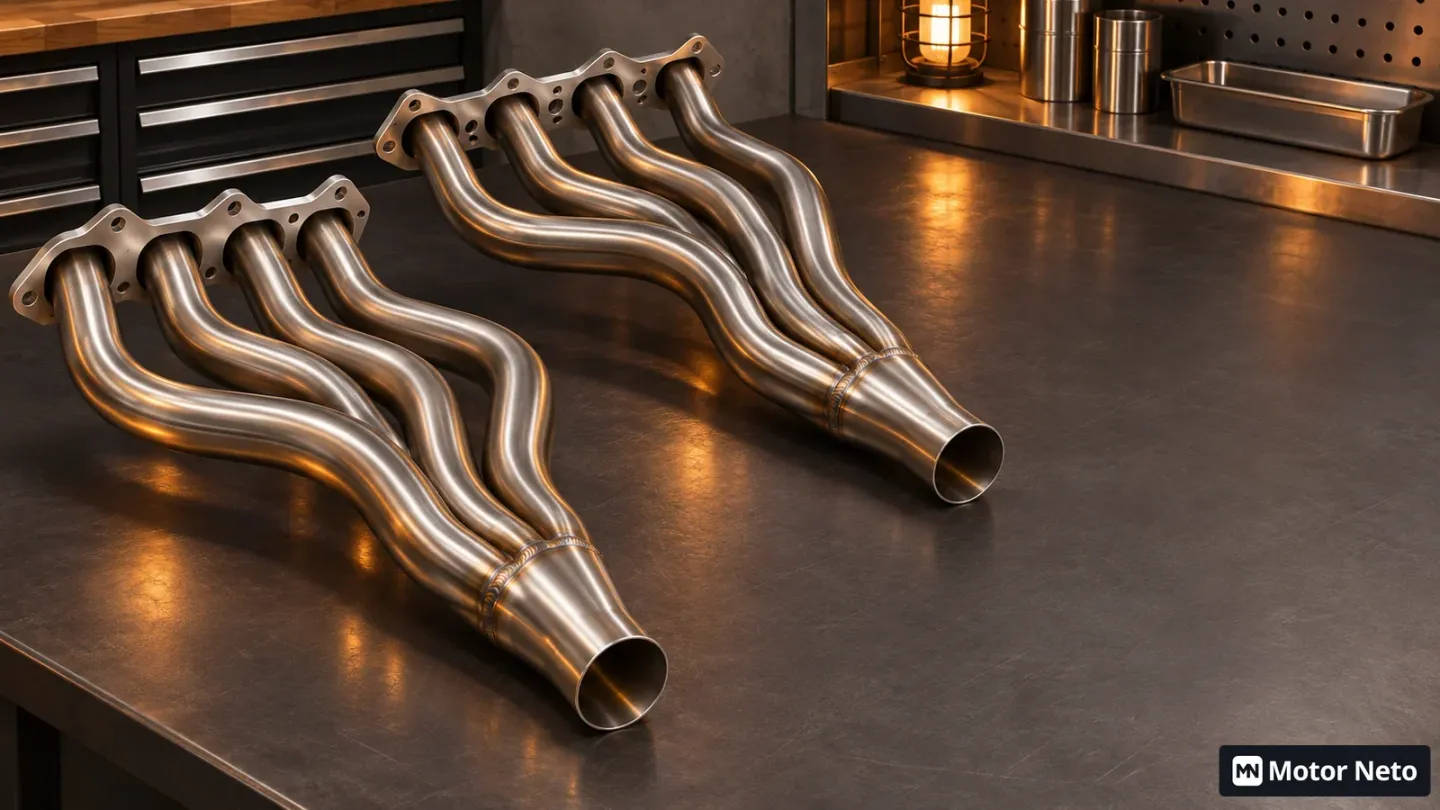
Each time an exhaust valve opens on the 6.2 litre LT1, a pressure wave travels down a pipe. A long tube header gives each cylinder a separate path to the collector. Tube length and diameter influence the engine speed at which the pulses help empty the cylinder. A wider pipe can move that benefit away from the revs you use. A power claim is of little use unless the engine, software and fuel match.
A cat-back starts farther downstream and retains the manifolds. It makes sense if sound is your main aim. A cold start recording tells you little about cabin drone in a high gear. Look for a steady cruise in the same body style and transmission, and establish whether the car in the recording has NPP exhaust valves.
Two prices, two different rear sections
American Racing Headers lists its catted Long system for the US coupé with 1⅞ inch (about 48 mm) primaries and a 3 inch (about 76 mm) X-pipe. It retains the rear silencers and requires one cut on each side. The price is $2,835.30. Its $4,021.08 Full Dual Tips system adds silencers and tailpipes for cars originally equipped with one outlet per side. Check any promise to retain NPP control against the exact rear section quoted.
What the Israeli budget buys
Prices were checked on 23 November 2026. At the Bank of Israel rate of 3.326 shekels per dollar on 20 November, plus 18% VAT on the goods, the two systems come to about 11,100 or 15,800 ₪. AmericanMuscle allows four hours for a comparable Kooks system. At the Tax Authority’s 2024 workshop benchmark of 250 to 500 ₪ per hour before VAT, that adds about 1,180 to 2,360 ₪. The resulting estimate is 12,300 to 18,200 ₪. The Kooks time is a comparison only.
A complete system is bulky. Add a freight quote based on the box dimensions, other import charges and VAT on those amounts, seized fasteners, calibration and dyno time to the workshop estimate. These fall outside the range. At home you save only the work you perform. Cutting tools, stands and test time still cost money. If you want to keep the original sound as an option, agree where the cut will be and keep the original rear section.
What happens on the lift and what to measure afterwards
The Stainless Works instructions illustrate the access problem. The headers enter from underneath and, on the version shown, the steering shaft is in the way. A workshop starts cold, identifies the sensors, aligns the sections before tightening and checks the steering, wiring and mounts for clearance. A home installer needs level ground, stable supports and enough height to swing the assembly into place. Leave the work around the steering to a specialist if access or experience is limited. A retailer’s fitting time is a poor basis for planning a drive that evening.
Check for leaks before touching the map. A leak upstream of an oxygen sensor can mislead fuel control. Ask the tuner to save the original file, check mixture and ignition under load and record the fuel and test conditions on the before and after graphs. Changing the engine map will not cure silencer resonance in the cabin. Cross-check the itemised parts list when collecting the car.
Checklist before you continue
Found an error or outdated information? Read how we handle corrections and sources, or email us: [email protected].