
The short answer
Locate the kit, read the sealant expiry date and check its parts against the vehicle and product instructions. Arrange suitable replacements through the service provider and keep the instructions accessible. This is a readiness check, not roadside repair advice for a particular puncture.
Who this guide is for
Car owners in Israel preparing for a journey or taking delivery of a used car who want to check the equipment in the boot.
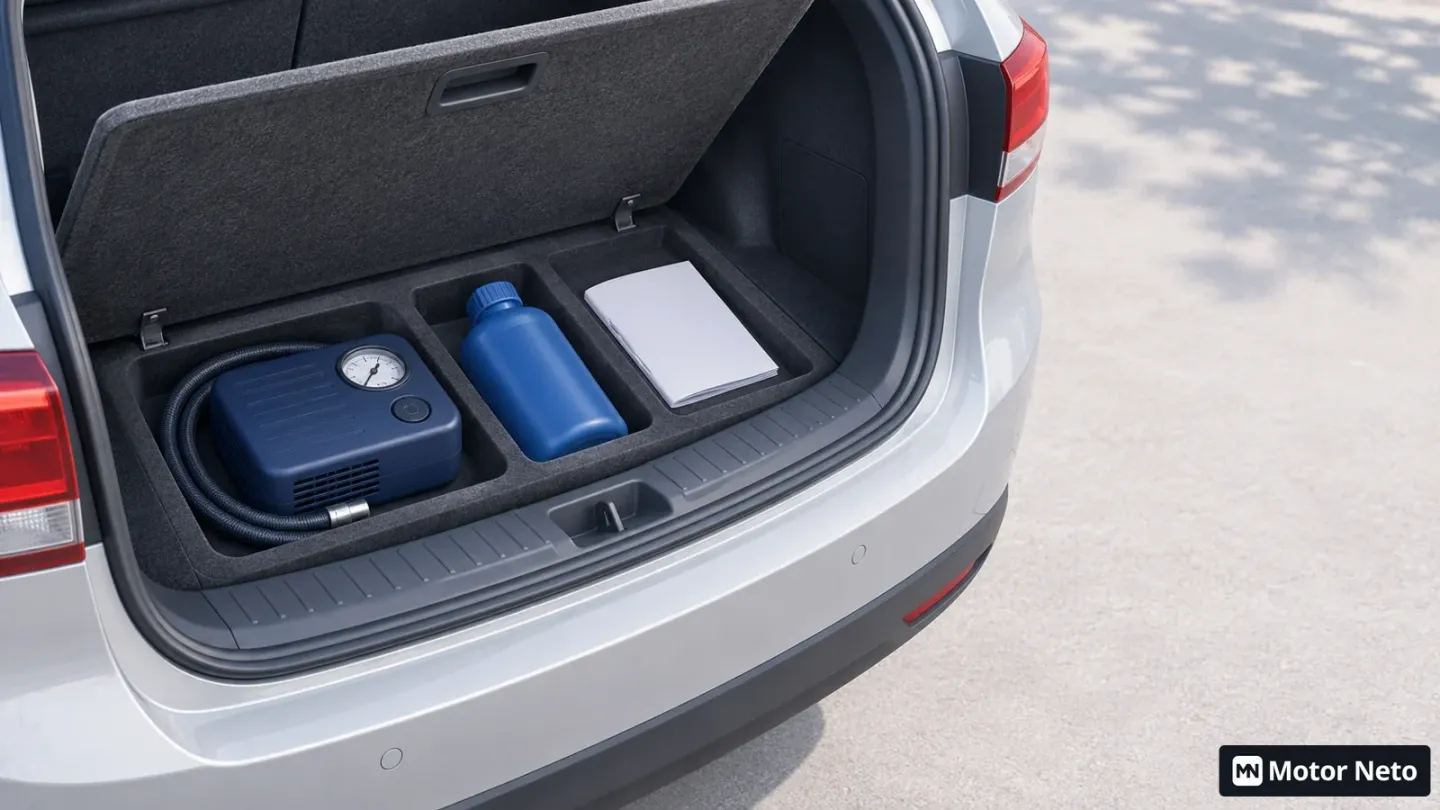
A tyre repair kit sitting in the boot is not necessarily ready to use. Before a long journey, check what is actually in the car, whether the sealant is within its expiry date and whether the instructions match your kit and tyres. Do this beforehand in a safe parking place, rather than meeting the equipment for the first time beside passing traffic.
This guide covers preparation and decisions, not roadside repair instructions. If a tyre is already damaged or you are unsure whether you can continue, follow the vehicle handbook and roadside assistance advice. Having a compressor does not by itself authorise the use of sealant or further driving.
Start with what is really under the boot floor
Open the equipment compartment and inspect its contents. In a used car, a moulded space for a bottle does not prove the bottle is still there, and a closed bag does not tell you whether the kit has been used. Find the manufacturer’s name, product number and instructions. Photograph them so you can ask about compatibility without taking everything to a shop.
The Israeli handbook for the 2023 Volvo XC40 describes a compressor and sealant bottle intended for a temporary repair. That is one particular system, not an equipment list for every car. Yours may have a spare wheel, different equipment or another combination. Start with the handbook for the precise version.
Check that you can read the instructions without an internet connection. If they are only on your phone, save a suitable accessible copy. A video showing similar packaging is not enough: bottle connections, operating methods and conditions of use can depend on the product.
During the checks before buying a used car, record exactly which equipment will be handed over. Missing items can then be addressed before delivery, rather than discovered on the way to a holiday.
Read the date and check compatibility before buying a refill
Find the expiry date on the sealant bottle. The Volvo instructions mentioned above require replacement of an expired bottle; Continental’s ContiMobilityKit instructions require replacement before the marked date is reached. There is therefore no universal rule that every bottle lasts the same number of years from the car’s purchase date.
If the date is illegible or the bottle is missing, ask the service provider to identify the correct part. Do not buy by packaging colour alone. Include the kit name, bottle number, connections and product compatibility in your enquiry. Continental also publishes tyre-size and required-pressure conditions for its replacement bottles, so matching the volume alone is not a complete answer.
The official Continental replacement-bottle information illustrates the specifications to read; it does not establish compatibility with your car. Ask for a quotation identifying the part and whether a hose or another component also needs replacement after previous use.
Do not open a sealed bottle simply to inspect the liquid, or activate the injection system as an experiment. Ask the service provider about checks that the instructions do not explain. Dispose of old material according to the product instructions and the relevant service provider’s guidance, rather than pouring it down a drain.
Know the limits of the temporary solution
Volvo’s instructions distinguish a tread puncture from sidewall damage and warn against use for major damage such as large cuts or cracks. This does not remotely diagnose your tyre. If you do not know what has been damaged, do not replace a professional assessment with the assumption that sealant will close everything.
Restrictions on continuing the journey also belong to the particular product. Speed, distance and inspection conditions printed on another kit are not instructions for yours. Locate the relevant section of your handbook in advance and keep assistance contact details accessible.
Distinguish kit preparation from routine tyre care. In-date sealant does not resolve existing damage or replace pressure checks according to the vehicle instructions. If a warning appears, consult the guidance for that warning and model rather than assuming every alert calls for sealant.
Finish with a check you can repeat
Set a reminder before expiry and save the part number with it. After using the kit, record what was replaced and what is still missing. Putting it back in its compartment does not necessarily make it ready for the next incident.
Plan access too. If luggage will cover the equipment, think about how it could be reached without unloading everything in a dangerous setting. This is a packing decision made beforehand, not advice to unload on the hard shoulder. In a real incident, people’s safety and the stopping location come before convenient access to a bag.
Checklist before you continue
At the end, you should know what is present, what needs replacing and whom to contact if the kit cannot address the situation. That knowledge is more useful than simply having a bag in the boot.
Found an error or outdated information? Read how we handle corrections and sources, or email us: [email protected].