
Stellantis announced on 19 November 2026 that French media drives had begun for Smart Compact Van, its compact commercial-vehicle family focused on a more useful cabin layout. The company says orders are open there. This is not an Israeli launch announcement, but it raises a practical question for business owners choosing a van: how much space must carry people, and how much should serve their equipment?
The development was already presented in June and at IAA Transportation in September. The current step is the start of media drives in France, not the vehicles’ first unveiling. Nor does the opening of those drives constitute a Motor Neto road test.
The passenger seat becomes part of the working layout
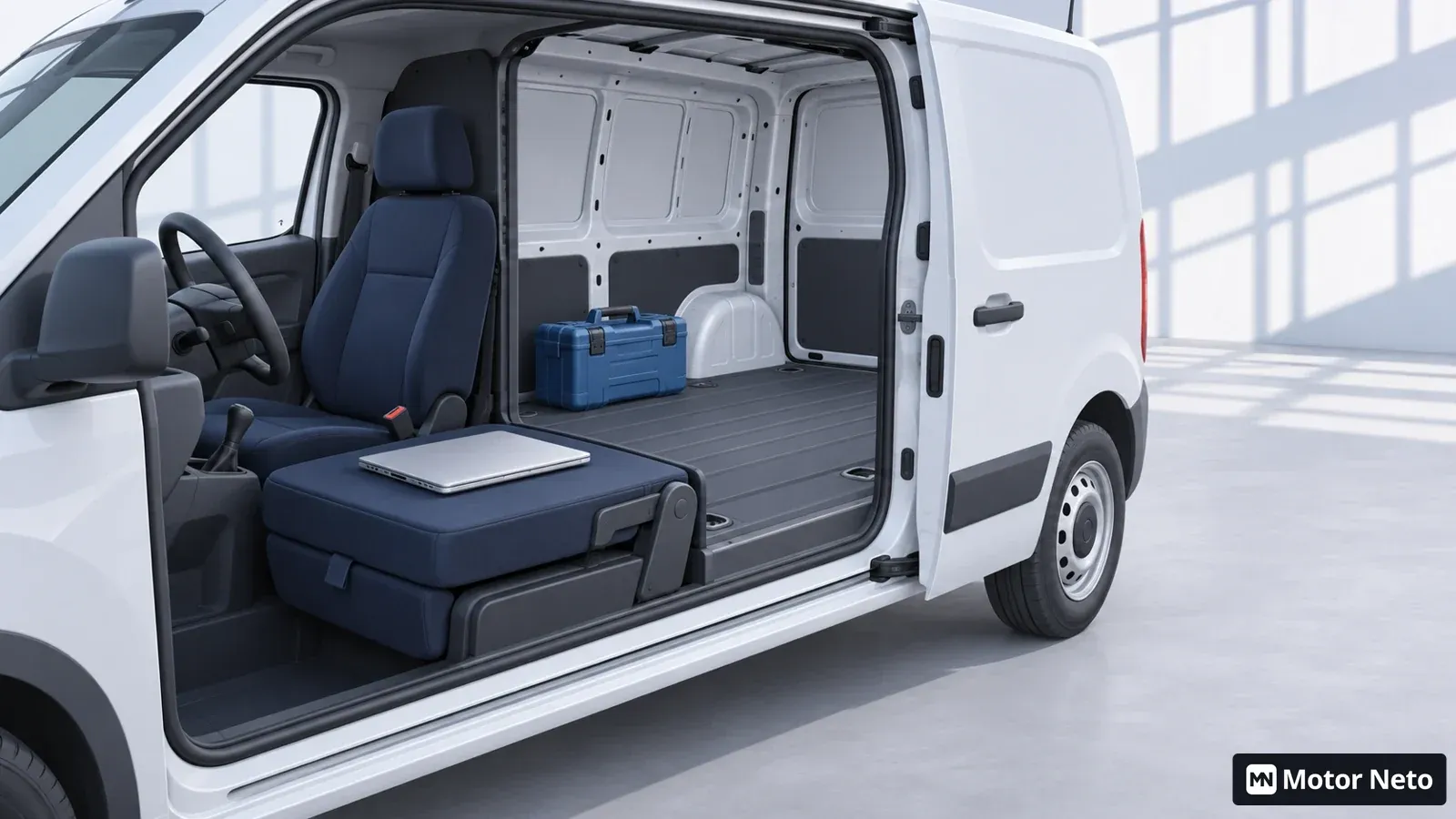
Central to the Stellantis announcement is Flexiseat, a folding passenger seat intended to free space for cargo. The company also presents Modutable, a surface for work or breaks while parked. These describe the manufacturer’s intended functionality, not independently measured comfort or durability.
The distinction between an empty seat and useful space matters before selecting a version. A tradesperson travelling with a colleague needs something different from someone driving alone most of the day. Write down a real working week: passenger numbers, equipment left in the van and items unloaded at every stop. That helps establish whether a folding arrangement meets a recurring need or simply looks persuasive in a photograph.
Alongside the seat, Stellantis describes storage compartments and other organisation options. The release also offers a Moduwork configuration for those requiring three front seats. Buyers should not assume that every named feature is included in every vehicle; they need to identify the exact configuration and equipment in the quotation.
One family does not mean one specification everywhere
The family has four names: Citroën Berlingo Van FIRST, FIAT Professional Doblò EasyPRO, Opel Combo Cargo START and PEUGEOT Partner ACTIVE. The French announcement describes electric and combustion-engine choices, with a hybrid addition later. It does not confirm the same choice in Israel or a local date for a future version.
Comparison between a foreign advertisement and a local offer must therefore begin with the same version, not merely the same badge. Request details of seating, the cargo partition, usable dimensions, payload and included equipment. If an electric option is available, examine working patterns and charging access before assuming an operational advantage.
The guide to choosing a powertrain for your routine helps separate technology from use. With a van, the decision also involves an unusual working day: a longer route, another passenger or equipment that is not normally carried.
What an Israeli quotation needs to show
The French release supplies no Israeli price, delivery date or binding local specification. A description of a lower entry price within the family is not a sum that can simply be converted into shekels to establish the price here.
If a relevant version is offered to you in Israel, request a written quotation with its full name, contents, total price and delivery terms. Separate original equipment from local installation and accessories not included. Reading the quotation carefully matters especially when the main difference is inside rather than visible from outside.
The new French stage now gives journalists an opportunity to assess the concept in driving and use. For an Israeli buyer, the practical test remains whether the configuration offered here suits the equipment and people being carried, and on what terms it is sold.
Found an error or outdated information? Read how we handle corrections and sources, or email us: [email protected].