
The short answer
Match the box to the car and crossbars, then subtract the rack and empty box from the car's driving roof-load limit. Check the component limits, tailgate clearance and total height too. Capacity in litres is not enough to make the decision.
Who this guide is for
Drivers in Israel who need extra luggage space and want a roof box suited to their car, parking and daily use.
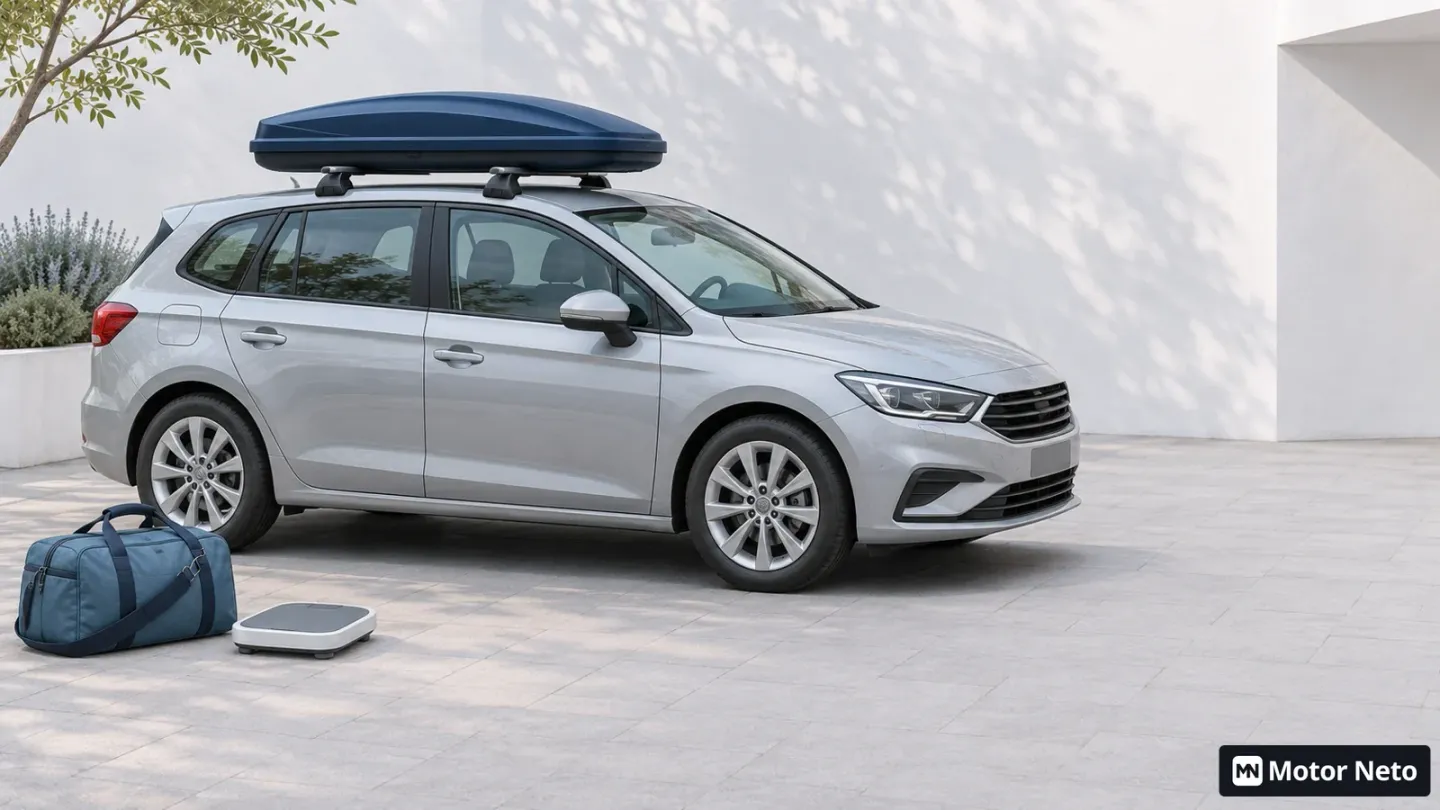
Before buying a roof box, check three separate things: compatibility with the car and crossbars, the weight left for luggage after allowing for the equipment, and clearance for the boot lid and parking entrances. A large capacity in litres answers none of these questions. It describes volume, not permission to carry anything that fits.
A box can help when the car lacks space for light, bulky items, but it adds another system to fit, store and use. This guide concerns choosing equipment before purchase. Installation and loading must follow the instructions for the particular vehicle, bars and box, without improvised attachments.
Match the vehicle, bars and box
Write down the car model, model year and roof type, then identify a compatible carrier system. Similar-looking rails do not prove that equipment from your previous car fits the new one. Ask the seller to specify the fitting components in writing, rather than simply naming a product family.
Compatibility also includes the connection between box and bars. Is an adaptor required? Are the bars in positions permitted by the instructions? Do not solve a boot-opening problem by moving them to an unapproved position. On its Israeli Motion 3 XL Low page, for example, Thule directs buyers to the vehicle or rack manufacturer if it is unclear whether the crossbars can be repositioned.
A clear quotation should identify what is included: bars, feet or fitting parts, adaptors, box and installation if ordered. This allows comparison of a complete system rather than one component’s price. The same distinction helps when reading a car quotation: a product name does not specify everything you need to receive.
Calculate luggage in kilograms, not litres
Thule’s roof-box instructions calculate total roof load from the carrier system, box and contents together. Start with the vehicle’s limit while driving, then check the limits of the bars and box too. A rating for one component does not override a stricter limit elsewhere.
Here is an arithmetic example only, not a vehicle or product specification. If the permitted roof load while driving is 70 kg, the carrier weighs 6 kg and the empty box 19 kg, 45 kg remains before checking the other limits. If the box instructions allow less luggage, the lower figure matters. The vehicle’s maximum overall weight still needs consideration as well.
Do not substitute a stationary load figure for a driving limit. Thule distinguishes these in its packing advice; a static figure discussed for a roof tent is not a luggage allowance on the road. If the correct handbook does not provide a clear figure, pause the comparison and ask for clarification.
Weigh the equipment you plan to take. Box volume does not tell you whether a suitcase will pass through its opening, and a suitcase’s weight cannot be judged from its appearance. List the items and decide which genuinely need to move from the boot to the roof.
Check opening space, height and everyday use
A box compatible with the bars may still interfere with the boot lid. Thule’s Motion 3 XL Low page describes a clearance check using the distance from the front crossbar to where the roof meets the hatch. This is a measurement tied to that product’s instructions, not a universal rule for every box. Consult the fitting diagram for the one you are considering.
Account for total height after installation. Record it and compare it with the limits at the parking facilities you use, rather than remembering that the car fitted yesterday. If the figure is uncertain, arrange an appropriate measurement before entering a height-restricted space.
Check which side opens, whether you can reach the contents without leaning on parts not intended for support, and where the box will be stored when unused. In a narrow car park or a home without storage space, these can matter more than a small increase in capacity.
The guide to planning car ownership costs encourages looking beyond purchase price. Here too, compare complete solutions: buying, hiring if a suitable offer exists, or packing differently. Before buying a large system for an occasional need, examine the alternatives actually available to you.
Understand what changes when luggage goes on the roof
Volvo’s XC40 guidance states that roof loads change the car’s centre of gravity and handling characteristics. A box should therefore not be treated as an extra boot that has no effect on the vehicle. Load position, securing and attachment checks must also follow the manufacturers’ instructions.
This guide provides no universal fuel-consumption increase or range reduction. A numerical effect requires relevant test conditions and a suitable vehicle; a percentage from an advertisement or another car’s test should not be transferred. The Volvo roof-load guidance is one example of the cautions a manufacturer attaches to use.
Checklist before you continue
The right box solves your luggage problem within the car’s limits and your everyday needs. Capacity becomes a useful purchasing criterion only when accompanied by compatibility, weight and dimensions.
Found an error or outdated information? Read how we handle corrections and sources, or email us: [email protected].