
What this overview is based on
Pirelli release of 23 November 2026 at 14:30 CET. Demonstration and performance descriptions are attributed to the manufacturer; no independent test conducted.
Pirelli announced its US presentation of Cyber Tyre on 23 November, following a Las Vegas demonstration of communication between tyres and vehicle systems. The practical point for drivers in Israel is that the sensor and tyre are only part of the system: changing how vehicle controls operate also requires suitable software and electronic integration in the car.
The company says the demonstration covered braking and traction-control applications. These are a manufacturer's presentation and claims, not a Motor Neto comparative test. The announcement supplies no universal numerical braking-distance reduction that can be applied to every vehicle and road.
Wheel data needs a system able to use it
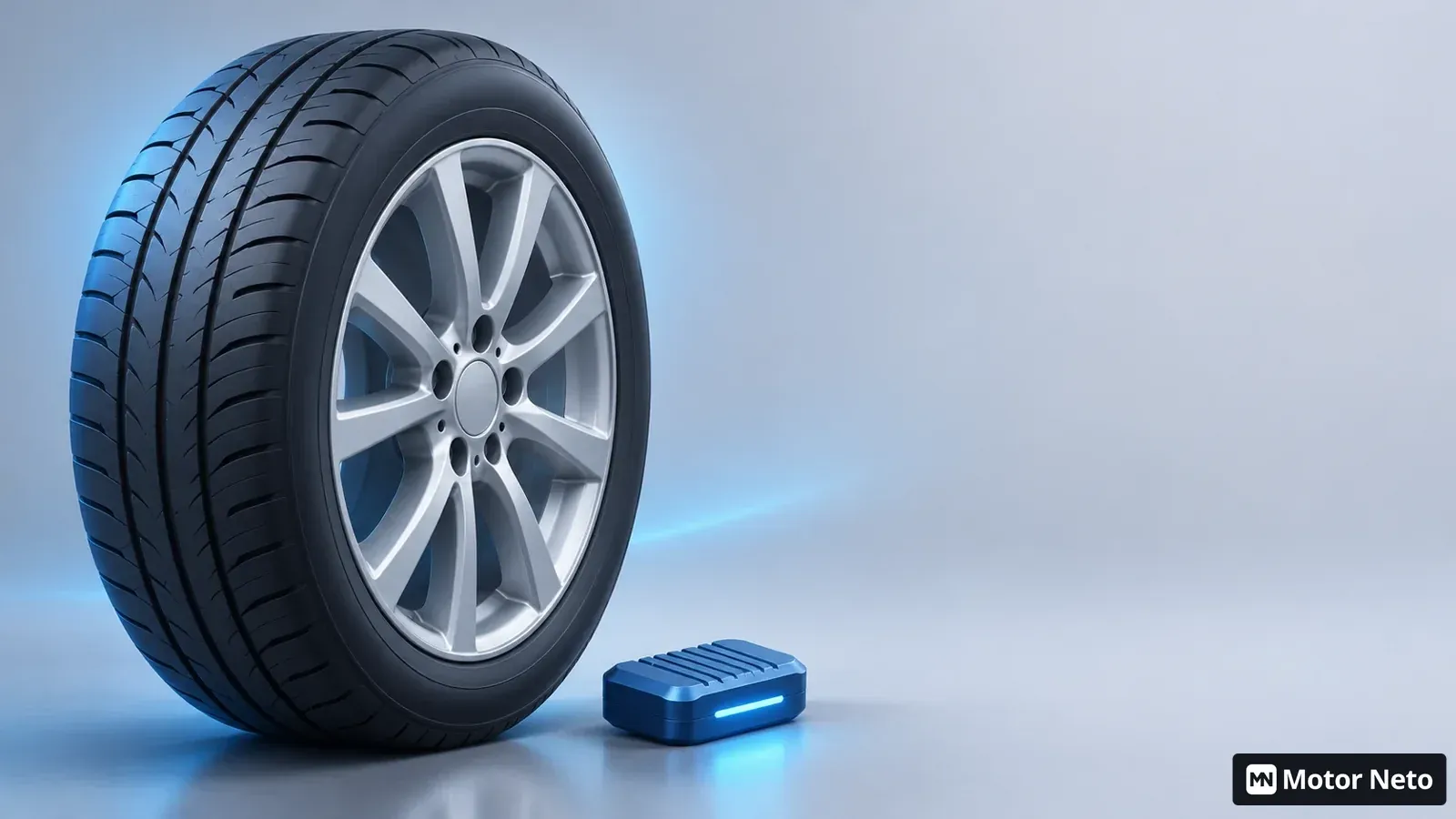
Pirelli's technical explanation describes a sensor collecting tyre identification, pressure, temperature and acceleration. Data travels by Bluetooth for processing in the company's software, then can inform control systems in a vehicle integrated with the technology.
Receiving information and changing a function are different steps. A pressure display is useful to a driver, but using data to adapt traction control goes further: the vehicle must be designed to receive and use it. Buying a sensor-equipped tyre therefore cannot be assumed to add the same functions to any existing car.
Pirelli describes tailoring traction control to the tyre fitted and assisting ABS, the system intended to prevent wheels locking under braking. That is not an invitation to explore grip limits on public roads. For a purchasing decision, the question is what the manufacturer supports for the exact version, rather than what the phrase “smart tyre” seems to promise.
A current demonstration within a longer production plan
Alongside the demonstration, Pirelli links the technology to expansion of its plant in Rome, Georgia. It describes a programme intended to start in 2027 and progressively increase production capacity through 2033. The investment plan itself was announced in September, so it should not be presented as a decision made now.
These are industrial planning dates, not delivery dates for Israeli customers. Expanding factory capacity does not establish that every tyre it makes will contain a sensor, or that every size will be offered here. Keeping the new demonstration separate from the earlier plan avoids confusing technology, production and shop availability.
The technology is not being presented here as an invention first revealed this week. The reported development is its US activity and the demonstration of applications within that programme. For an owner, its significance needs to be assessed against a functioning system in their car, not solely against the manufacturer's investment timetable.
What to check in a smart-tyre quotation
Ask for the tyre model, size, vehicle compatibility and functions the car actually supports. A proposed change of tyre or wheel size is a separate matter covered in the guide to changing tyre and wheel sizes. A technology label does not replace a proper fitment check.
Also ask who services the sensor, what the replacement price includes and what information will be available after installation. These are questions for an individual quotation, not a claim that a particular surcharge applies. Include the total in your car ownership budget without paying for an assumed benefit that your vehicle cannot support.
The release reviewed confirms neither Israeli distribution of the described system nor a local price. The demonstration illustrates the direction of development: information from tyres can participate in vehicle control. It does not turn every replacement tyre into a ready-made electronic upgrade for every car.
Found an error or outdated information? Read how we handle corrections and sources, or email us: [email protected].