
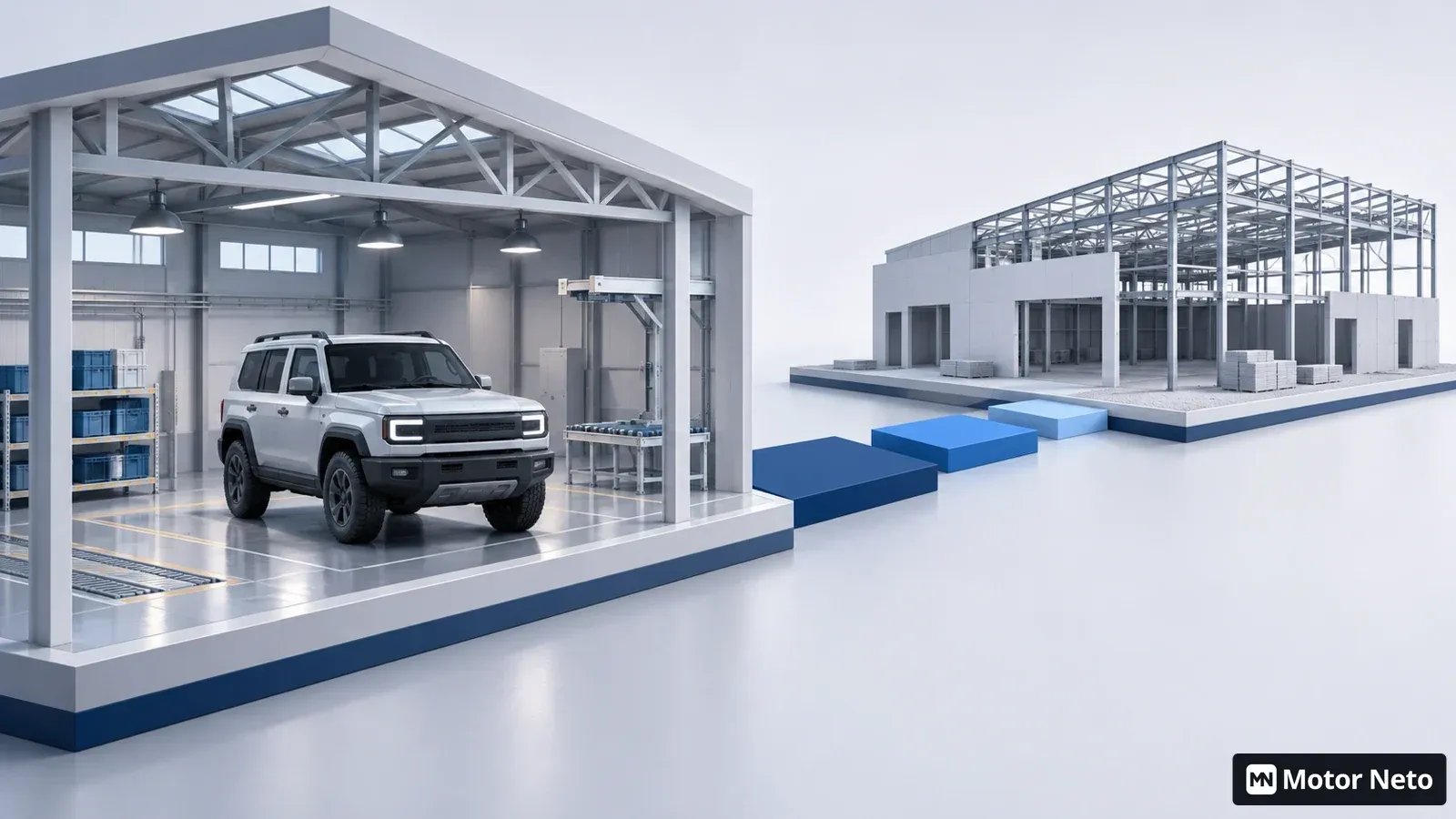
INEOS announced on 24 November that it plans to produce the Grenadier and Quartermaster in the United States in 2028. At the same time, it is in exclusive negotiations to sell its Hambach factory in France to BYD. These are two developments at different stages, not an announcement that cars intended for Israeli customers have already changed their country of manufacture.
For buyers with a quotation or an order, the news warrants a focused question about their particular vehicle. It does not itself establish a change in price, specification, delivery date or service provider in Israel. Nor does it announce the sale of the INEOS brand to BYD.
The chosen factory has not yet been announced
In a 24 November report, Autoblog cited company spokesperson Colleen Robar saying options included an existing factory or a greenfield site. This adds detail about the search, rather than confirming a completed site selection.
According to the INEOS announcement, the company has shortlisted potential production sites in the United States and expects a final decision in the coming months. It presents 2028 as the target for starting production. That is a planned timetable, not evidence of an American line already producing customer vehicles.
The distinction matters because production can refer to several stages: choosing a site, preparing it, starting assembly and delivering a specific vehicle. For someone placing an order, that last stage is the relevant one. A strategic statement about a future factory does not replace the delivery date in an agreement.
When comparing quotations, ask the seller to distinguish a vehicle already in stock from a future production order. Our guide to reading a new-car quotation helps bring the transaction details together. Here, the additional question is whether the seller can already identify the car offered to you, or only the version they intend to order.
A possible factory sale is not its closure
INEOS says that, if negotiations with BYD succeed, the Grenadier and Quartermaster would continue to be produced at Hambach in the medium term. The announcement gives no precise end date for that period. There is therefore no basis for setting a final day of French production or saying every delivery after a particular date will come from the United States.
Factory ownership and the brand on a car are also separate questions. The announcement concerns the possible sale of an assembly facility. It does not describe a change of vehicle brand or replacement components for a car already delivered.
It is possible to read the announcement without turning every missing detail into a scenario. It does not publish final transaction terms for the factory or an allocation of production for Israel. Each of those questions needs appropriate information, rather than an inference from the name of the negotiating company.
The relevant questions for an Israeli order
Israeli buyers should keep the discussion centred on the transaction documents: exact version, delivery date, warranty details and the organisation providing service. If someone says the announcement changes your quotation, ask for a written explanation of the change and the order to which it applies. There is no need to assume a change before receiving such information.
When comparing another vehicle, country of manufacture is one detail in a wider picture. Building a shortlist around your budget and routine brings the decision back to your needs: what the car must do, when you need it and what the quotation actually includes. Quality, running costs and suitability cannot be inferred solely from the country where assembly is planned.
For existing owners, this announcement alone is not an instruction to arrange servicing or make a modification. It is not a new commitment on parts delivery times either. Direct service questions to the organisation handling your vehicle, with details of the work required. The next developments that will clarify the picture are the US site selection and the outcome of negotiations in France, rather than repetition of the 2028 plan.
Found an error or outdated information? Read how we handle corrections and sources, or email us: [email protected].