
What this overview is based on
News based on the manufacturer’s global announcement, primarily describing North American specifications. No test drive was conducted.
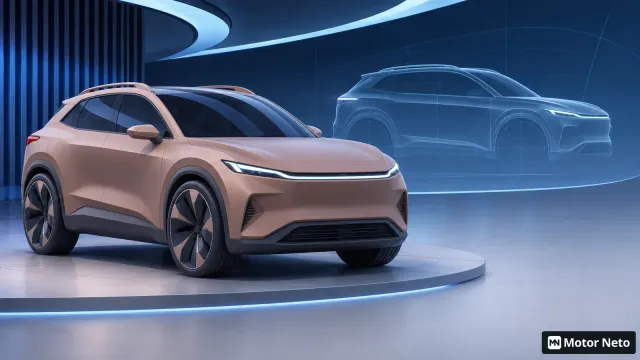
Hyundai presented the eighth-generation Elantra at the Los Angeles Auto Show on 19 November. According to the manufacturer’s announcement, published on 20 November Korean time, the launch in global markets, including North America, is planned for early 2027. For buyers in Israel, this is information about the next generation, rather than a local sales offer.
The name is familiar, but the new car needs to be distinguished from versions currently on sale. Hyundai says the generation launched in Korea as the Avante in August 2026. The new development is its presentation as the Elantra for additional markets, with details of the cabin, powertrains and software. The announcement provides no Israeli price or local delivery date.
Larger dimensions do not settle everyday usability
Hyundai lists a length of 4,795 mm, a width of 1,855 mm and a wheelbase of 2,750 mm. Compared with the previous model identified in the announcement, these represent increases of 85 mm in length and 30 mm in both width and wheelbase. They are manufacturer figures for the global specification, mainly covering North America.
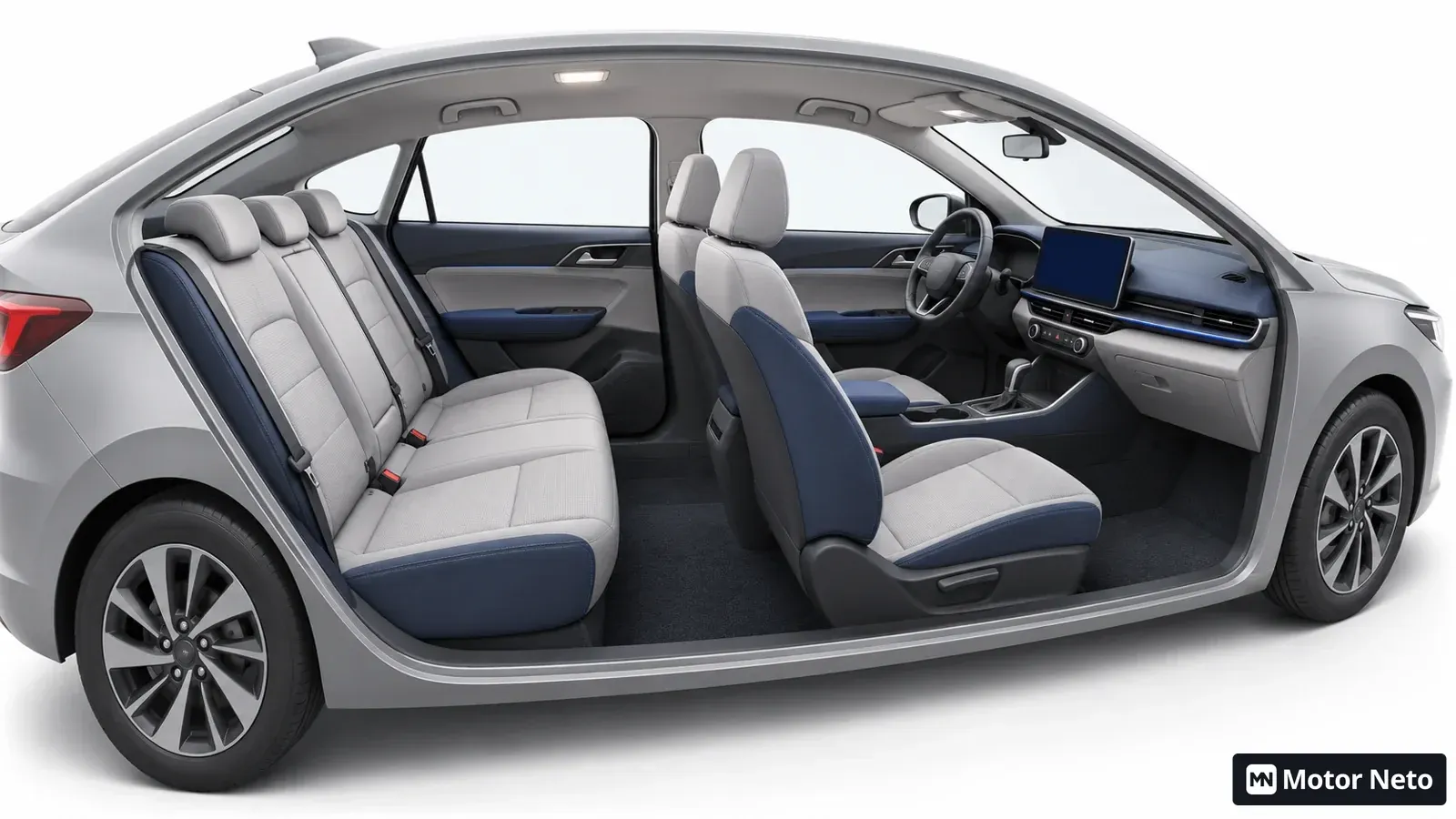
For buyers carrying rear passengers, a longer wheelbase is worth considering, but it does not by itself prove that the seats are more comfortable. Seat height, door openings and the shape of the roof also affect use. This is not an account of sitting in the car or an independent measurement of its space.
The distinction between versions also appears in the boot. Hyundai lists 479 litres for the combustion-engine version and 467 litres for the hybrid, measured under the VDA method. Even within one generation, a single figure cannot therefore be applied to every powertrain. An Israeli specification would allow comparison of the particular version, rather than the model name alone.
Two powertrains, with consumption still awaiting certification
The manufacturer describes a 2.0-litre petrol engine with an IVT transmission, alongside a hybrid system using a 1.6-litre engine and a six-speed dual-clutch gearbox. The hybrid output is the combined system figure, not a number to which the electric motor’s output should be added again.
| Published specification | Petrol | Hybrid |
|---|---|---|
| Engine capacity | 2.0 litres | 1.6 litres |
| Declared output | 149 PS | 157 PS combined |
| Transmission | IVT | Six-speed dual-clutch |
Engine capacity
- Petrol
- 2.0 litres
- Hybrid
- 1.6 litres
Declared output
- Petrol
- 149 PS
- Hybrid
- 157 PS combined
Transmission
- Petrol
- IVT
- Hybrid
- Six-speed dual-clutch
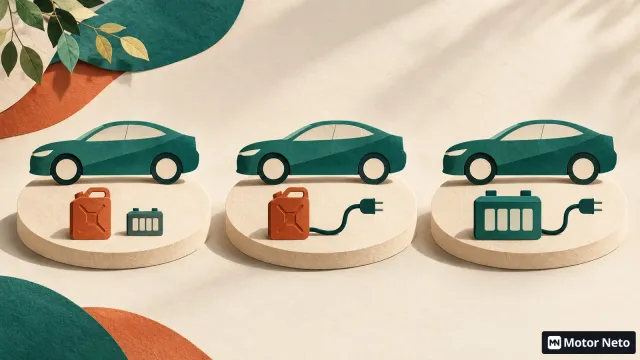
Hyundai says the hybrid fuel-consumption figure remains in the EPA certification process. There is therefore no final consumption number here for comparison, let alone an Israeli figure. When choosing between hybrid, plug-in hybrid and electric cars, keep the system type, test conditions and your driving routine separate.
Hybrid functions also extend to parking
The release describes Smart Regeneration System 3.0, which recovers energy during deceleration and braking, alongside predictive energy management. Hyundai attributes efficiency improvements to these technologies; the announcement does not provide independent measurements establishing savings for an individual driver.
It also lists Stay Mode, intended to operate climate control, audio and lighting while parked, reducing unnecessary engine operation. This does not promise unlimited running time or mean that the engine will never operate. The conditions should be read in the instructions for the relevant version when it goes on sale.
A different screen, with equipment still dependent on market
Pleos Connect is based on Android Automotive OS and supports remote software updates. Hyundai specifies a 12.9-inch central display alongside physical buttons for essential functions. It also describes Gleo AI, an in-car conversational and action system, but this announcement does not promise Hebrew support or availability of every service in Israel.
The manufacturer stresses that technologies, safety systems and equipment may vary by market and version. Before a local purchase, a detailed new-car price offer should identify the generation, trim and attached specification. A foreign feature list does not replace the seller’s commitment for the car to be delivered.
Found an error or outdated information? Read how we handle corrections and sources, or email us: [email protected].