
The short answer
Use the handbook's demisting mode with the appropriate airflow and intake, and check side and rear windows too. Do not leave if visibility is inadequate or cannot be maintained; stop safely if it deteriorates on the road.
Who this guide is for
Drivers in Israel dealing with misted windows and learning their climate controls.
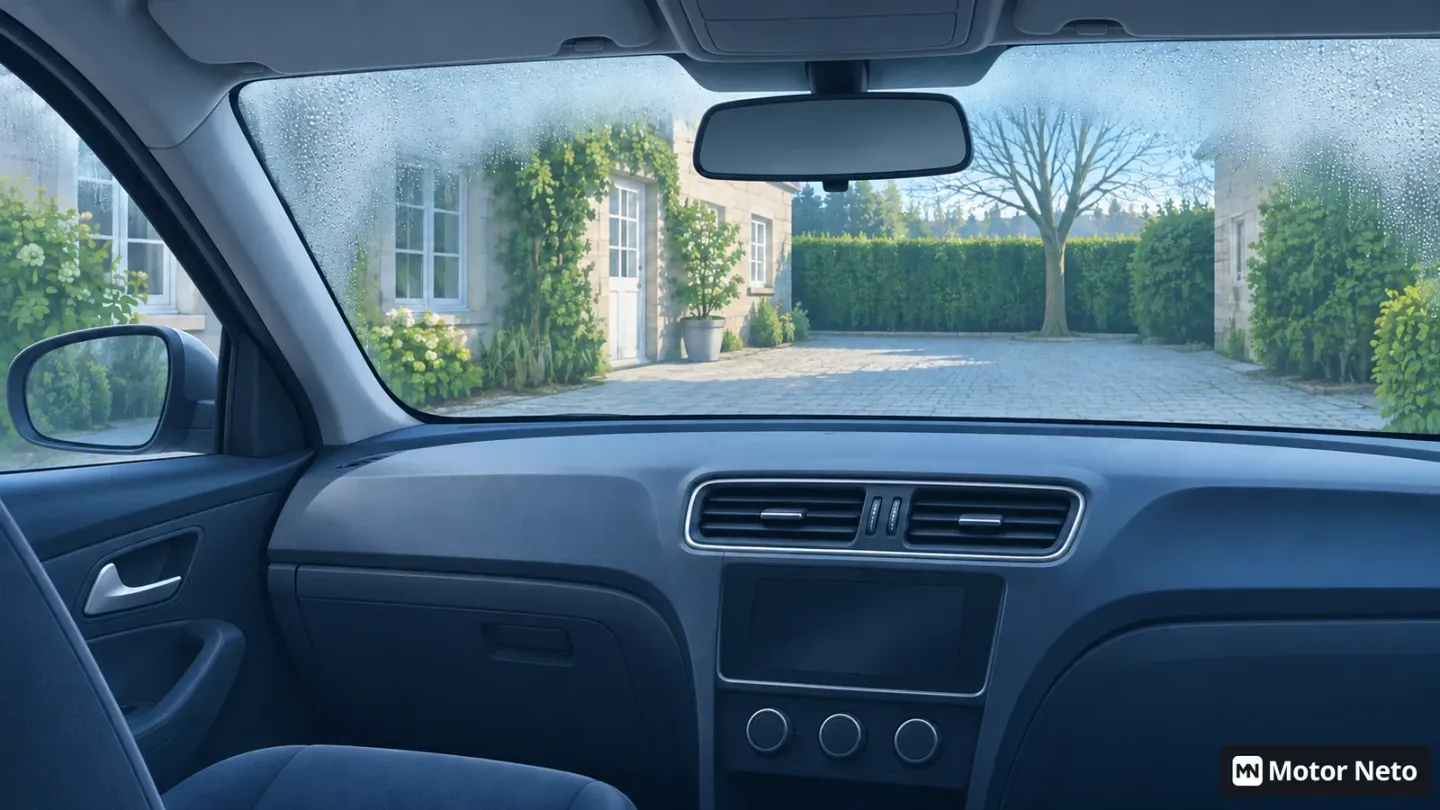
If mist is restricting your view through the windscreen, do not set off hoping it will clear on the way. Select front demisting according to the handbook, check that air is directed towards the glass and that outside air has not been replaced by unsuitable recirculation. If visibility deteriorates while driving, maintain control and stop somewhere safe; do not hunt through menus on the move.
The aim is a clear, stable field of view, not a small circle wiped directly in front of your eyes. Check the side windows and your view of the mirrors too. Once visibility is adequate, you can return the climate control to a comfortable setting and check that the mist does not immediately return. Clearing the glass for a moment without keeping it clear has not resolved the problem.
Identify the situation before changing every control
Israel's National Road Safety Authority, the RALBAD (הרלב״ד), explains that mist results from temperature and humidity differences between the cabin and its surroundings, and is not confined to winter. Its guidance on clearing misted windows recommends admitting outside air and directing conditioned air at the windscreen. You can choose a comfortable warm or cool temperature; warm conditioned air can also help dry the glass.
An illuminated A/C indicator therefore does not mean you must sit in a cold cabin. Nor does that lamp alone demonstrate that the system is doing the required job. Check where the air is going, the air-intake setting and what you can actually see. Randomly pressing several controls makes it harder to understand which change helped and which setting cancelled another.
With the car parked, try to distinguish condensation on the inner surface from water or dirt outside, or a film which does not disappear. These are not necessarily the same problem. Do not decide in advance that every mark requires new wipers or an air-conditioning refrigerant refill. If you cannot identify the problem and restore adequate visibility, seek assistance instead of continuing the experiment on the road.
Find the demisting function for your model
Look in the handbook for front demisting, sometimes called Defrost or Max Defrost. Establish whether it uses a physical button or a screen and how to leave the mode. Learn that route while parked in daylight, before several windows mist up together when you are rushing to leave.
For example, Volvo's Israeli support manual for the 2014 V60 Plug-in Hybrid says maximum demisting activates air conditioning and automatically disables recirculation. The manufacturer also notes that the fan becomes noisier. This describes a particular model; it does not promise that every car makes exactly the same changes or displays the same indicators.
If your car's automatic mode changes settings itself, do not immediately undo them because the fan is strong or A/C has switched on. Read what is supposed to happen. The same Volvo manual says this function may also start the combustion engine when the car is in PURE mode. Do not assume a hybrid will remain silent and exhaust-free simply because it started electrically; do not operate it in an enclosed space.
Let air reach the glass and distinguish front from rear
Make sure objects on the dashboard are not covering the outlets intended for the windscreen. Activate the appropriate mode and observe the change in visibility while stationary. There is no magic clearing time applicable to every windscreen, and a promise of “exactly one minute” is no substitute for checking the result in your own car.
RALBAD advises increasing fan speed or opening windows when there is more mist. Do this as conditions and the handbook allow, without admitting rain in a way that worsens matters. Passenger comfort and moisture removal do not necessarily demand opposite settings. The objective is air that dries the glass and a setting you can continue to use.
The rear window needs separate consideration. RALBAD describes using its heating switch so that the heating elements dry the condensation. Do not assume the front button also activates rear-window or mirror heating in every car. Check the handbook for linked functions and the equipment fitted to your particular trim.
Side windows matter too: a clear windscreen is not enough if you cannot see through the side glass towards a mirror. Assess the field of view from the driver's seat, not merely the glass's appearance from outside. If someone helps, ask them to confirm what has changed without treating that as proof that an untested system works.
If the mist returns, record the symptoms before ordering repairs
If condensation returns after you switch demisting off, note what changed: fan speed, air direction, A/C or recirculation. Return to the manufacturer's instructions and check whether visibility is maintained. You do not need to become an air-conditioning diagnostician; this information helps describe the symptom clearly to a service provider.
Tell the garage whether it happens only at the start of a journey, after extended running as well, on one window or all of them. Mention whether you can feel airflow and whether a message appears on the display. There is no need to take photographs while driving. Write the details down after stopping, giving a more useful account than “the air conditioning does not work”.
If a warning appears, follow the guidance on finding the meaning of a warning light rather than relying on colour alone. If work is needed, first ask for an explanation of the diagnosis, then an itemised garage quotation. This guide cannot establish that refrigerant is low, a filter is blocked or a particular component needs replacement.
Prepare a short routine before setting off
In a car shared by several drivers, make sure everyone knows where to find demisting. The previous driver's comfortable setting may not suit your morning. A short pre-departure check can cover the windscreen, side and rear windows and the view of the mirrors, without starting a journey on the assumption that the system will sort itself out.
If visibility cannot be restored or maintained, postpone the journey and seek appropriate help. A short distance does not make an obscured window a minor problem. The decision to leave should reflect what you can actually see, not how many minutes the air conditioning has been running or how busy that morning's schedule is.
Keep the relevant handbook page somewhere you can find again. If operation uses a screen, learn how to return to the normal driving display while parked too.
Checklist before you continue
Found an error or outdated information? Read how we handle corrections and sources, or email us: [email protected].