
What this overview is based on
Label fields were checked against Nissan Israel. The comparison method and worksheet are editorial tools, not a tyre test.
Bottom line
Identify the product and check compatibility before comparing letters and prices.
The short answer
First ask a professional to confirm that the identified product suits your car. Then compare each label measure separately, alongside the same quantity and service scope in the quotation.
Who this guide is for
For drivers in Israel comparing tyre quotations or documenting tyre specifications before buying a car.
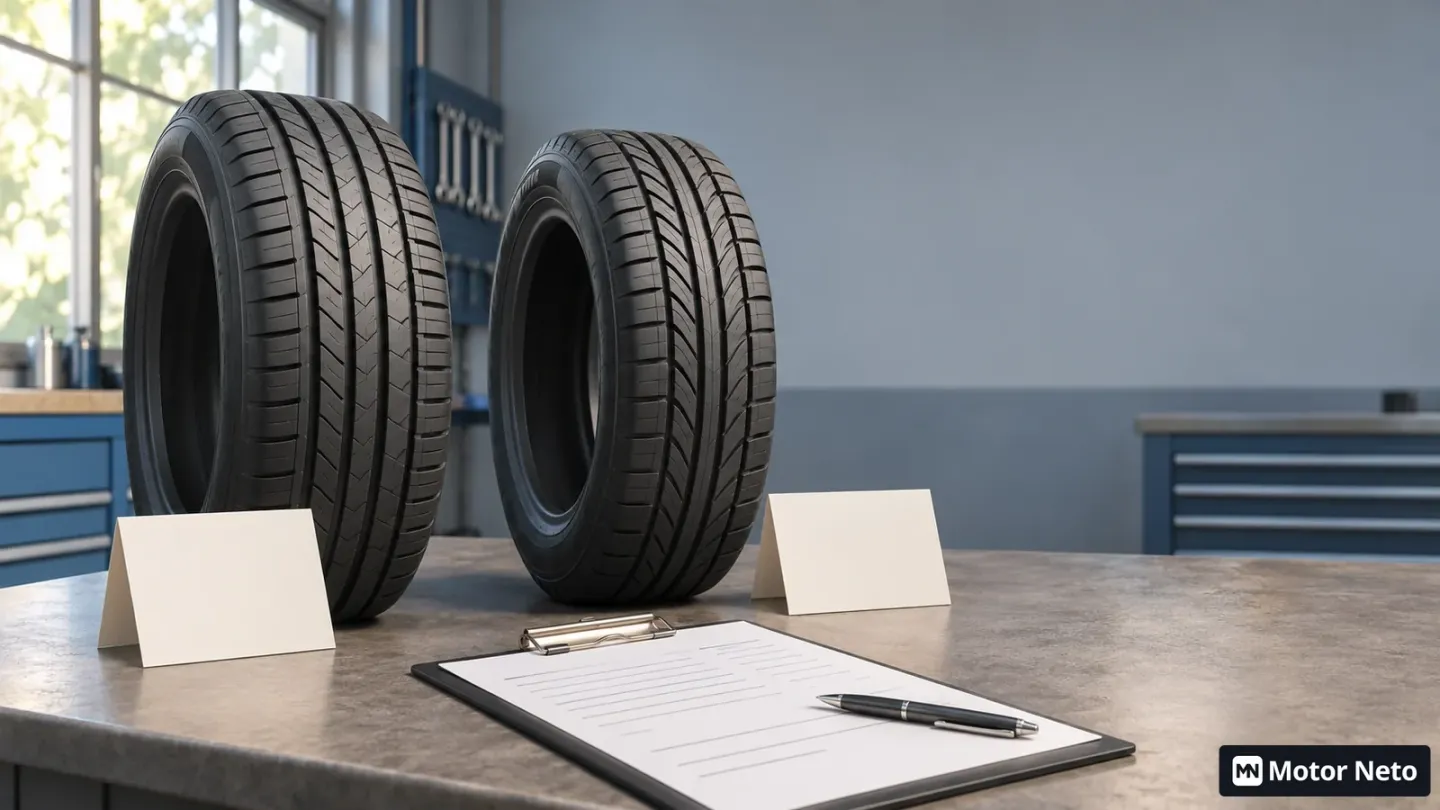
Before comparing the labels on two tyres, make sure both quotations identify a product that suits your car. Then compare each measure separately, using the same units and the same basis for the price. A label can help explain differences between alternatives, but it does not answer every question about fitment, cost or how your car will behave.
This guide is for preparing a clear comparison before ordering, not choosing a tyre remotely from a photograph. If the proposal changes the tyre size or wheel, start with the checks in our guide to changing tyre and wheel sizes in Israel. A favourable rating is no reason to skip a professional compatibility check.
Identify the product behind the price
Ask each supplier for a written quotation stating the manufacturer, full model name, size, load and speed codes, and any other markings relevant to the proposed product. A brand name and a wheel diameter do not provide enough information for a comparison. If the seller offers an alternative, give it a new row rather than quietly changing the model name in the existing one.
Attach a label or product document that identifies the particular tyre. Check that its numbers and name match the quotation, rather than merely a generic website picture. If a link leads to a product family, ask which version you would receive. Keep the link and the date of your check beside the document so you can return to the same information.
Take the compatibility question to a professional with the details of your car and its manufacturer's requirements. Ask for an explanation of the proposed specification, especially if it differs from what you expected. You do not need to choose a substitute code yourself from an internet table. A tyre pictured beside a similar car model is not proof that it is the right choice for your own vehicle.
Mark separately what has been checked and what remains open. For example, the model and size may be identified while an additional marking in the quotation still awaits clarification. This keeps the price available for comparison without turning it into an early purchase decision. Do not let the urgency of an offer erase an unanswered question.
Read each measure on its own
Nissan Israel's tyre-label explanation lists energy efficiency and wet grip from A to E, and external noise in decibels and classes A to C. The QR code links to EPREL product data.
Copy each value into a separate column. Do not simply write A-rated tyre: identify the measure to which the letter belongs. When a value is missing, leave the cell blank and request it. Missing information is not a low rating, and marketing descriptions such as quiet or economical do not substitute for product data.
External noise is the name of that measure; do not rename it cabin noise in your comparison. Similarly, do not turn a rating letter into an annual saving in shekels or a guaranteed braking distance for your car. Claims like those require information beyond a short quotation.
Use the following worksheet without inventing grades or assigning your own overall score:
| Item to check | First quotation | Second quotation |
|---|---|---|
| Product identity and full specification | Copy from quotation | Copy from quotation |
| Energy efficiency | Matching label value | Matching label value |
| Wet grip | Matching label value | Matching label value |
| External noise | Value and class | Value and class |
| Quantity and total price | Written breakdown | Written breakdown |
| Unanswered questions | Separate notes | Separate notes |
Product identity and full specification
- First quotation
- Copy from quotation
- Second quotation
- Copy from quotation
Energy efficiency
- First quotation
- Matching label value
- Second quotation
- Matching label value
Wet grip
- First quotation
- Matching label value
- Second quotation
- Matching label value
External noise
- First quotation
- Value and class
- Second quotation
- Value and class
Quantity and total price
- First quotation
- Written breakdown
- Second quotation
- Written breakdown
Unanswered questions
- First quotation
- Separate notes
- Second quotation
- Separate notes
This table is not a comparative test we have conducted, and it does not recommend a product. It helps prevent one measure, a unit price or a familiar name from hiding another difference. If one proposal does better on one measure and the other on another, keep the trade-off visible instead of declaring an unsupported winner.
Turn the label into an orderable quotation
Record how many tyres the price covers and exactly what the service includes. Ask for itemised installation, balancing and any additional work offered, together with clarification of whether relevant taxes are included. There is no need to assume that every supplier includes a particular service, or that your car needs every proposed extra.
For an additional operation, ask why it is needed and obtain a separate price before authorising it. A fair comparison keeps the quantity and scope of service the same in both columns. A single-tyre price versus a package price, or a price without service versus one including it, are not two figures you can simply subtract and call the difference a saving.
Also establish what is actually available and what happens if the product is out of stock at installation time. Ask that the model not be substituted without fresh agreement. An alternative may be worth considering, but its identity, compatibility and data need checking again. The words equivalent quality are not a product document.
When buying a new car, add the tyre question to your review of the vehicle quotation: what is known about the car to be delivered, and what is not yet a written commitment? Do not automatically copy the showroom car's tyres into your order. Ask for a record of what was agreed and what needs clarification before delivery.
Keep a clear trail from quotation to invoice
Before approving an order, revisit the two checks separately: does the product suit the car, and does the quotation represent the product and service you chose? An answer to one does not settle the other. If you do not understand a marking or a change, pause the comparison and request a professional explanation tied to that specific quotation.
At installation, ask the supplier to confirm that the product matches the order, and retain an itemised invoice. If a change is proposed on the spot, update the documents before agreeing. This guide is not a fitting procedure or a self-inspection manual; a worksheet prepared at home does not replace professional installation and checks.
Checklist before you continue
A useful comparison ends with a decision you can explain: an identified product, checked compatibility, correctly read data and a price for a clear scope of supply. It does not require an invented overall rating or a promise of a result that the label does not show.
Found an error or outdated information? Read how we handle corrections and sources, or email us: [email protected].