
The short answer
A larger turbo can sustain airflow as engine speed rises. Allow roughly 11,200 to 11,700 ₪ for the NX2 and mechanical fitting, before mandatory calibration, freight and supporting equipment.
Who this guide is for
For owners considering a turbo change on a 2015 to 2023 Mustang EcoBoost with the 2.3 litre engine.
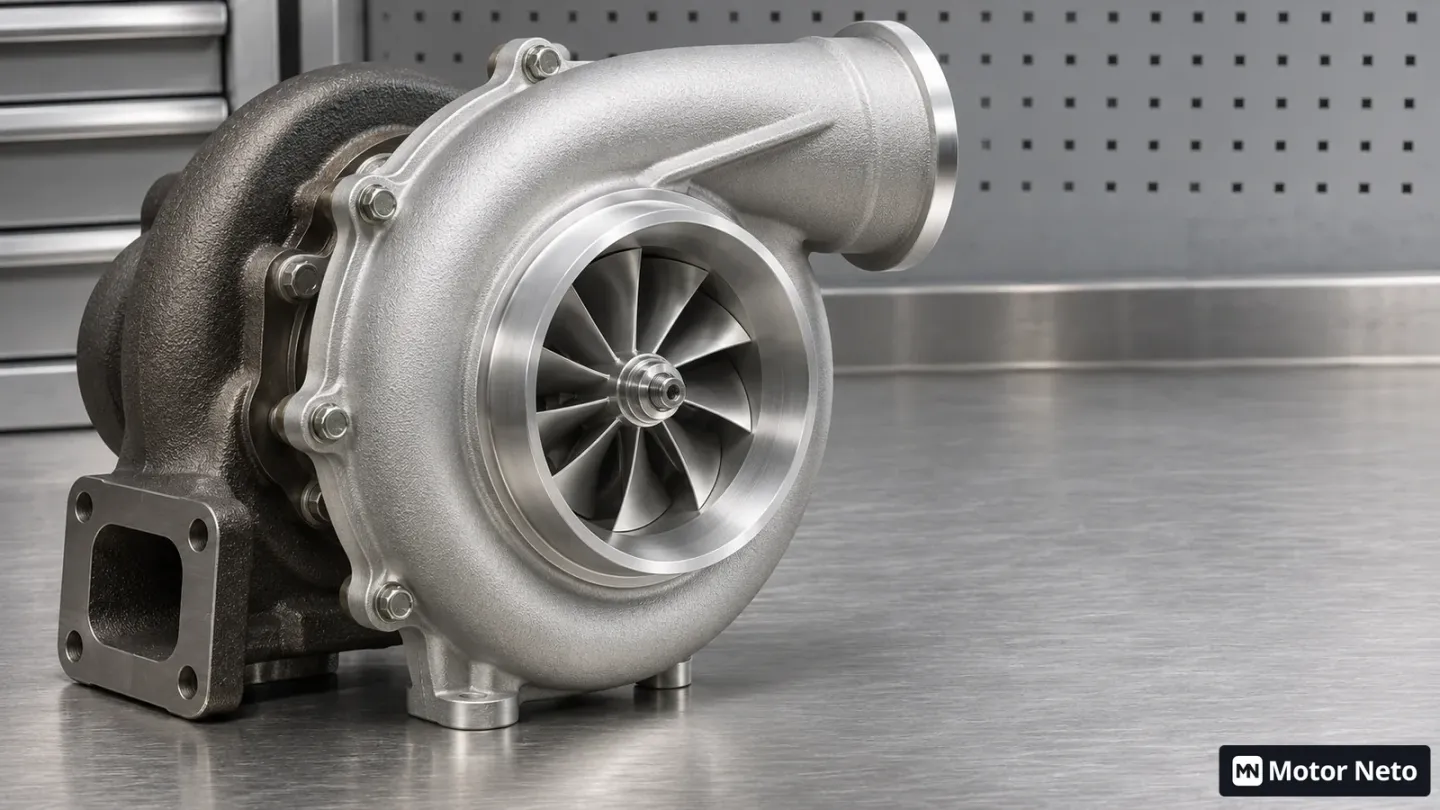
520 hp is the figure beside Precision's NX2 turbo. If you want to know how much power your Mustang EcoBoost will gain, that figure does not answer the question. It is a capability rating, conditional on an engine, fuel supply and calibration that can use the airflow. For a daily driver, establish where the original turbo is already restrictive. If the first pull is strong and the second weak, find out what happens to the air after the compressor before buying a bigger one.
Keeping the factory location or moving the turbo
Exhaust gas spins the turbine. Its shaft drives a compressor on the intake side, and compressed air reaches the engine through an intercooler. A larger unit can supply more air mass as revs climb. The trade-off is how long it takes the rotating assembly to reach the required speed after you press the accelerator. Diameter alone does not predict that delay. Turbine housing design, load and the way the ECU controls the exhaust wastegate also matter.
Precision lists its Stage 1 NX2, part 11910, as a drop-in unit. Its instructions cover the 2015 to 2023 2.3 litre Mustang EcoBoost. The turbo comes with gaskets and silicone couplers. A kit that moves the turbo may also need a different downpipe, bracket, charge pipes and rerouted supply lines. On a modified car, identify the intake and actuator already fitted. TunePlus says an upgraded actuator for the standard turbo does not suit the NX2 housing and rod.
What the power rating says about the original engine
Precision's 520 hp rating converts to about 527 metric horsepower. It gives neither a wheel nor a crankshaft measurement on a specified test car and identifies no fuel for the rating. Subtracting Ford's published output does not give a gain. Nor is this a safe stress limit for the standard pistons and connecting rods. Heavy load low in the rev range differs from a gradual build-up towards the top, even when both curves eventually reach the same peak power.
Ford Performance also offers its HiPo turbo for the standard EcoBoost. The compressor wheel measures 63 mm against the standard 60 mm, and Ford requires a separate calibration. Owners of a High Performance Package car should identify the installed unit first. An upgrade over the base model does not establish a step up for their car. Ask the tuner to overlay the curves and identify where they diverge, especially if you often accelerate without changing down.
Can the fuel supply and intercooler keep up?
The compressor adds air capacity but cannot increase fuel pump capacity. On a direct injection engine, compare actual rail pressure with the target and check whether the injectors have enough time to supply the requested quantity. During its NX2 development work, Function Factory Performance encountered a fuelling limit and did not publish a final post-installation power figure in that report. It illustrates what to measure without making one development car the limit for every engine.
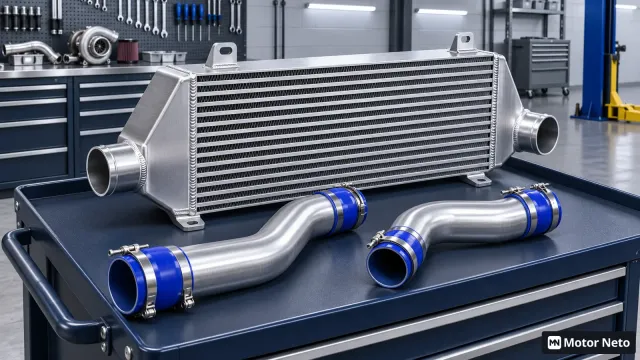
Stable boost does not guarantee stable air temperature either. In Garrett's repeated EcoBoost pulls the original and replacement intercoolers behaved differently as heat accumulated. The Mustang EcoBoost HPP intercooler and pipework guide explains how to interpret temperature downstream of the cooler. Agree with the tuner what pressure, temperature or mixture reading would interrupt a run. Replacing pump, injectors and intercooler before setting a target can raise the bill without tackling the initial problem.
Reading the missing lines on a quotation
On 23 November 2026 TunePlus listed the NX2 at a regular $2,730 beside a sale price of $2,634.23. At the regular price, the Bank of Israel rate that day of 3.343 shekels per dollar and 18% VAT, the turbo alone comes to about 10,800 ₪. That is the home fitting starting point if you own the tools. Freight, additional import charges, fluids, fuelling improvements and intercooler are extra. Neither the file nor the programmer comes with the turbo.
Function Factory Performance reports about an hour and a half for an experienced fitter. The Israel Tax Authority's 2024 garage guide gives a historical range of 250 to 500 ₪ an hour before VAT. An hour and a half therefore adds about 440 to 890 ₪ including VAT. The estimate in Israel is about 11,200 to 11,700 ₪ for turbo and mechanical work. A driveable result also requires calibration and may require a programmer and dyno time. Price those against your existing equipment and exact ECU.
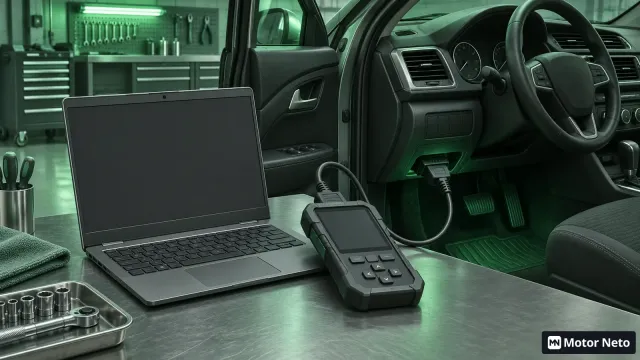
For a budget that includes software and hardware, TunePlus itemises a Cobb Accessport at $665 and a single calibration at $250 in its W400 package. If the supplier confirms compatibility with your ECU and fuel and those prices apply separately, that adds about 3,600 ₪ at the same exchange rate and VAT. The turbo, device, calibration and mechanical fitting then total about 14,800 to 15,300 ₪, or around 14,400 ₪ fitted at home. This assumes the rest of the car already supports the target and excludes a local dyno session and the other W400 components.
In the workshop: from engine condition to the power curve
Have the engine and existing calibration checked, and identify the cause if the old turbo failed. Poor oil supply would still be poor with a new unit. The fitter checks oil and coolant lines, mounts and seals the turbo, prepares it for first operation as instructed and checks for leaks. A dyno allows the tuner to increase load under control and examine rail pressure and torque instead of chasing a peak number. The EcoBoost calibration guide explains the distinction between a base map and a tested file.
Ask for the parts and fluids list, the file ID and its fuel requirement, plus the torque and power curves. Specify gearbox type and clutch condition before agreeing a target. Smooth changes on the old turbo do not establish the clutch's capacity for a sharp torque rise. Replacing the turbo itself adds no gearbox capacity.
Home installation: access dictates the timetable
The same shop allows about four and a half hours for an enthusiast, depending on lifting equipment. That is mechanical time, not a promised departure time. This job suits someone already familiar with exhaust components and fluid lines. It needs level space, supported access underneath, hand tools, a torque wrench and drain containers. Let the exhaust cool and support the car on suitable equipment. Follow the full instructions for the specific part number.
First check contents and adapters, then clear access and disconnect the lines. Renew the seals, align the turbo and reconnect the services. An oil connection that will not start squarely is a reason to stop and improve access. Follow the specified lubrication and filling procedure before starting. Arrange a base map and load testing beforehand. Finishing the bolts is little use on a day when nobody can answer a calibration question.
Drawbacks felt before peak power
If most journeys are at low revs, a slower response may matter more than additional top-end power. Sustained load also means more fuel and heat to manage. A larger turbo makes sense for a defined airflow target, with appropriate petrol and someone to verify the result. For consistent everyday response, diagnosing the existing cooling and mapping may answer the question more precisely and at less cost.
Checklist before you continue
Found an error or outdated information? Read how we handle corrections and sources, or email us: [email protected].